
ADA · Active aquasoil
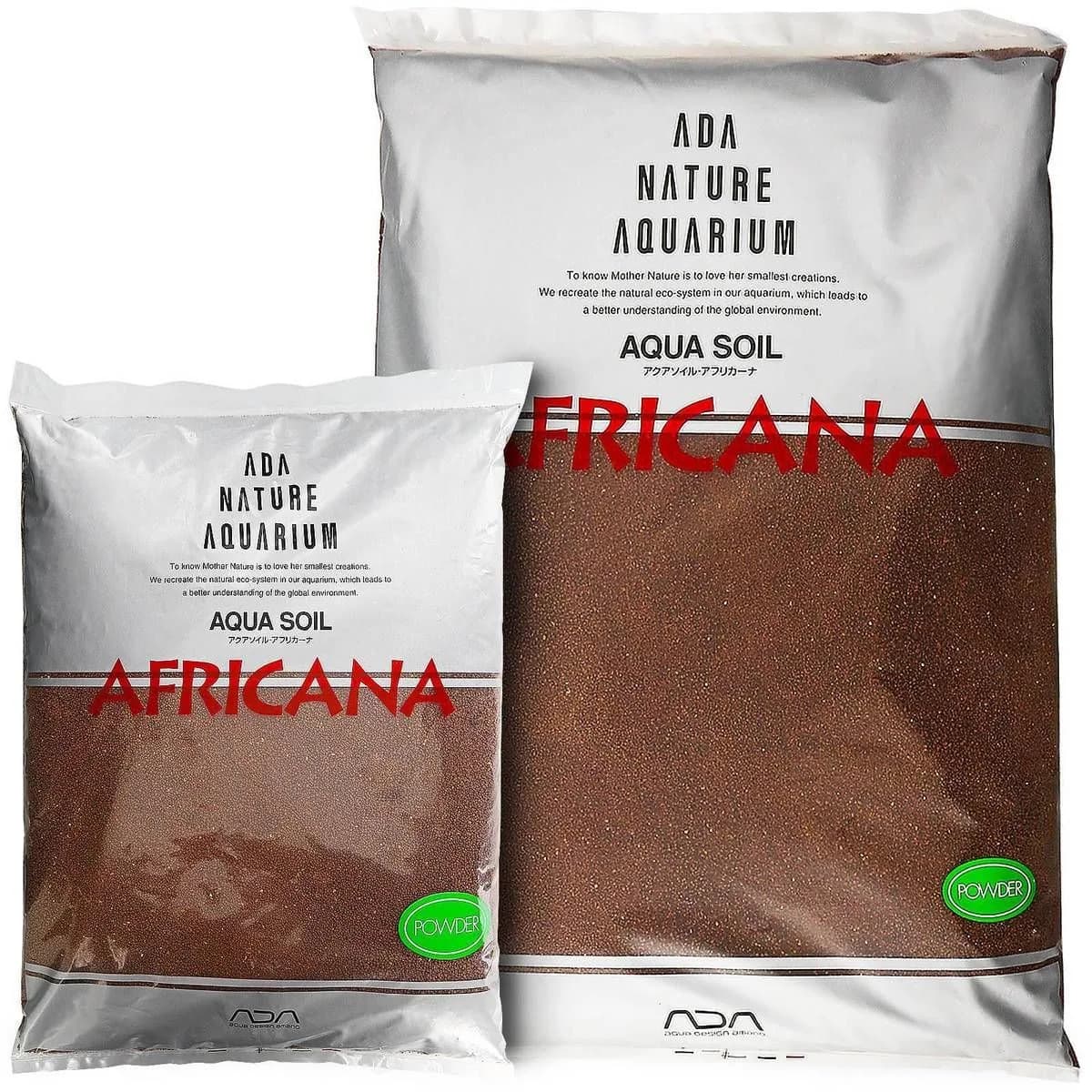
ADA Aqua Soil Africana
Japan · Reddish brown · grain 2 to 5 mm
External link to aquasabi.com, opens in a new tab.
TL;DR, ADA Aqua Soil Africana
Africana uses a different clay source (laterite-rich African soil) that produces a distinctive reddish-brown grain. African biotope tanks (Lake Tanganyika, Lake Malawi if hardness can be raised separately, West African streams) where the reddish substrate matches the natural environment.
Full specs
- Brand
- ADA
- Country of origin
- Japan
- Category
- Active aquasoil
- Colour
- Reddish brown
- Grain size
- 2 to 5 mm
- pH target
- 5.8 to 6.5
- pH effect
- Lowers (strong)
- KH effect
- Lowers (strong)
- Ammonia release
- Moderate
- Nutrient content
- Medium-high
- Buffering longevity
- 12 to 18 months
- Recommended water
- Soft tap or RO
- Difficulty
- 3 / 5
- Shrimp-safe
- Yes
- Best for
- African biotope tanks, alternative aesthetic to dark substrates
How it works
Africana uses a different clay source (laterite-rich African soil) that produces a distinctive reddish-brown grain. Chemistry is similar to Amazonia but with slightly lower ammonia release and slightly lower nutrient density. The pH buffering effect is comparable.
Best use cases
African biotope tanks (Lake Tanganyika, Lake Malawi if hardness can be raised separately, West African streams) where the reddish substrate matches the natural environment. The colour also pops the green of Anubias and other West African aquatic plants.
Common mistakes
Treating Africana as interchangeable with Amazonia. While the buffering profile is similar, Africana releases less ammonia, which means slower initial plant growth in the first two weeks. Heavy root feeders may need supplementation earlier than with Amazonia.
Pro tips
Pair with red volcanic stone (Maten stone, Frodo stone) for a coordinated warm-tone hardscape. Works particularly well with red colour-line stem plants because the reddish substrate amplifies their colour by reflection.
Plants that thrive in this substrate
Hand-curated pairings based on the substrate category, not a relational query.
- Cryptocoryne WendtiiCryptocoryne wendtiiHeavy root feeder, thrives on the strong ammonia and nutrients leaching from new aquasoil.
- Amazon SwordEchinodorus grisebachiiBackground rosette with extensive root system, builds tall on the rich substrate.
- Rotala RotundifoliaRotala rotundifoliaStem plant that colours strongest under low pH + high nutrient soil conditions.
- Monte CarloMicranthemum tweedieiCarpeting plant that pearls quickly when rooted directly into aquasoil with CO2.
- Ludwigia 'Super Red'Ludwigia palustris 'Super Red'Reds deepen on active aquasoil thanks to the consistent micro-nutrient release.
Sources & further reading
Compare against another substrate.
Line up to four substrates side by side. Spec table, pH effect, ammonia release, nutrient content, shrimp safety.
Open the compare tool