Care at a glance
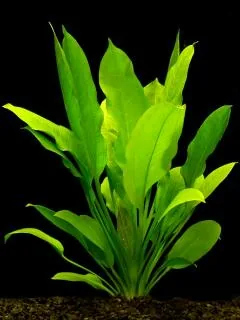
Statement background plant. Heavy root feeder, root tabs are non-negotiable. Single plant fills a 60 cm tank corner within 6 months.
By Mike ElmiraUpdated 2 min read
Part of our complete guide to the planted aquarium.

Echinodorus grisebachii
Statement background plant. Heavy root feeder, root tabs are non-negotiable. Single plant fills a 60 cm tank corner within 6 months.
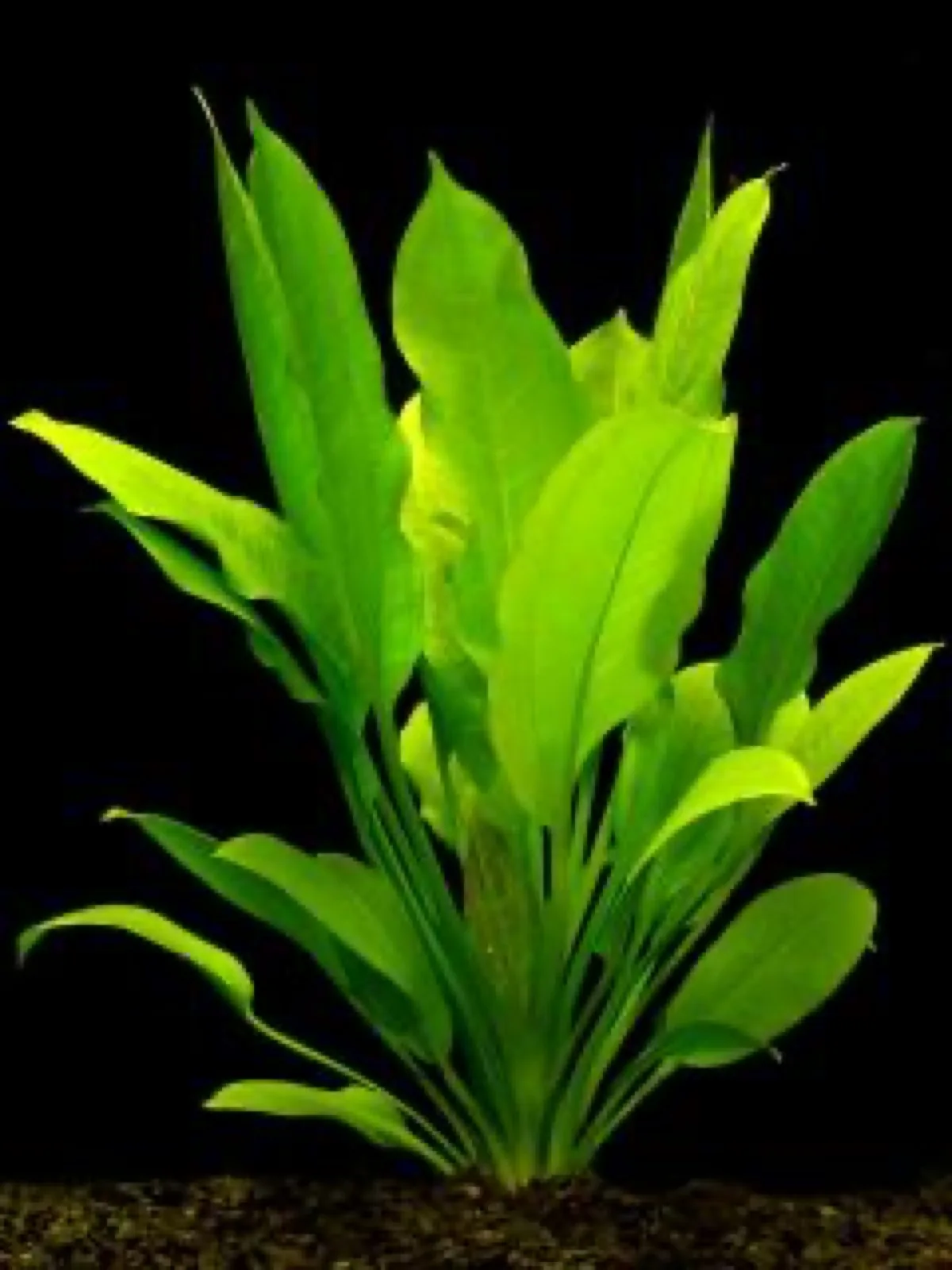
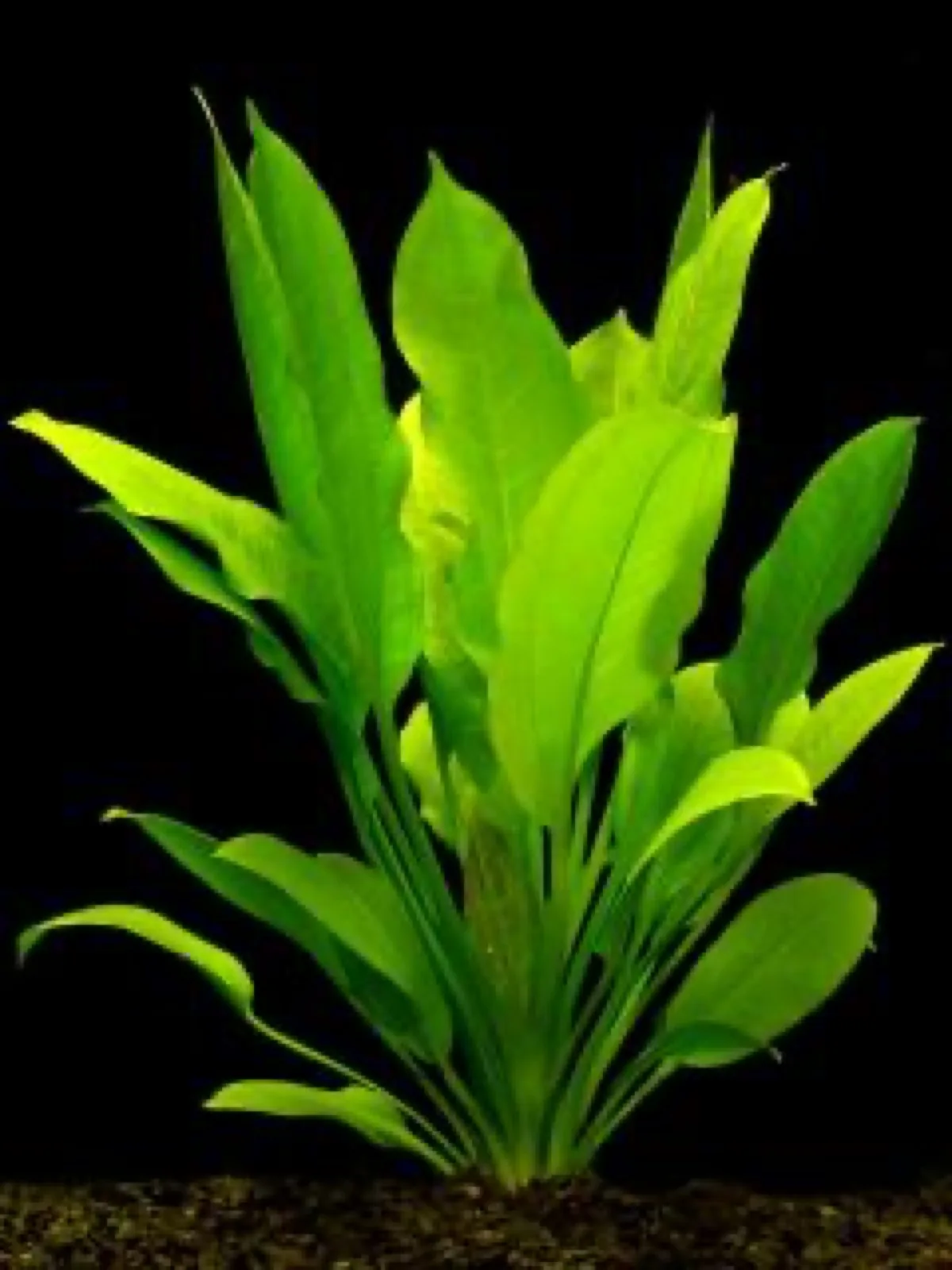
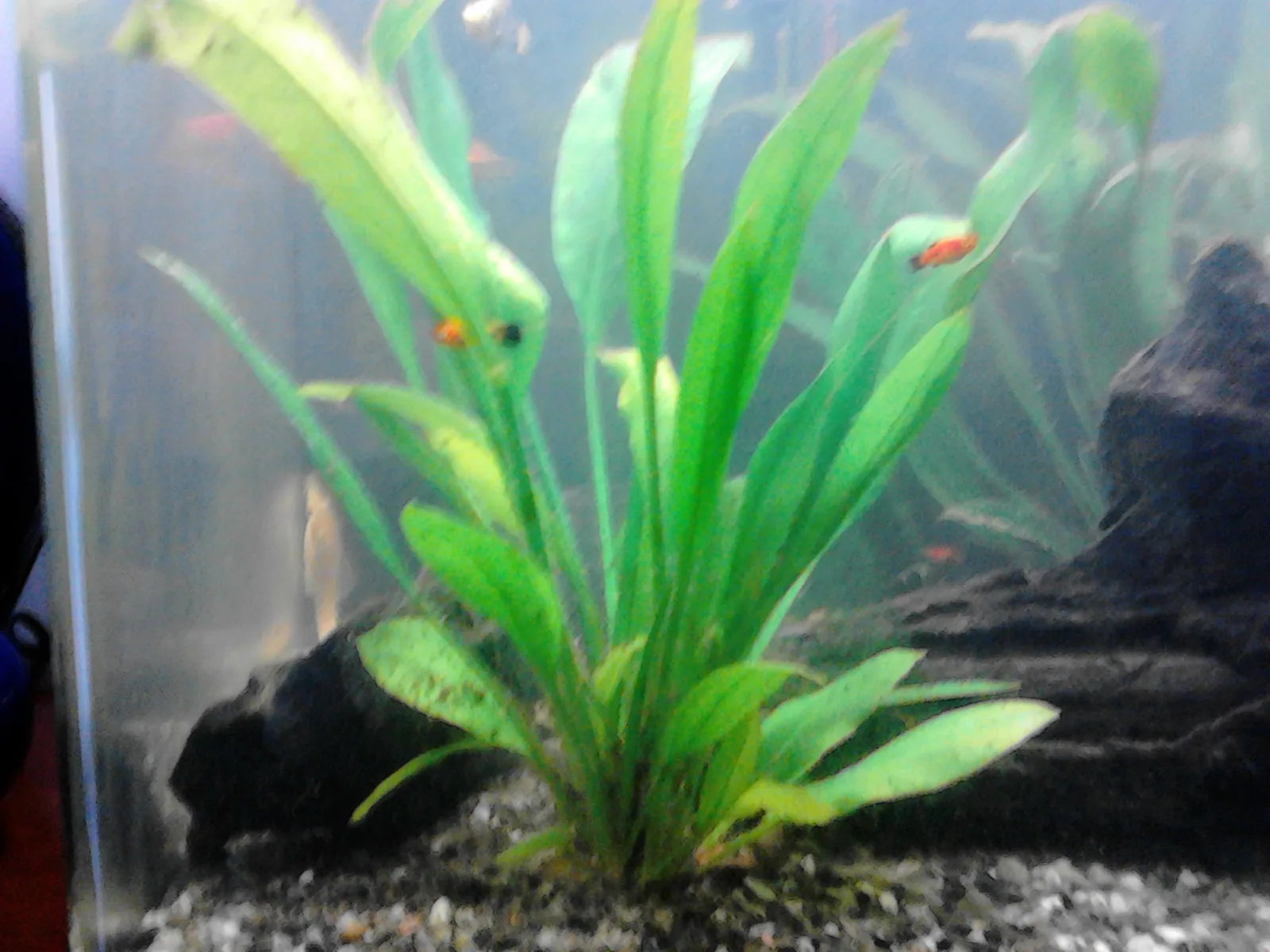
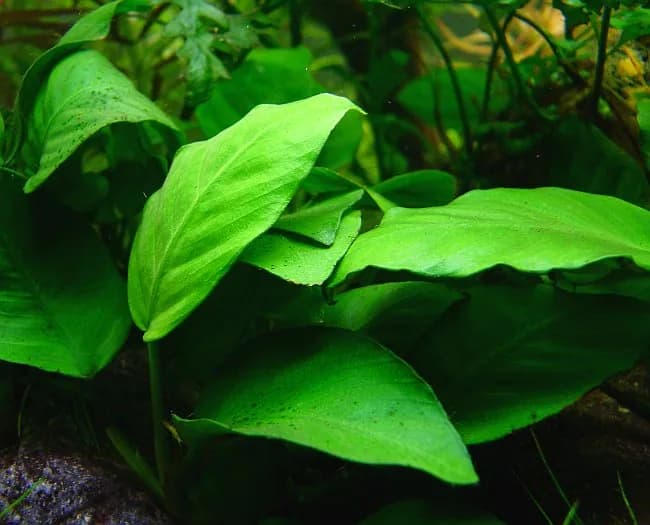
Amazon Sword (Echinodorus grisebachii) is a rosette / heavy root feeder aquatic plant for the background of a planted tank. It reaches 40–50 cm under good conditions and grows at a medium to fast rate. Light: low to medium. CO₂: optional. Target 22–28 °C, pH 6.5–7.5, and 3–18 dGH. Substrate: Nutrient-rich substrate + root tabs essential. Propagate via runners and adventitious plantlets.
Care at a glance
Statement background plant. Heavy root feeder, root tabs are non-negotiable. Single plant fills a 60 cm tank corner within 6 months.
By Mike ElmiraUpdated 2 min read
Part of our complete guide to the planted aquarium.
The parameters that decide whether amazon sword fits in your tank.
Alismataceae
Rosette / Heavy Root Feeder
Background
Nutrient-rich substrate + root tabs essential
Runners and adventitious plantlets
Marshes and slow margins of the Amazon basin
Brazil
Tank-mate safety and the species this one is documented to thrive (or fail) alongside.
Hard-won lessons from the tank.
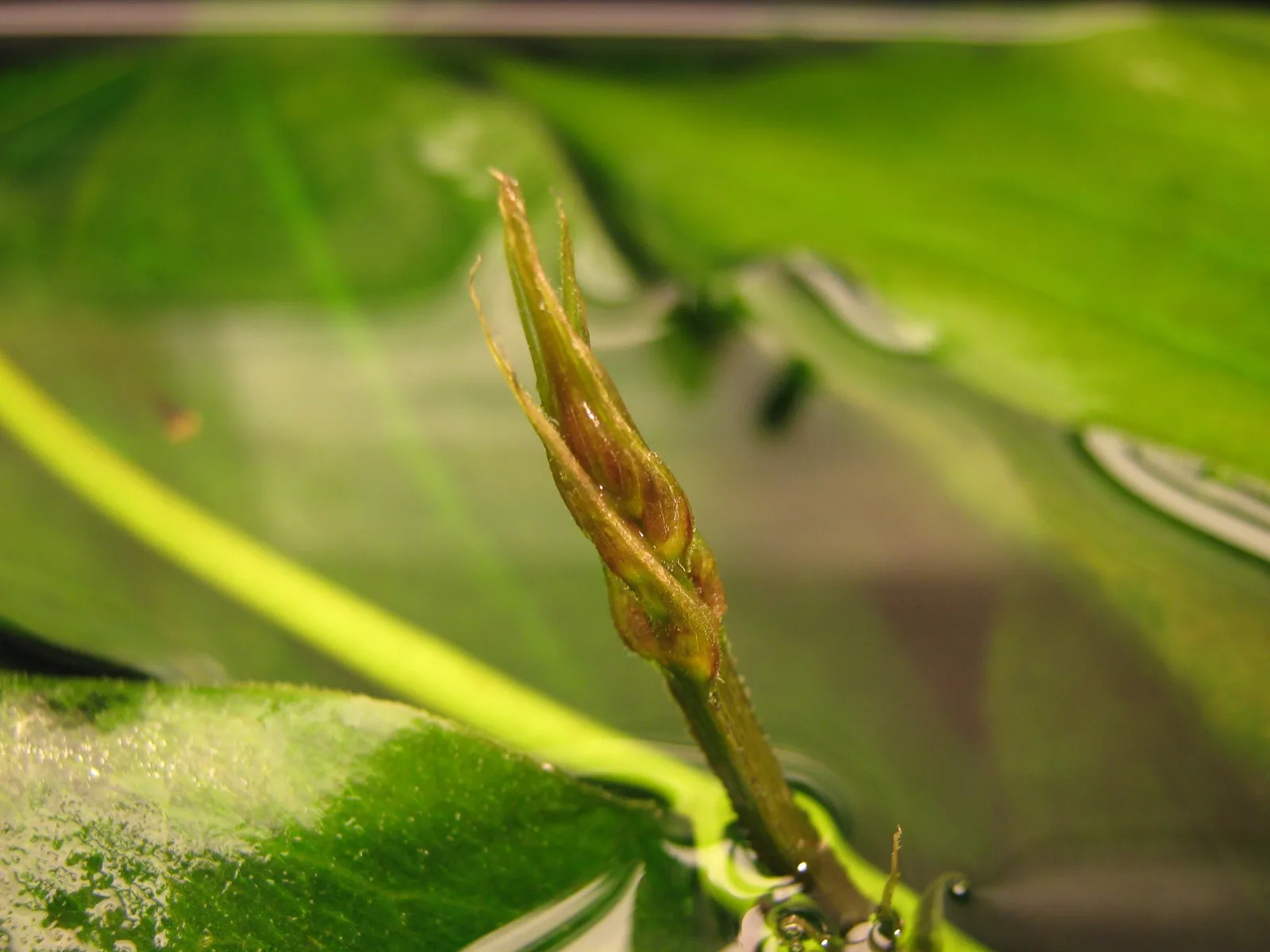
A single mature Amazon sword fills a 60 cm tank corner. Plan its space generously. When the plant produces a flower stalk with plantlets, leave it floating — once plantlets have 4–6 leaves and visible roots, snip and plant them. Free propagation forever.
What can go wrong and how to spot it.
Failure modes, in order of how dramatic the fix is.
Yellow leaves with green veins: iron deficiency. Pinholes: potassium. Stunted new growth: nitrogen. Pale stunted overall: insufficient root nutrition — add tabs.
Old leaves accumulate BBA and spot algae as the plant cycles them out. Trim early rather than letting old leaves linger.
The practical routine, read top to bottom.
HEAVY root feeder. Root tabs every 3 months are essential. Iron deficiency manifests as pale yellow leaves with green veins; correct quickly. Macro dosing (N, P, K) needed in dense planted setups.
Snip oldest outer leaves at the rhizome base. Don't cut leaves in half — they die back. Trim flower stalks only if you don't want plantlets.
Where it comes from, how it behaves, and the variants you'll see at retail.
Where it lived before it came home.
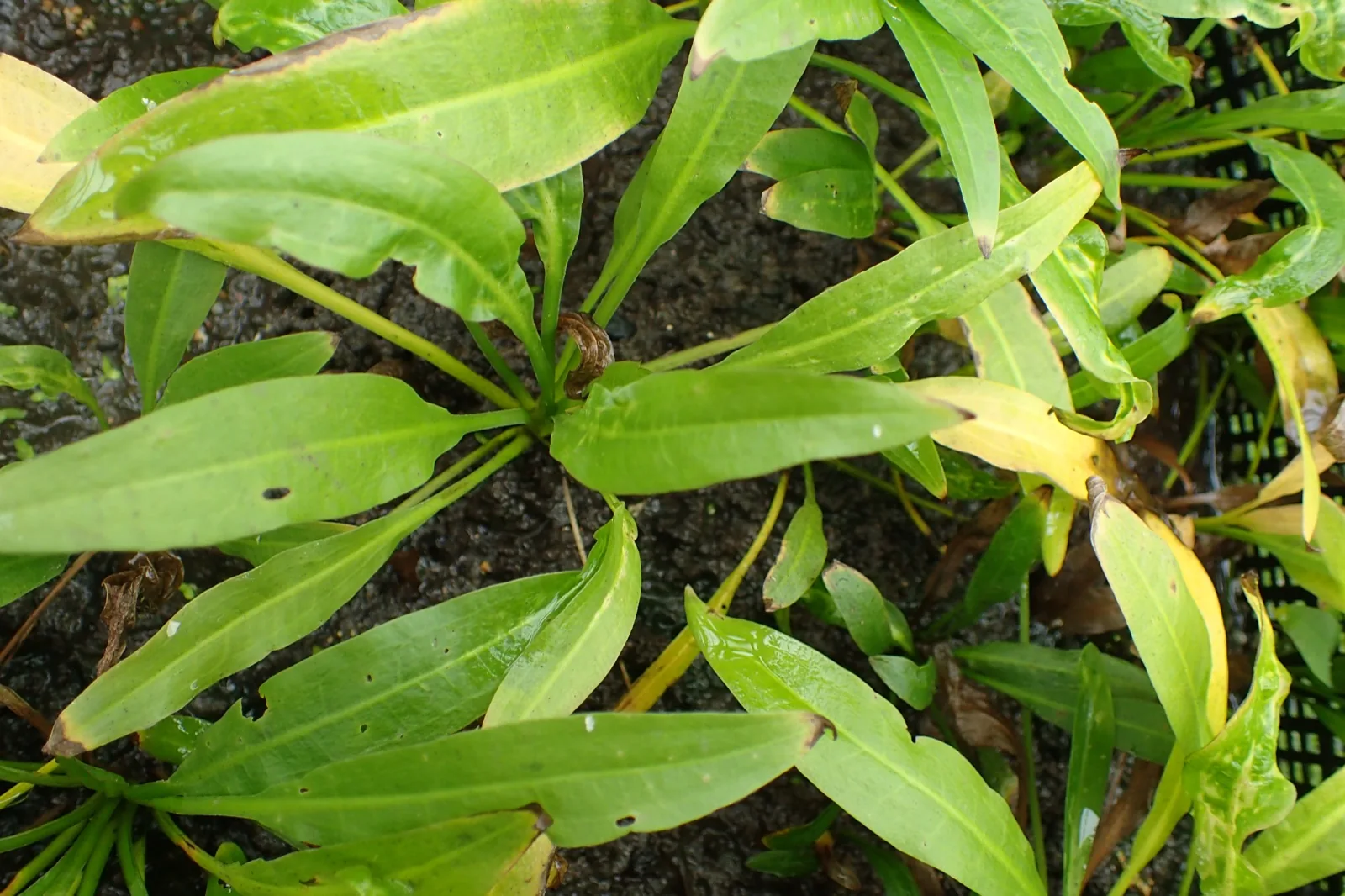
Brazilian wetlands and slow rivers; often grows emersed on river banks and floods to fully submerged in wet season.
Dramatically different — leaves are stiff, oval, on long petioles; produces white flowers on tall stalks. Almost all retail Amazon swords arrive in emersed form.
Underwater swords occasionally send up flowering stalks that produce adventitious plantlets (rather than seed-fertile flowers). These are how it propagates submerged.
The named cultivars and the lookalikes worth flagging.
E. bleheri is the 'true' Amazon sword. 'Rose' (red new leaves), 'Red Rubin', 'Indian Red Sword' all popular. E. amazonicus is smaller and sometimes mislabelled.
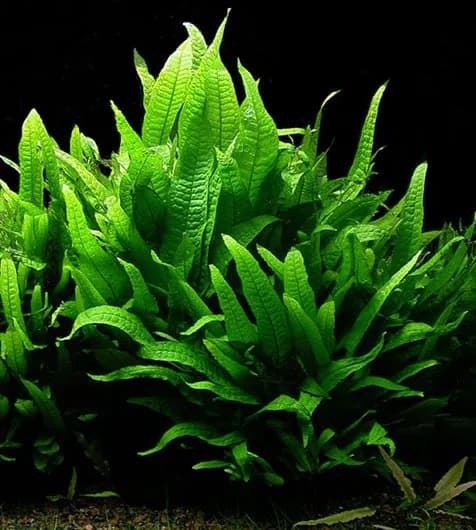
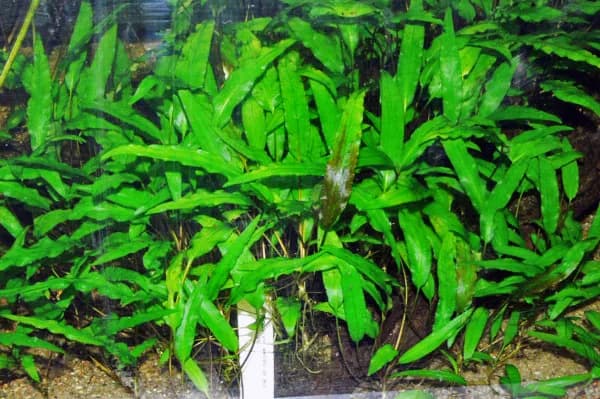
Many 'Amazon swords' sold are actually E. grisebachii 'Bleheri' (a cultivar of a related species). E. amazonicus, E. parviflorus, and even E. uruguayensis sometimes get the same label.
Direct answers to the questions search engines and AI assistants surface most often about this species.
CO₂ requirement: optional. Light requirement: low to medium. Under low-tech conditions the plant grows at a medium to fast rate.
Amazon Sword (Echinodorus grisebachii) needs low to medium light. Run a photoperiod of 6–8 hours; longer photoperiods invite algae unless CO₂ and dosing are dialled in.
Position: background. Substrate: Nutrient-rich substrate + root tabs essential It typically reaches 40–50 cm.
Propagation method: Runners and adventitious plantlets. Amazon Sword is a rosette / heavy root feeder plant.
Target 22–28 °C, pH 6.5–7.5, and 3–18 dGH. Flow tolerance: low to medium.
Difficulty: 2/5. Forgiving, beginner-friendly once the tank is cycled.
A planted tank is a system. Pair this plant with one entry from each other pillar to plan the whole scape.