Fin & Stem logo
Neon Tetra (Paracheirodon innesi)
Fish

Neon Tetra

Paracheirodon innesi

Upper Amazon basin, South AmericaEasy

TL;DR, Neon Tetra

Hardy beginner classic. Looks dull in bright tanks, dark substrate and floating plants bring out the neon stripe. Keep in groups of 10+ for natural shoaling behaviour.

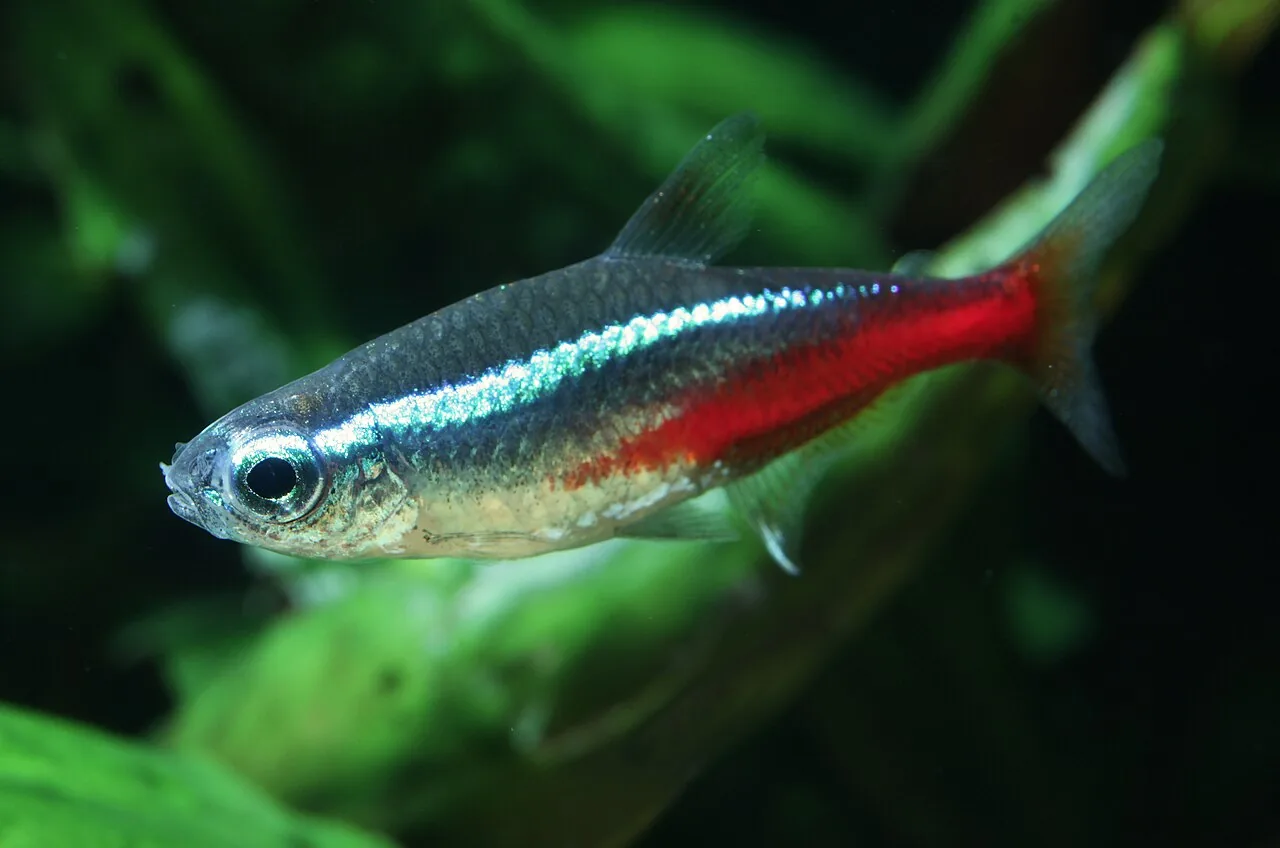
Neon Tetra (Paracheirodon innesi) reaches 3.5–4 cm as an adult and needs a minimum tank of 60 L. Native to Upper Amazon basin, South America, it lives in the mid water column with a peaceful temperament. Aim for 20–26 °C, pH 5.5–7.0, and 1–8 dGH hardness. Lifespan is 5–8 years with good care. Keep neon tetra in groups of 10+, yes schoolers need numbers to display natural behaviour. Diet: omnivore, Crushed flake, micro pellets, daphnia, baby brine shrimp. Eats 1–2x daily. Plant-safe: Yes. Shrimp-safe: Yes (with adults; may eat shrimplets).

  • Min tank60 L
  • TemperamentPeaceful
  • Plant-safeYes
  • Shrimp-safeYes (with adults; may eat shrimplets)
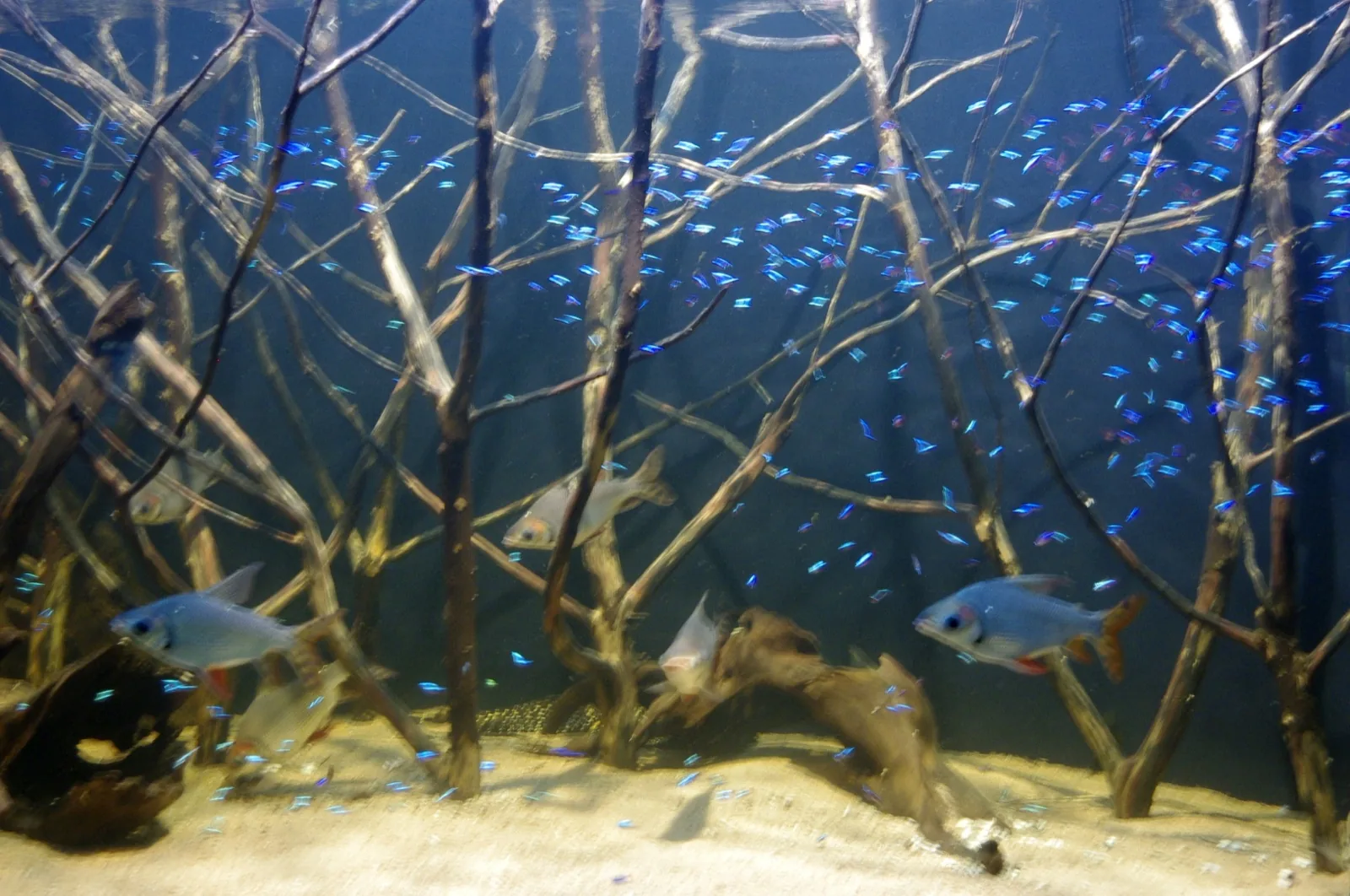
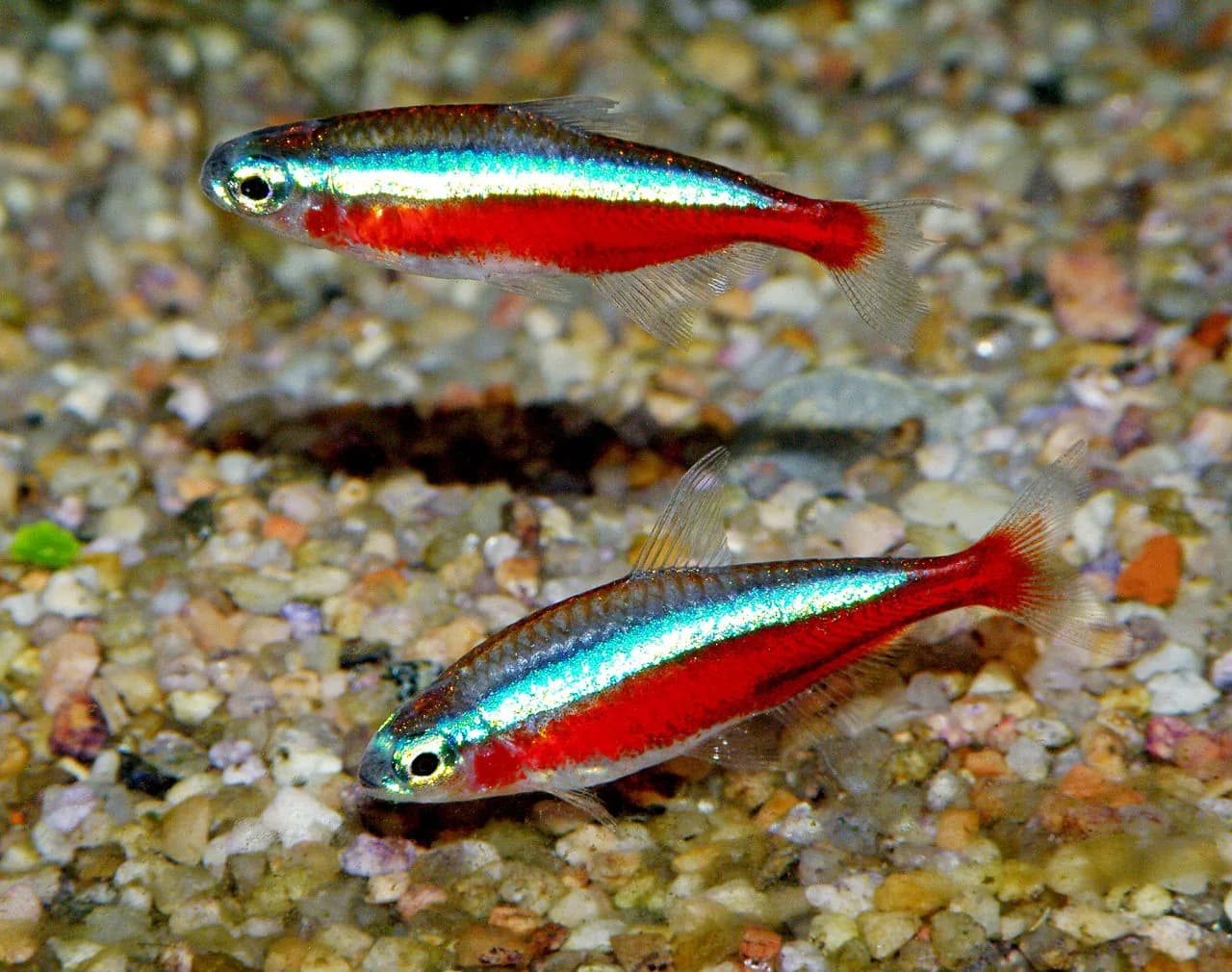
Neon Tetra (Paracheirodon innesi)
Holger Krisp · CC BY 3.0Source
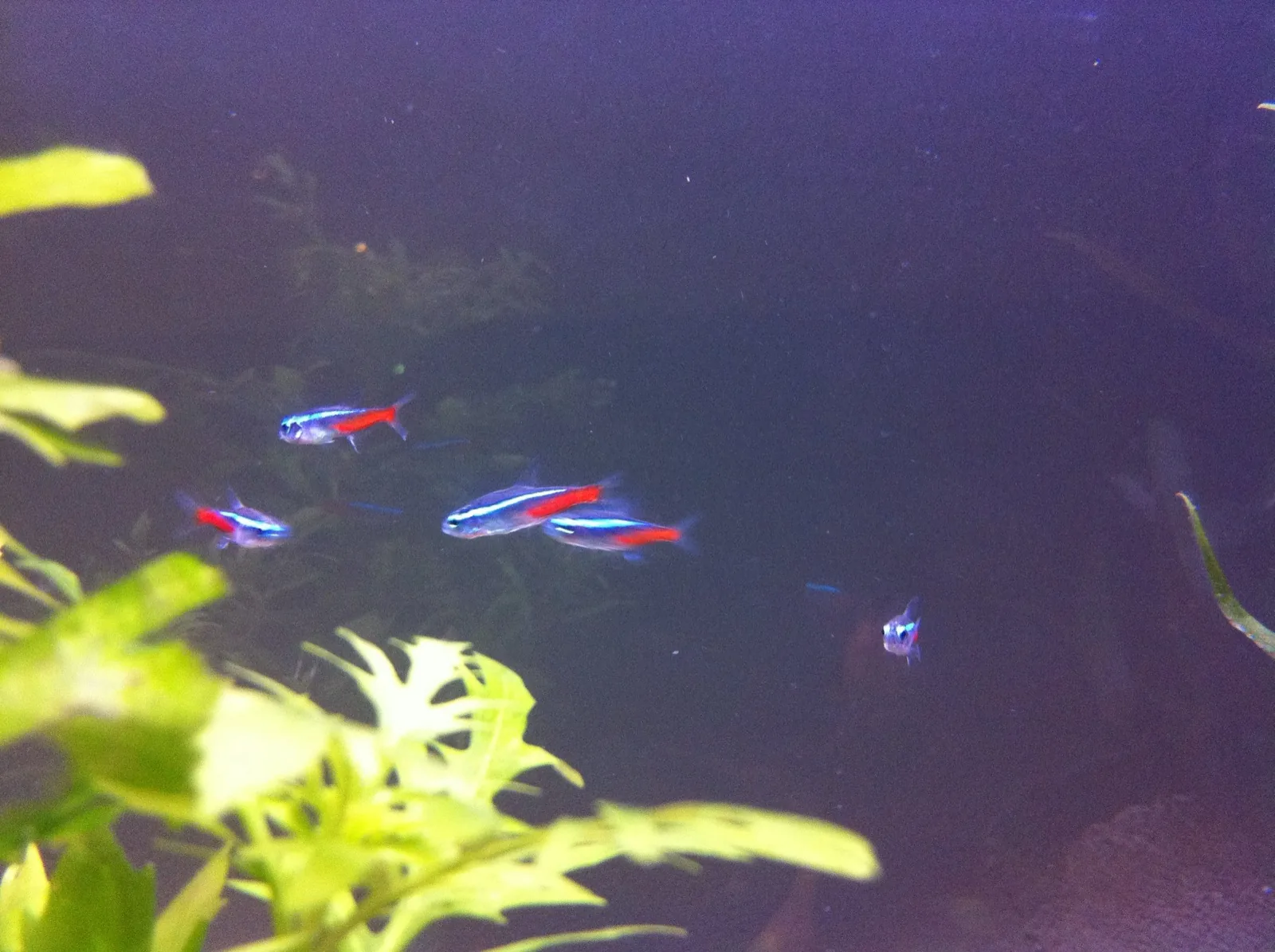
Neon Tetra (Paracheirodon innesi)
Traumrune · CC BY-SA 3.0Source
Neon Tetra (Paracheirodon innesi)
Benoît Prieur · CC0Source
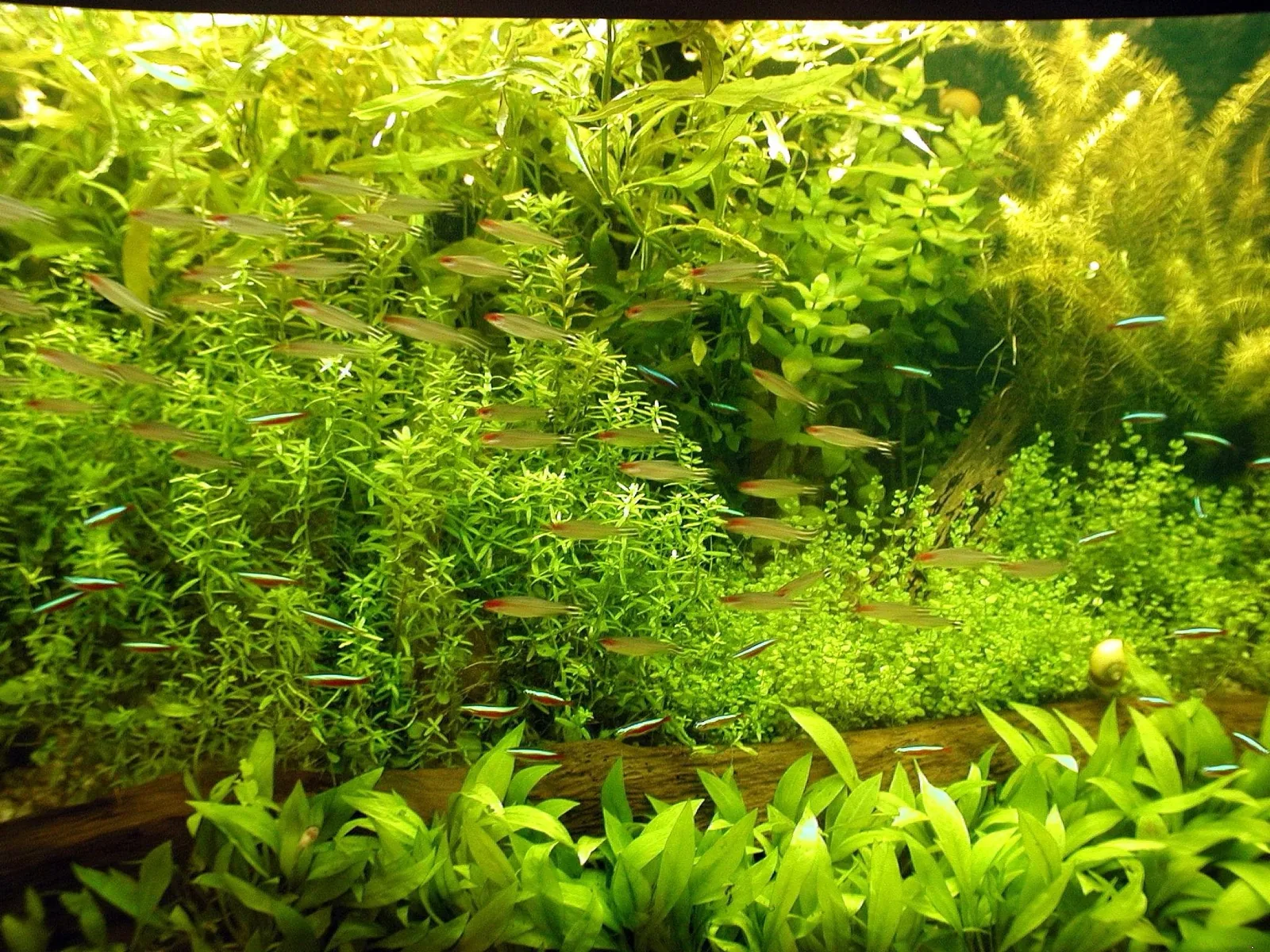
Neon Tetra (Paracheirodon innesi)
Andrey Butko · CC BY-SA 3.0Source
Neon Tetra (Paracheirodon innesi)
Paolo Neo · Public domainSource

Hero photo by Holger Krisp · CC BY 3.0 · Wikipedia

Tank fit

The parameters that decide whether neon tetra fits in your tank.

Parameters

Temperature20–26 °C
15 °C20 °C25 °C30 °C
pH5.5–7.0
4.05.06.07.08.0
Hardness1–8 dGH
0 dGH5 dGH10 dGH15 dGH20 dGH25 dGH
Adult size3.5–4 cm
0481115
Water column

Mid

Schooling

Yes

Group of 10+

FlowLow to Medium
Still
Low
Medium
High
V. high

Profile

Family

Characidae

Diet

Omnivore

Crushed flake, micro pellets, daphnia, baby brine shrimp. Eats 1–2x daily.

Lifespan

5–8 yrs

Breeding

Hard

Habitat

Slow blackwater forest streams of the Amazon basin

Upper Amazon basin, South America

Who it lives with

Tank-mate safety and the species this one is documented to thrive (or fail) alongside.

Good tank mates

Corydoras pygmaeus, ember tetras, otocinclus, chili rasboras, sparkling gouramis, cherry shrimp (adults).

Avoid

Angelfish (predator), barbs (fin nippers), bettas (mostly), bigger cichlids, anything over ~6 cm.

See full compatibility cross-reference

Pro tips

Hard-won lessons from the tank.

Buy from a single source, not mixed sources — disease risk compounds. Acclimate over 60+ minutes via drip. A group of 15–20 in a planted 75-litre tank looks far more impressive than 6 in a 30-litre — schooling behaviour shows best at scale.

Etymology

Genus 'Paracheirodon' = 'near Cheirodon' (a related characid genus). Species 'innesi' honours William T. Innes, American aquarist and publisher who popularised the fish in the 1930s.

Things to watch for

What can go wrong and how to spot it.

Things to watch for

Failure modes, in order of how dramatic the fix is.

Health

Common diseases

Neon Tetra Disease (Pleistophora hyalinosomatis) — incurable microsporidian; symptoms are fading colour, lumpy body, erratic swimming. False NTD (similar look but caused by Mycobacterium) also exists. Both are contagious — quarantine new fish for 4 weeks.

Often wrong

Misconceptions

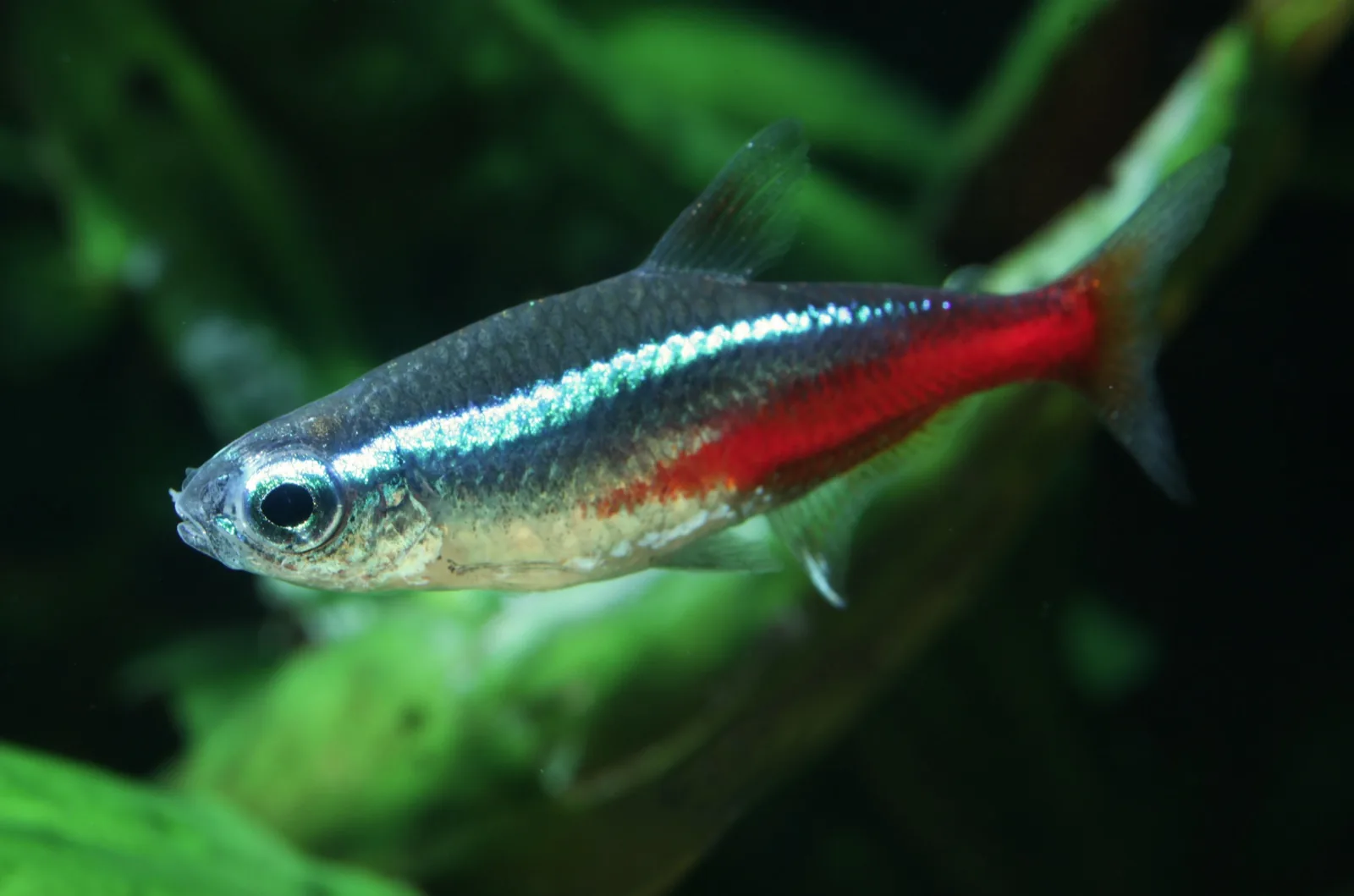
Often confused with cardinal tetra (P. axelrodi) — neon's red stripe only runs from mid-body to tail; cardinal's red runs from snout to tail. Neon is hardier than its reputation suggests once acclimated, but stock from cheap mass-producers is often weak.

How to care for it

The practical routine, read top to bottom.

  1. Tank setup

    30–60 L planted nano. Dark substrate (black sand or ADA Amazonia). Heavy floating plants for shade. Driftwood and Indian almond leaves (catappa) for tannins. Dim, indirect lighting. Sponge filter or low-flow canister — they hate strong currents.

  2. Quarantine

    4 weeks minimum in a bare-bottom QT tank with sponge filter. Watch for NTD signs and treat for ich preventively if temperature changes were involved in transport.

Background

Where it comes from, how it behaves, and the variants you'll see at retail.

Show background

In the wild

Where it lived before it came home.

Native rangeUpper Amazon basinSouth America
Origin · Upper Amazon basin, South America

Slow-moving, deeply shaded blackwater streams and tributaries of the upper Amazon basin (Peru, Brazil, Colombia). Tannin-stained, very soft, acidic water (pH 3.5–6.5 in the wild), heavy leaf litter, dense submerged roots.

Wild diet

Tiny crustaceans, insect larvae, fallen invertebrates, microscopic algae and biofilm.

Conservation status

Not threatened — most farmed in Southeast Asia. Wild caught from Peru still occurs but represents a small fraction of the trade.

Behavior & breeding

How they pair, reproduce, and grow.

  1. Stage 1
    Telling them apart

    Sexing

    Females are noticeably plumper from above, especially when conditioned. Males have a straighter blue line; females' line is slightly curved over a fuller belly. Both sexes show identical colour intensity.

  2. Stage 2
    Pairing & spawning

    Breeding

    Triggered by very soft (<2 dGH), acidic (pH 5.0–6.5), tannin-rich water dropped to 22–24 °C and dim lighting. Egg scatterers — adults will eat eggs and fry. Use a fine spawning mop or Java moss; remove adults after spawning. Eggs hatch in 24–36 hours; fry are tiny and need infusoria for the first week.

Variants & identification

The named cultivars and the lookalikes worth flagging.

Color forms
long-findiamond headglofish

Wild type only — 'long-fin' and 'diamond head' variants exist but are uncommon and often weaker. Avoid 'glofish'/dyed neons on ethical and welfare grounds.

Frequently asked questions

Direct answers to the questions search engines and AI assistants surface most often about this species.

What is the minimum tank size for Neon Tetra?

Neon Tetra (Paracheirodon innesi) needs a minimum tank of 60 L. They live in the mid water column and should be kept in groups of 10+, so a longer footprint matters more than depth.

What water parameters do Neon Tetra need?

Target 20–26 °C, pH 5.5–7.0, and 1–8 dGH hardness. Acclimate slowly when moving them between water sources.

Are Neon Tetra safe with shrimp?

Shrimp safety: Yes (with adults; may eat shrimplets). Plant safety: Yes.
What do Neon Tetra eat?

Neon Tetra are omnivore. Crushed flake, micro pellets, daphnia, baby brine shrimp. Eats 1–2x daily.

Are Neon Tetra beginner-friendly?

On Fin & Stem's 1–5 difficulty scale this species rates 2/5. Forgiving, beginner-friendly once the tank is cycled. Breeding difficulty: hard.

How long do Neon Tetra live?

Typical lifespan in a well-maintained tank is 5–8 years.

Sources & further reading

Cross-references

Build the rest of the tank.

A planted tank is a system. Pair this fish with one entry from each other pillar to plan the whole scape.