
Pillar guide
Aquarium Fish for the Planted Tank, A Complete Guide
How to choose freshwater aquarium fish based on water-parameter compatibility, temperament, and safety with plants and shrimp.
Updated 2 min read
TL;DR, Aquarium Fish for the Planted Tank, A Complete Guide
Choosing fish for a planted tank means matching water parameters (temperature, pH, hardness) and behaviour (schooling needs, temperament, fin-nipping) to the rest of the system. The biggest planted-tank mistake is stocking by sight at the LFS. The fix is starting from your water, your tank size, and your plants, then picking fish that actually fit. This guide explains the trade-offs, then links to every fish profile Fin & Stem maintains.
Fish are the last thing you should pick for a planted tank, not the first. Your tap water decides your hardness and pH. Your light + CO₂ level decides your plants. Your plants decide the available cover and the maturity timeline. Only then do fish slot in, based on temperament, water needs, plant safety, and shrimp safety.
Below: every fish in Fin & Stem's catalogue, profiled for the parameters that actually matter when you're building a planted tank.
The full catalogue in this guide
92 profiles · each cross-referenced for compatibility with the rest of the catalogue.
- Neon Tetra, Paracheirodon innesi
- Cardinal Tetra, Paracheirodon axelrodi
- Ember Tetra, Hyphessobrycon amandae
- Chili Rasbora, Boraras brigittae
- Harlequin Rasbora, Trigonostigma heteromorpha
- Celestial Pearl Danio, Danio margaritatus
- Otocinclus (Common), Otocinclus vittatus
- Sparkling Gourami, Trichopsis pumila
- Pygmy Corydoras, Corydoras pygmaeus
- German Blue Ram, Mikrogeophagus ramirezi
- Rummynose Tetra, Hemigrammus rhodostomus
- Honey Gourami, Trichogaster chuna
- Cockatoo Dwarf Cichlid, Apistogramma cacatuoides
- Kuhli Loach, Pangio kuhlii
- Sterbai Corydoras, Corydoras sterbai
- Cherry Barb, Puntius titteya
- Endler's Livebearer, Poecilia wingei
- Marbled Hatchetfish, Carnegiella strigata
- White Cloud Mountain Minnow, Tanichthys albonubes
- Diamond Tetra, Moenkhausia pittieri
- Reticulated Hillstream Loach, Sewellia lineolata
- Threadfin Rainbowfish, Iriatherina werneri
- Lemon Tetra, Hyphessobrycon pulchripinnis
- Clown Killifish, Epiplatys annulatus
- Pearl Gourami, Trichopodus leerii
- Forktail Blue-Eye, Pseudomugil furcatus
- Bristlenose Pleco, Ancistrus cf. cirrhosus
- Black Neon Tetra, Hyphessobrycon herbertaxelrodi
- Siamese Algae Eater, Crossocheilus langei
- Dwarf Pencilfish, Nannostomus marginatus
- Dwarf Puffer, Carinotetraodon travancoricus
- Agassiz's Dwarf Cichlid, Apistogramma agassizii
- Black Phantom Tetra, Hyphessobrycon megalopterus
- Glowlight Tetra, Hemigrammus erythrozonus
- Guppy, Poecilia reticulata
- Southern Platy, Xiphophorus maculatus
- Sailfin Molly, Poecilia latipinna
- Green Swordtail, Xiphophorus hellerii
- Zebra Danio, Danio rerio
- Tiger Barb, Puntigrus tetrazona
- Black Skirt Tetra, Gymnocorymbus ternetzi
- Bronze Corydoras, Corydoras aeneus
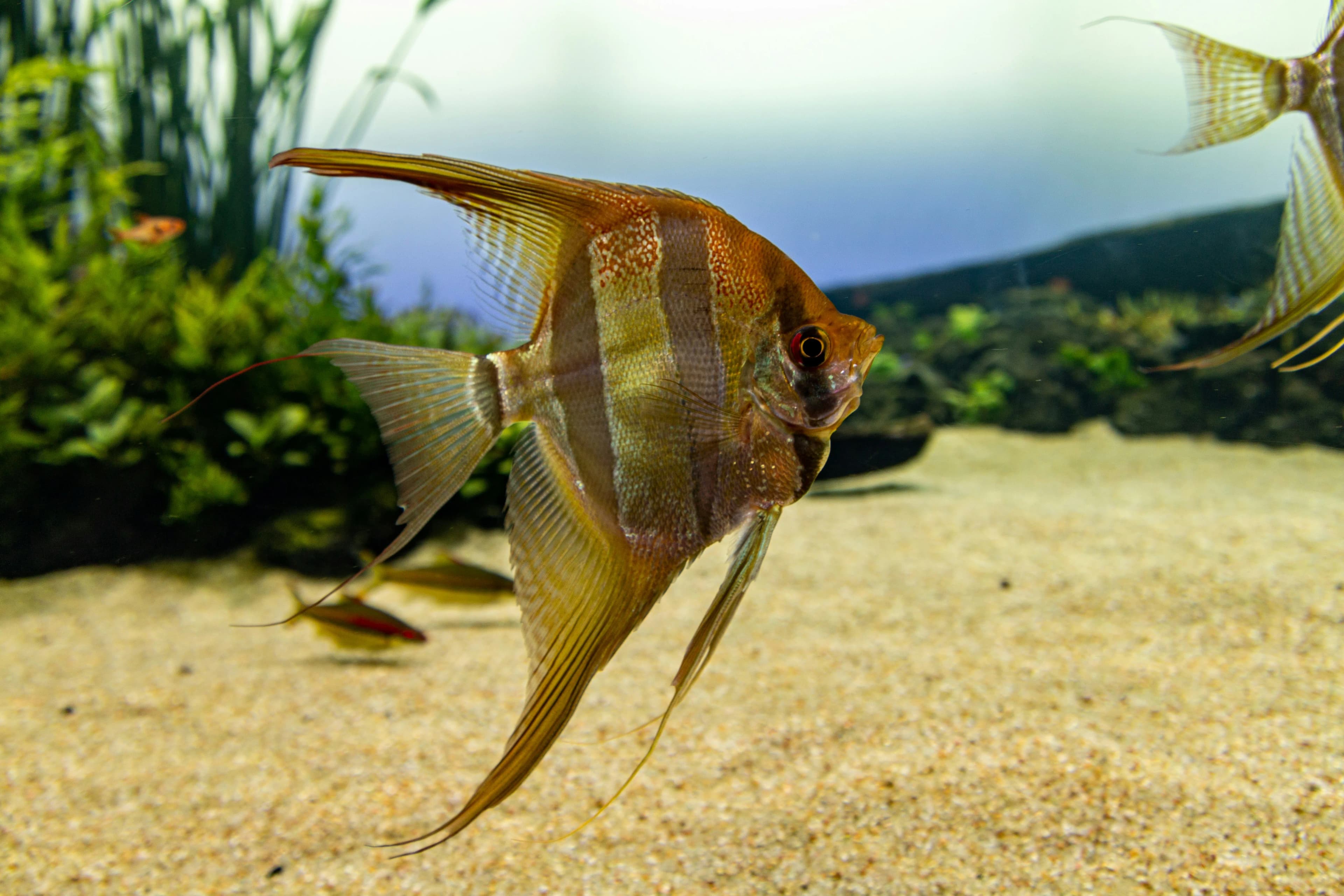
- Angelfish, Pterophyllum scalare
- Red-Tailed Black Shark, Epalzeorhynchos bicolor
- Boesemani Rainbowfish, Melanotaenia boesemani
- Dwarf Neon Rainbowfish, Melanotaenia praecox
- Bolivian Ram, Mikrogeophagus altispinosus
- Panda Corydoras, Corydoras panda
- Congo Tetra, Phenacogrammus interruptus
- Bloodfin Tetra, Aphyocharax anisitsi
- Silver Tip Tetra, Hasemania nana
- Dwarf Gourami, Trichogaster lalius
- Paradise Fish, Macropodus opercularis
- Scarlet Badis, Dario dario
- Lambchop Rasbora, Trigonostigma espei
- Kribensis, Pelvicachromis pulcher
- Spotted Blue-eye, Pseudomugil gertrudae
- Siamese Fighting Fish, Betta splendens
- Pristella Tetra, Pristella maxillaris
- Bleeding Heart Tetra, Hyphessobrycon erythrostigma
- Penguin Tetra, Thayeria boehlkei
- Serpae Tetra, Hyphessobrycon eques
- Roseline Shark, Dawkinsia denisonii
- Gold Barb, Barbodes semifasciolatus
- Rosy Barb, Pethia conchonius
- Yoyo Loach, Botia almorhae
- Clown Pleco, Panaqolus maccus
- Glass Catfish, Kryptopterus vitreolus
- Pictus Catfish, Pimelodus pictus
- Chocolate Gourami, Sphaerichthys osphromenoides
- Licorice Gourami, Parosphromenus deissneri
- Croaking Gourami, Trichopsis vittata
- Phoenix Rasbora, Boraras merah
- Dwarf Rasbora, Boraras maculatus
- Indian Glass Fish, Parambassis ranga
- Golden Wonder Killifish, Aplocheilus lineatus
- Dojo Loach, Misgurnus anguillicaudatus
- Pearl Danio, Danio albolineatus
- Buenos Aires Tetra, Hyphessobrycon anisitsi
- Black Molly, Poecilia sphenops
- Common Pleco, Pterygoplichthys pardalis
- Peacock Gudgeon, Tateurndina ocellicauda
- Umbrella Cichlid, Apistogramma borellii
- Keyhole Cichlid, Cleithracara maronii
- Discus, Symphysodon aequifasciatus
- Three-spot Gourami, Trichopodus trichopterus
- Kissing Gourami, Helostoma temminckii
- False Julii Cory, Corydoras trilineatus
- Salt and Pepper Cory, Corydoras habrosus
- Clown Loach, Chromobotia macracanthus
- Florida Flagfish, Jordanella floridae
- Pacific Blue Eye, Pseudomugil signifer
Frequently asked questions
Direct answers to the questions search engines and AI assistants surface most often about this species.
What fish are best for a planted tank?
Small, peaceful, plant-safe schoolers dominate the planted-tank canon: neon tetras, cardinal tetras, ember tetras, harlequin rasboras, chili rasboras, celestial pearl danios, pygmy corydoras, and otocinclus. Centrepieces include German blue rams, Bolivian rams, honey gouramis, and sparkling gouramis. Avoid known plant-eaters (goldfish, silver dollars, large barbs) and notorious shrimp predators if you're keeping a shrimp colony.
How many fish can I keep in my tank?
The 'one inch per gallon' rule is unreliable, adult size, body shape, bioload, and swimming style all matter more. Better starting points: a 60-litre tank supports 8–12 small schoolers plus a centrepiece, a 120-litre supports two schools plus a pair of dwarf cichlids, and a 240-litre opens the door to larger rainbowfish and apistogramma communities. Use Fin & Stem's per-species 'minimum tank size' field as the floor, not the goal.
What's the difference between schooling and shoaling?
Schooling fish swim in coordinated, tightly-spaced groups (cardinal tetras, rummy-nose tetras). Shoaling fish gather loosely for safety without coordinated movement (most rasboras, livebearers). Both need numbers, 6 minimum, 10+ preferred. Single fish or pairs from these species are visibly stressed and short-lived.
Do I need a heater for my aquarium?
Most tropical fish need 22–28 °C, a heater is mandatory unless your room sits in that range year-round. A handful of temperate species (white cloud mountain minnows, zebra danios, paradise fish, hillstream loaches) tolerate 16–22 °C and can run unheated in a stable room. Always size the heater at 1 W per litre minimum and use an inline thermostat for redundancy.
Ready to plan your tank?
Pick any species and Fin & Stem will cross-reference everything compatible across all four categories.
Setting up or troubleshooting a tank? cycle a new tank or fish & shrimp health.