Fin & Stem logo
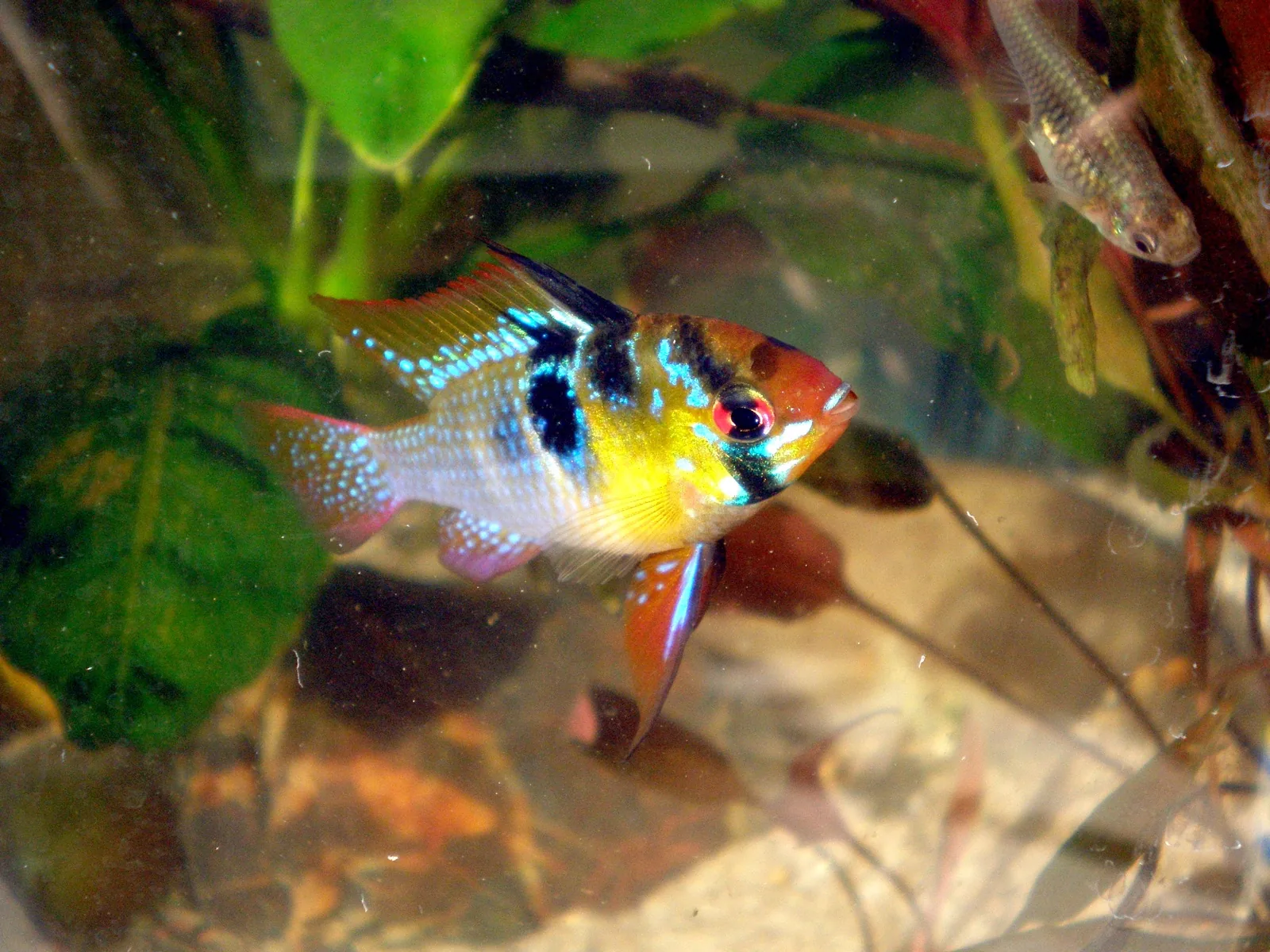
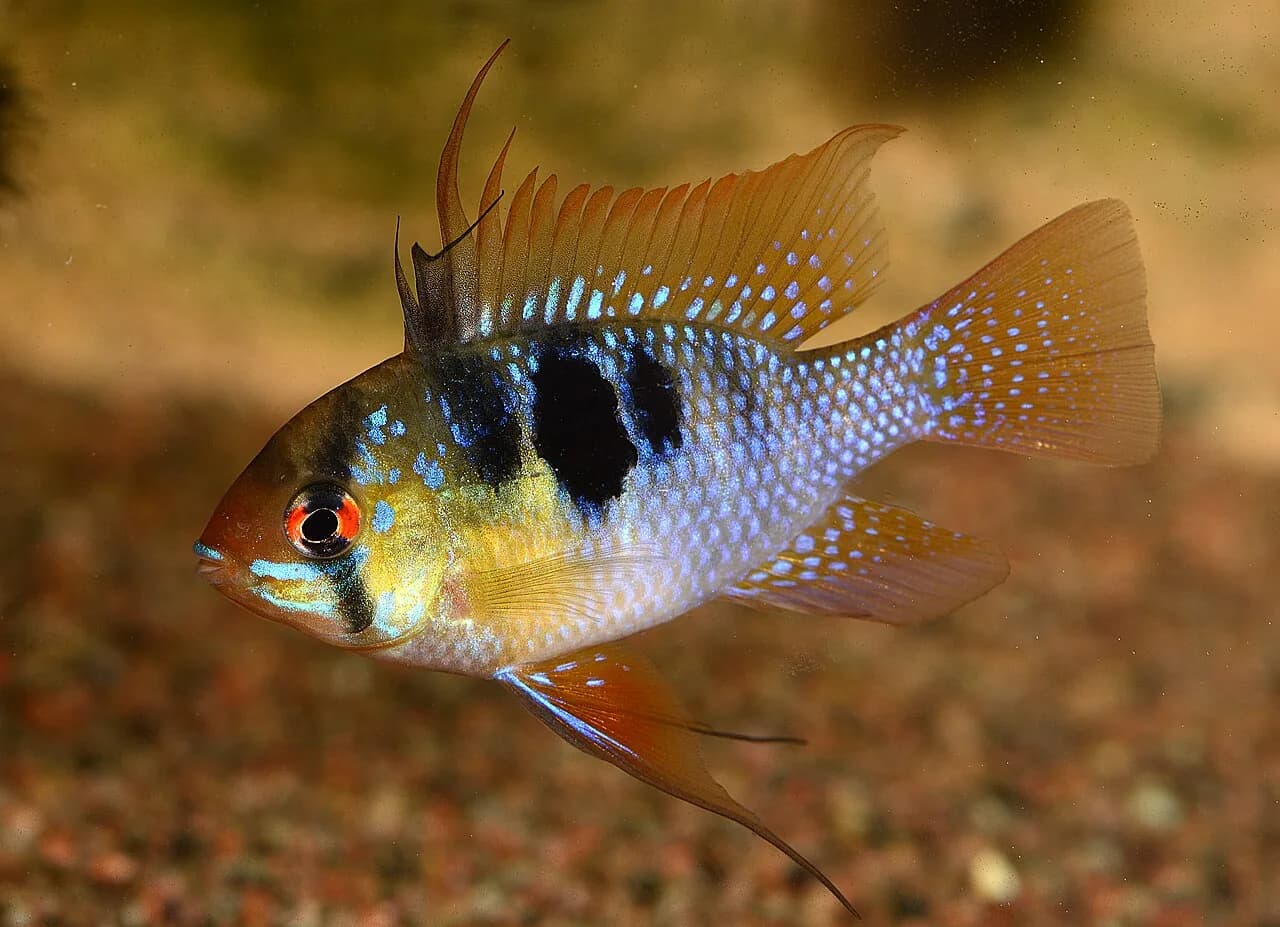
German Blue Ram (Mikrogeophagus ramirezi)
Fish

German Blue Ram

Mikrogeophagus ramirezi

Orinoco basin, Venezuela & ColombiaAdvanced

TL;DR, German Blue Ram

Centrepiece dwarf cichlid for a planted Amazon-style scape. Demands warm, clean, soft water; sensitive to nitrate. A flat stone makes a perfect spawning site.

German Blue Ram (Mikrogeophagus ramirezi) reaches 5–7 cm as an adult and needs a minimum tank of 75 L (pair). Native to Orinoco basin, Venezuela & Colombia, it lives in the mid to bottom water column with a peaceful (territorial when breeding) temperament. Aim for 26–30 °C, pH 5.0–7.0, and 1–8 dGH hardness. Lifespan is 2–3 years with good care. Keep german blue ram in groups of 2+, pair schoolers need numbers to display natural behaviour. Diet: omnivore, Quality flake, micro pellets, frozen brine shrimp, bloodworms. Plant-safe: Yes. Shrimp-safe: Risky with dwarf shrimp.

  • Min tank75 L (pair)
  • TemperamentPeaceful (territorial when breeding)
  • Plant-safeYes
  • Shrimp-safeRisky with dwarf shrimp
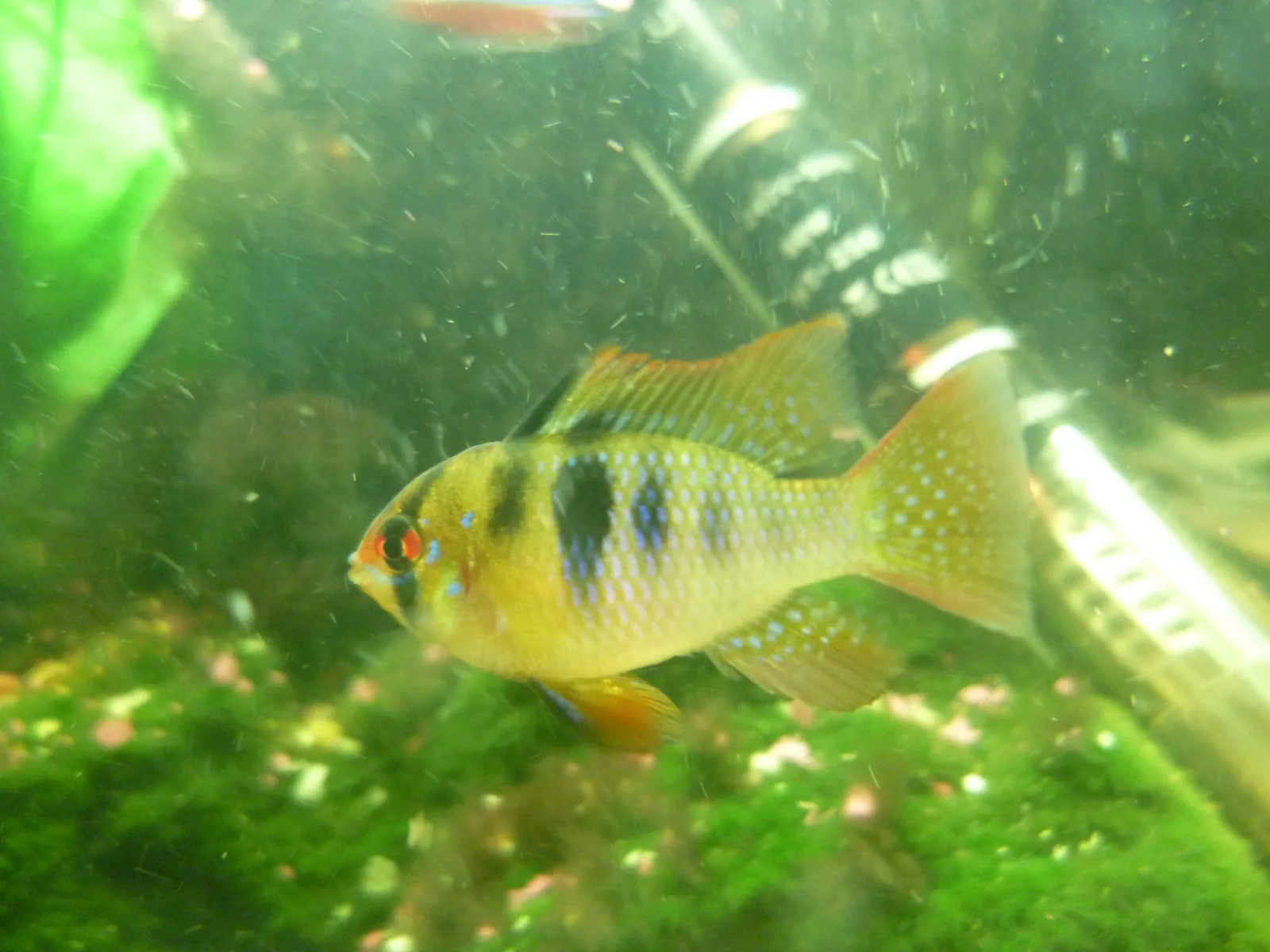
German Blue Ram (Mikrogeophagus ramirezi)
Kennyannydenny · CC BY-SA 3.0Source
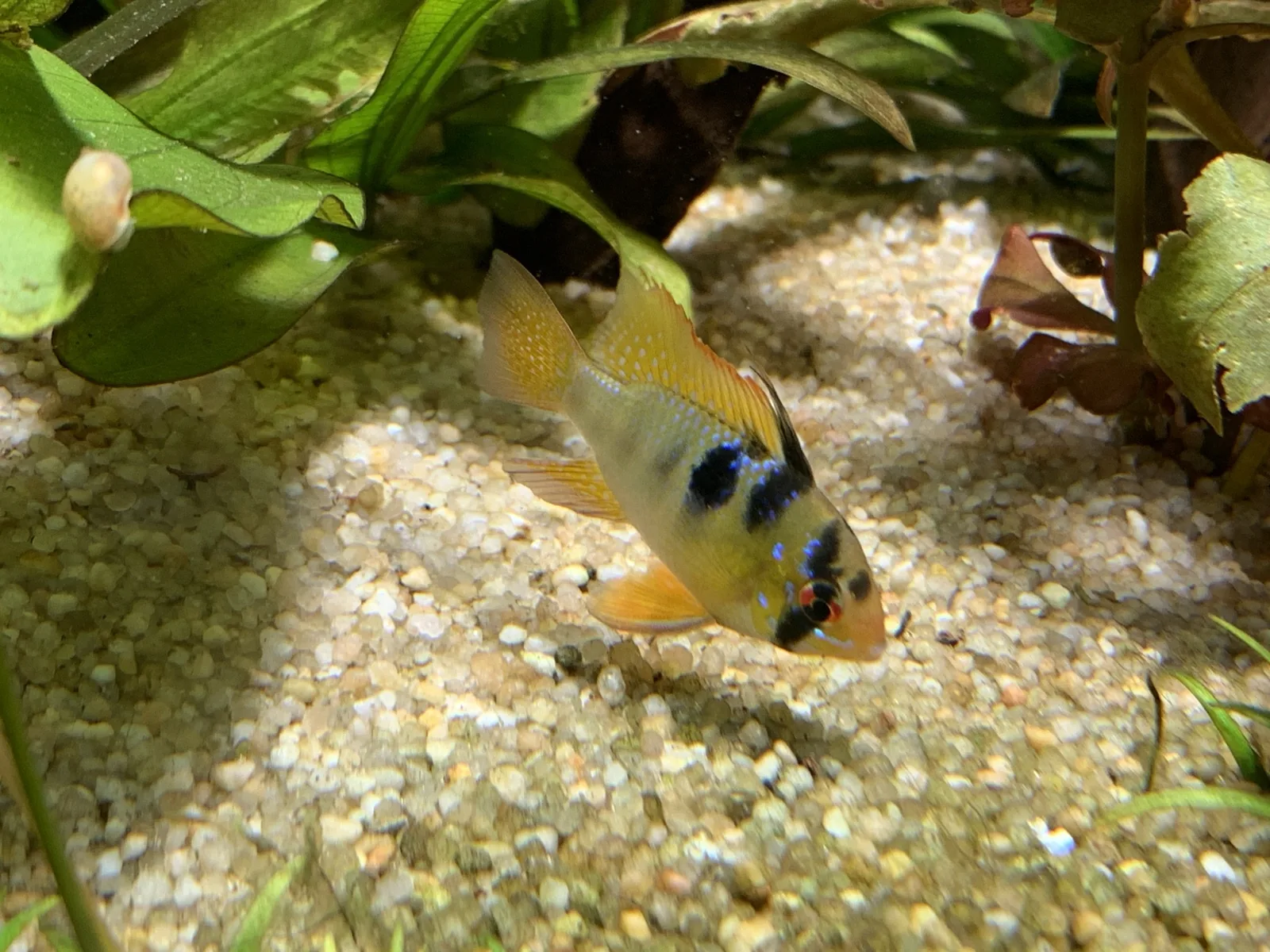
German Blue Ram (Mikrogeophagus ramirezi)
Chabe01 · CC BY-SA 4.0Source
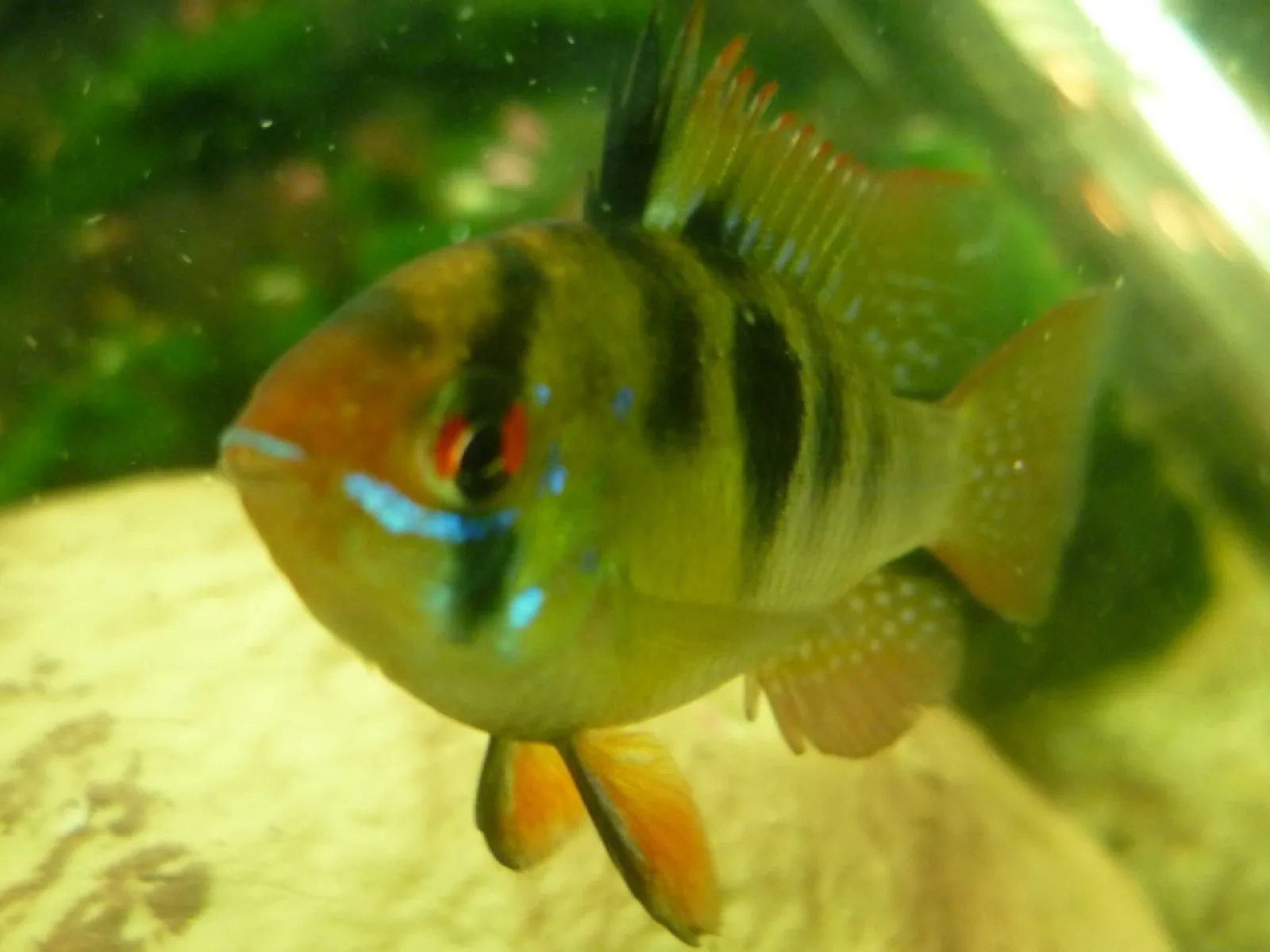
German Blue Ram (Mikrogeophagus ramirezi)
Aquakeeper14 · CC BY-SA 3.0Source
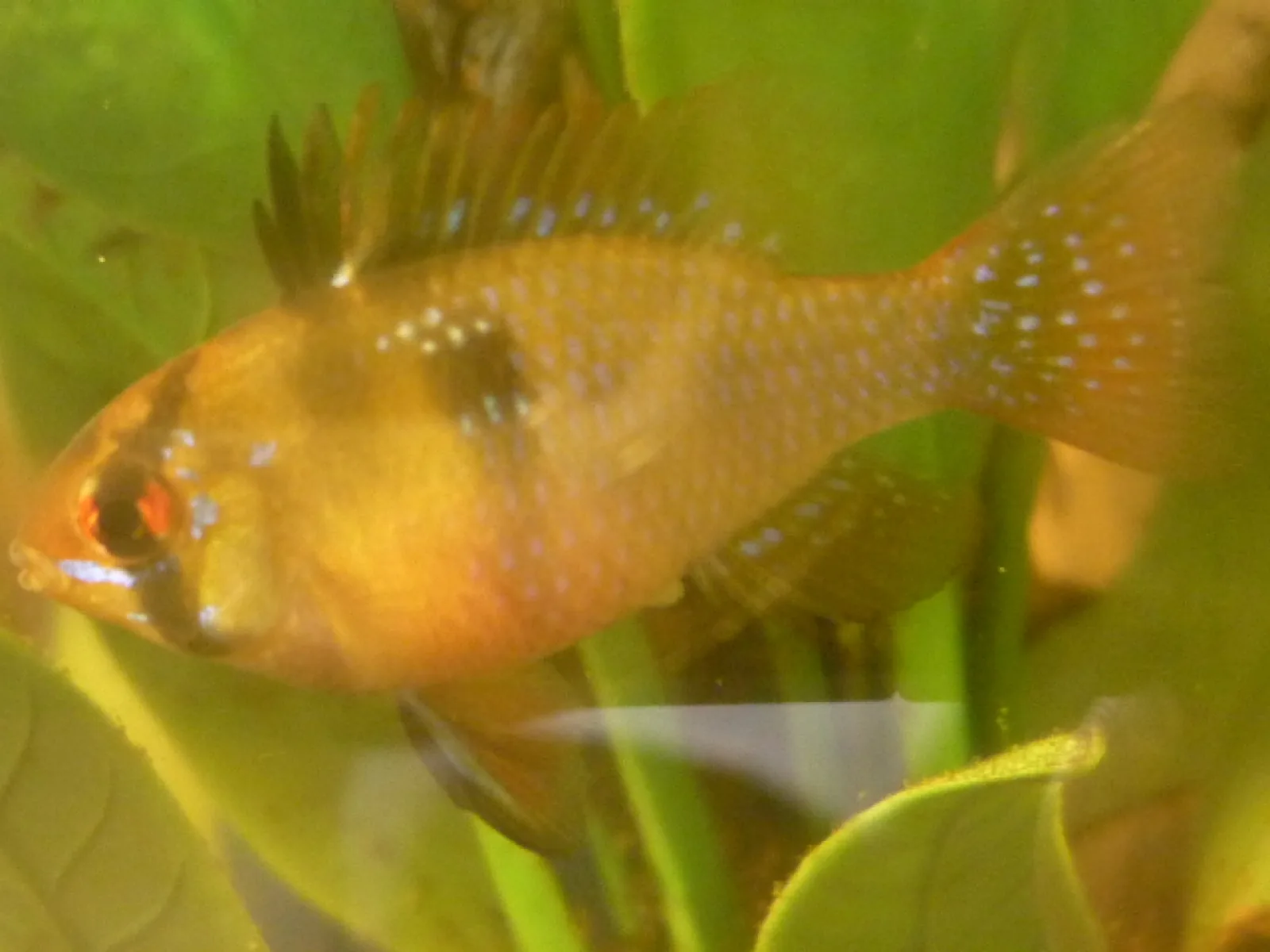
German Blue Ram (Mikrogeophagus ramirezi)
Aquakeeper14 · CC BY-SA 3.0Source
German Blue Ram (Mikrogeophagus ramirezi)
Aquakeeper14 · CC BY-SA 3.0Source

Hero photo by Sven Kullander · CC BY-SA 4.0 · Wikipedia

Tank fit

The parameters that decide whether german blue ram fits in your tank.

Parameters

Temperature26–30 °C
15 °C20 °C25 °C30 °C
pH5.0–7.0
4.05.06.07.08.0
Hardness1–8 dGH
0 dGH5 dGH10 dGH15 dGH20 dGH25 dGH
Adult size5–7 cm
0481115
Water column

Mid to Bottom

Schooling

No

Keep as a bonded pair

FlowLow
Still
Low
Medium
High
V. high

Profile

Family

Cichlidae

Diet

Omnivore

Quality flake, micro pellets, frozen brine shrimp, bloodworms.

Lifespan

2–3 yrs

Breeding

Medium

Habitat

Warm shallow llanos pools of the Orinoco basin

Orinoco basin, Venezuela & Colombia

Who it lives with

Tank-mate safety and the species this one is documented to thrive (or fail) alongside.

Good tank mates

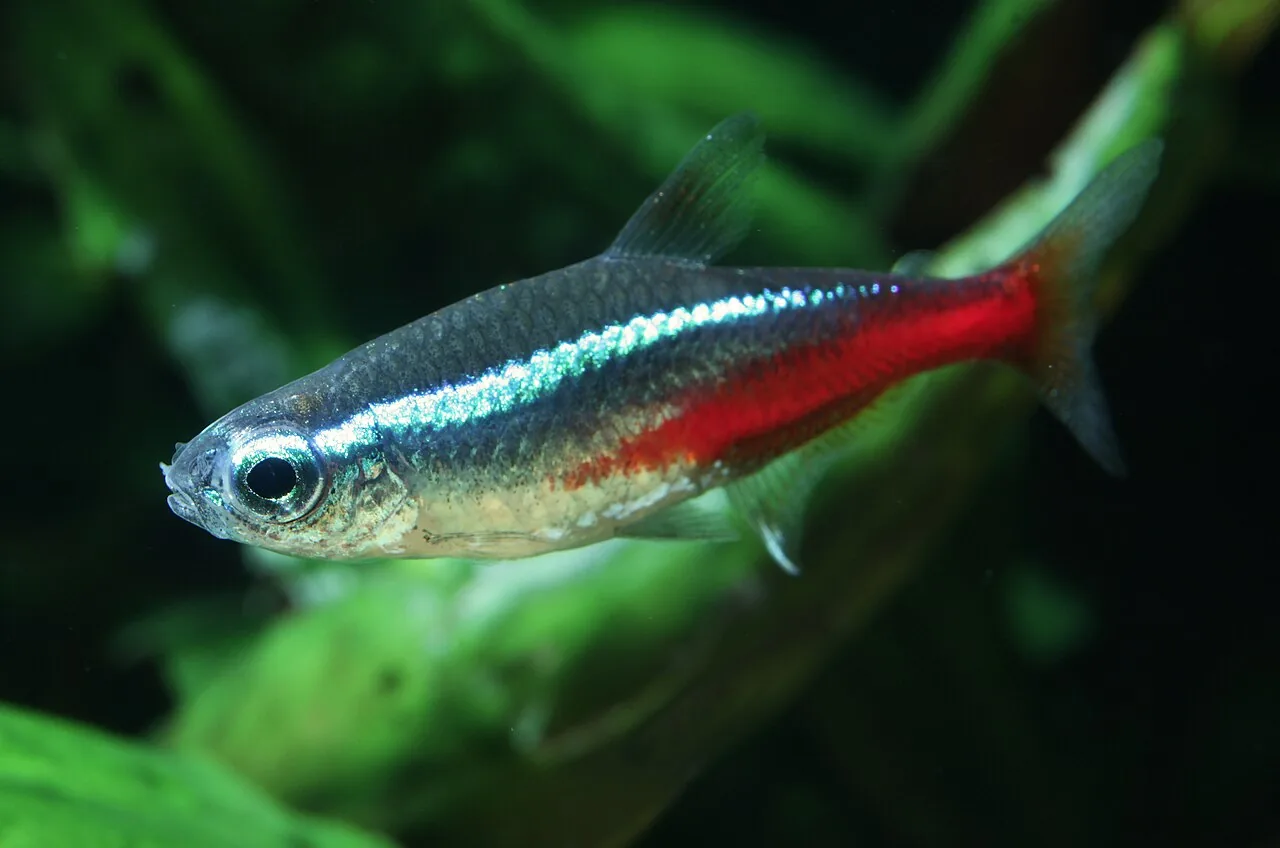
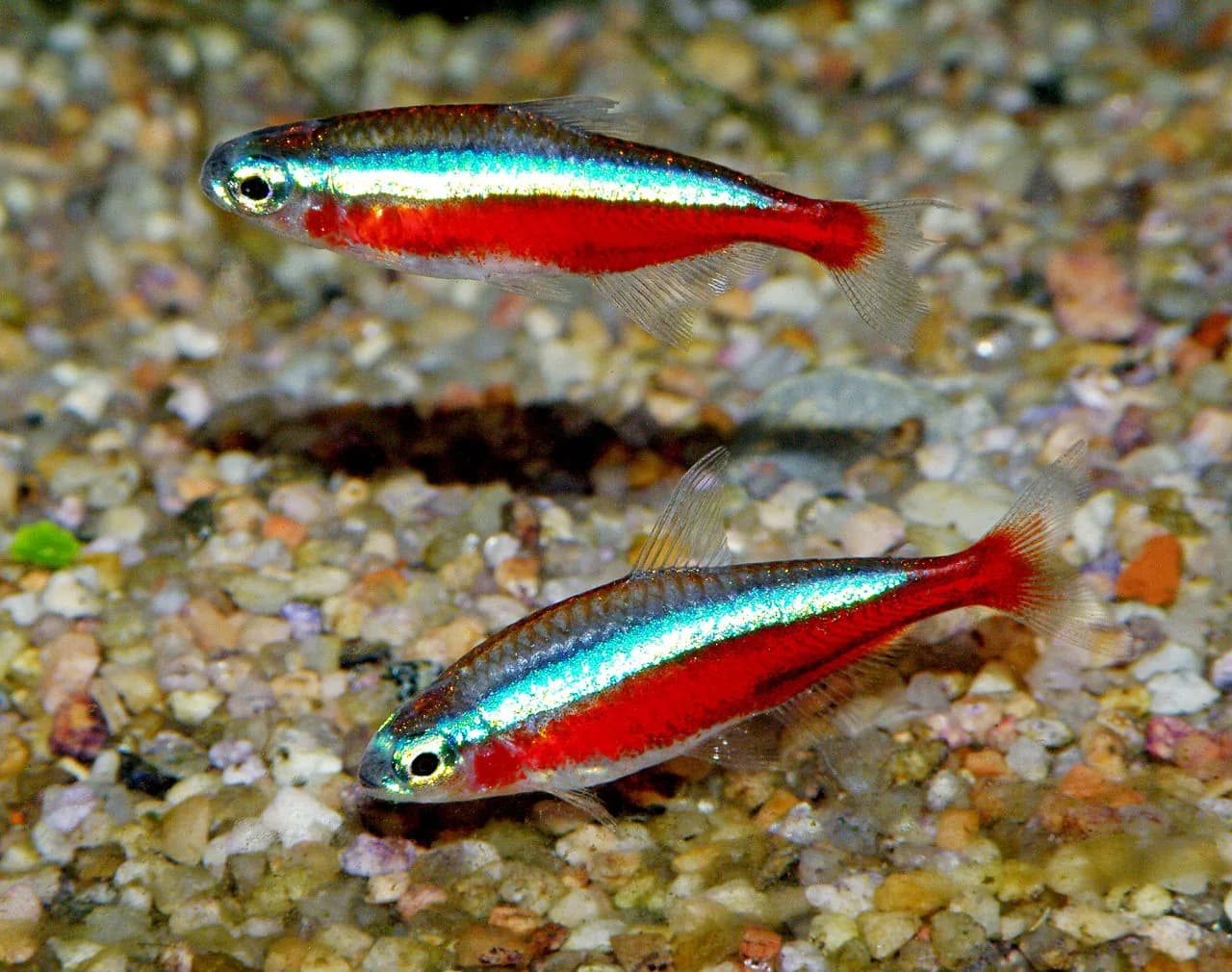
Cardinal tetras, rummynose tetras, corydoras (sterbai for the heat), hatchetfish, otocinclus. Best in a soft-water Amazon biotope.

Avoid

Other cichlids (territorial conflicts), boisterous fish, anything that nips fins during breeding.

See full compatibility cross-reference

Pro tips

Hard-won lessons from the tank.

Keep tank temp at 28–29 °C — this is non-negotiable for long-term health. Buy young juveniles (~2 cm) and let a pair form naturally; bonded pairs are far more stable than randomly paired adults. Watch for the 'shimmy' (rapid side-to-side motion) — it signals stress, usually parameter or nitrate issues.

Etymology

'Mikrogeophagus' = 'small earth-eater'. Species 'ramirezi' honours the collector Manuel Ramírez. 'German Blue' refers to a specific blue colour line bred in Germany.

Things to watch for

What can go wrong and how to spot it.

Things to watch for

Failure modes, in order of how dramatic the fix is.

Health

Common diseases

Sensitive to nitrate (>20 ppm), temperature swings, and stress. Susceptible to a wasting condition often called 'ram disease' that's likely a complex of stressors plus pathogens.

Often wrong

Misconceptions

NOT a beginner cichlid despite small size. They demand water quality, warmth, and stability that catches new keepers out. The 'community cichlid' label undersells how demanding they are.

How to care for it

The practical routine, read top to bottom.

  1. Tank setup

    75 L+ per pair, larger for community. Sand substrate, flat stones, driftwood, dense plants. Warm (28–30 °C), soft (<8 dGH), slightly acidic (pH 5.5–7.0). Excellent filtration with low flow.

  2. Quarantine

    4 weeks. Watch for slow-onset wasting that can take weeks to appear.

Background

Where it comes from, how it behaves, and the variants you'll see at retail.

Show background

In the wild

Where it lived before it came home.

Native rangeOrinoco basinColombiaVenezuela
Origin · Orinoco basin, Venezuela & Colombia

Orinoco basin floodplains in Venezuela and Colombia. Warm (27–32 °C in dry season), soft, acidic, slow-moving water with sandy substrate and dense submerged structure.

Wild diet

Insect larvae, small crustaceans, plant matter, biofilm.

Conservation status

Wild populations not threatened; aquarium stock entirely farmed.

Behavior & breeding

How they pair, reproduce, and grow.

  1. Stage 1
    Telling them apart

    Sexing

    Males have first ray of dorsal fin elongated and pointed. Females have a pink/purple flush on belly, especially when in spawning condition. Black flank spot has metallic scales in males, plain in females.

  2. Stage 2
    Pairing & spawning

    Breeding

    Substrate spawners on flat stones or broad leaves. Both parents tend eggs and fry. Soft acidic water, 28–30 °C, very stable conditions. Fry are tiny; first food microworms and powder fry food. Pair-bonded — they need to choose each other; buy 6 juveniles and let them pair off.

Variants & identification

The named cultivars and the lookalikes worth flagging.

Color forms

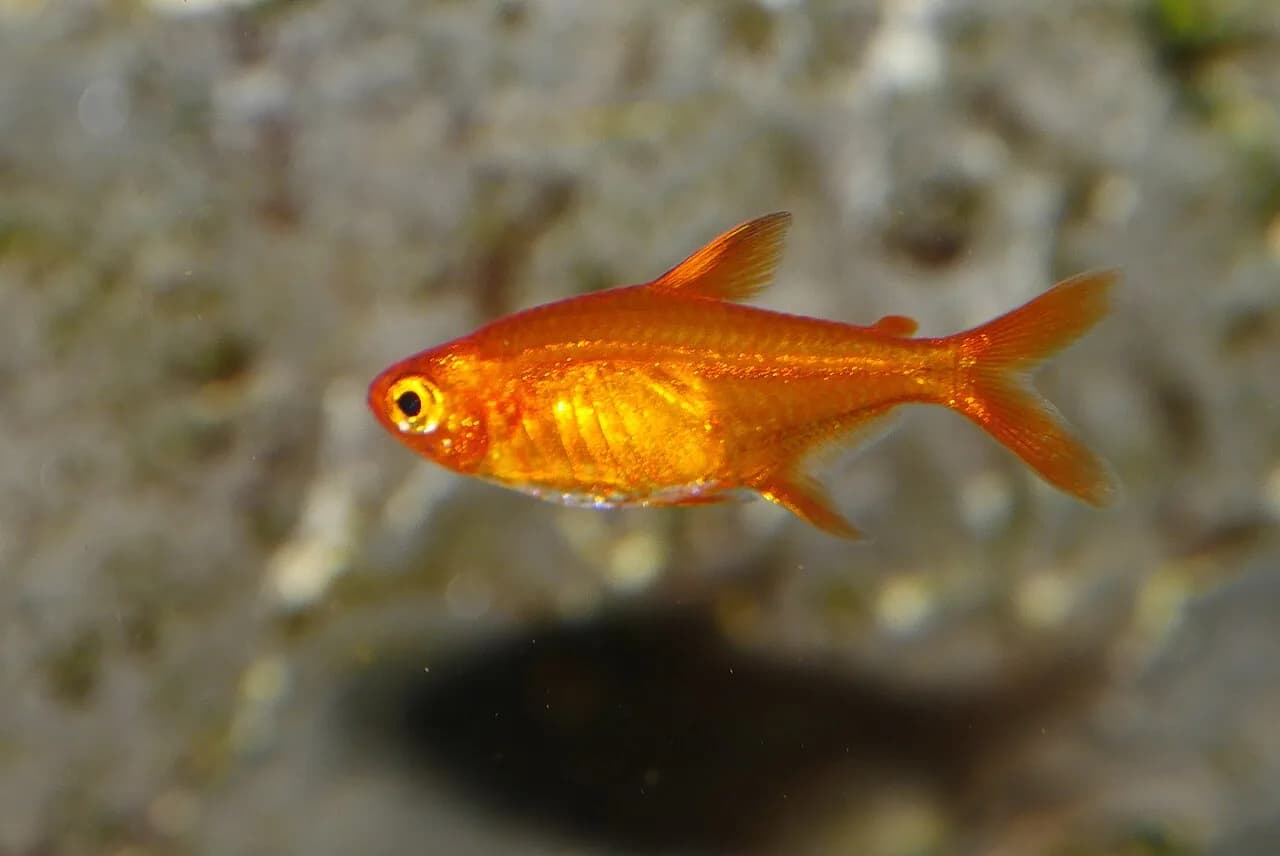
Wild German Blue, Electric Blue Ram, Gold Ram, Long-fin variants, Balloon Ram (avoid — deformed body shape). Quality varies hugely; mass-farmed Asian rams are often weak.

Frequently asked questions

Direct answers to the questions search engines and AI assistants surface most often about this species.

What is the minimum tank size for German Blue Ram?

German Blue Ram (Mikrogeophagus ramirezi) needs a minimum tank of 75 L (pair). They live in the mid to bottom water column and should be kept in groups of 2+, so a longer footprint matters more than depth.

What water parameters do German Blue Ram need?

Target 26–30 °C, pH 5.0–7.0, and 1–8 dGH hardness. Acclimate slowly when moving them between water sources.

Are German Blue Ram safe with shrimp?

Shrimp safety: Risky with dwarf shrimp. Plant safety: Yes.

What do German Blue Ram eat?

German Blue Ram are omnivore. Quality flake, micro pellets, frozen brine shrimp, bloodworms.

Are German Blue Ram beginner-friendly?

On Fin & Stem's 1–5 difficulty scale this species rates 4/5. Advanced, demands dialled-in CO₂/dosing or precise water chemistry. Breeding difficulty: medium.

How long do German Blue Ram live?

Typical lifespan in a well-maintained tank is 2–3 years.

Sources & further reading

Cross-references

Build the rest of the tank.

A planted tank is a system. Pair this fish with one entry from each other pillar to plan the whole scape.