Fin & Stem logo
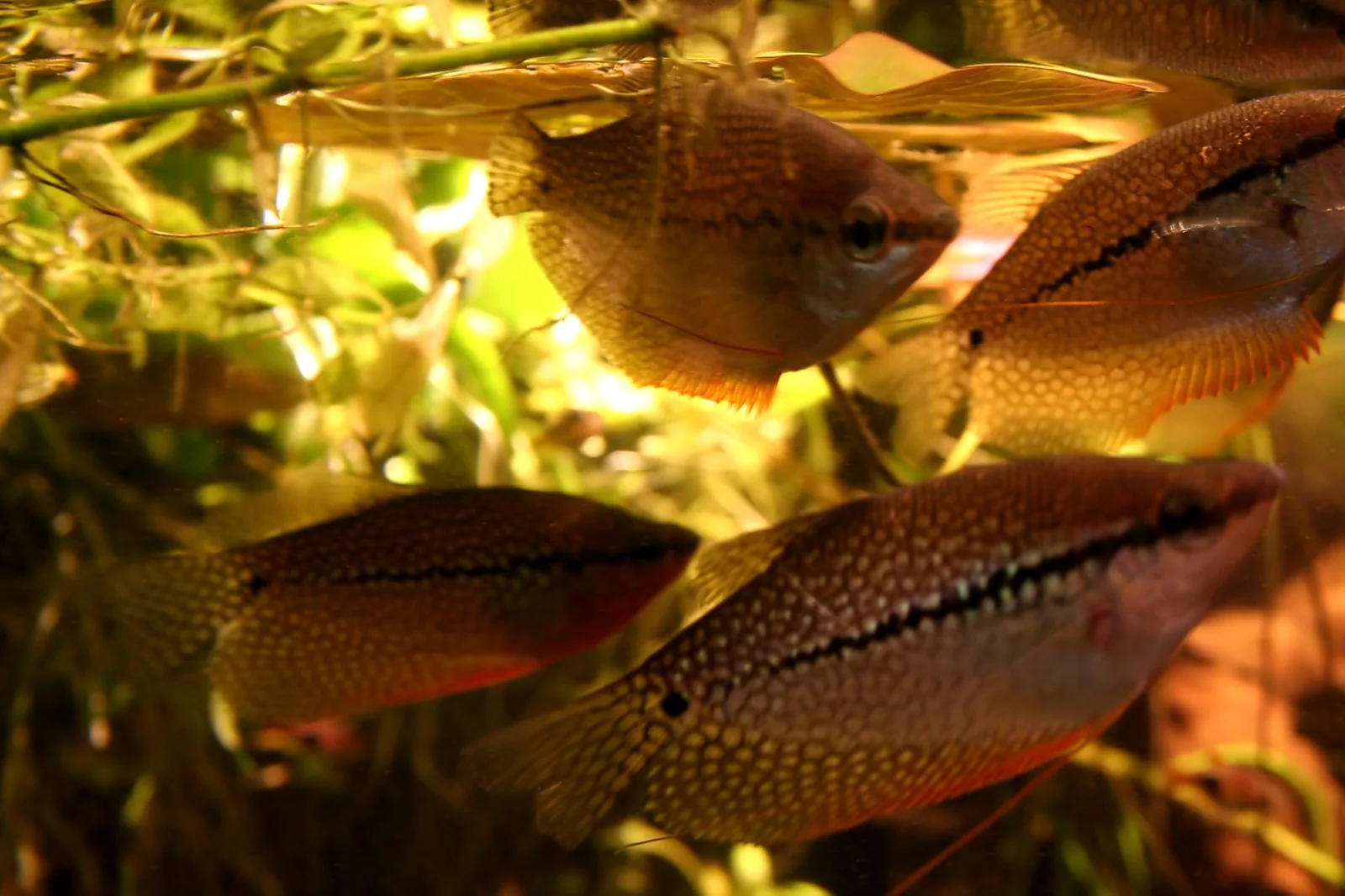
Pearl Gourami (Trichopodus leerii)
Fish

Pearl Gourami

Trichopodus leerii

Southeast Asia (Malay Peninsula, Sumatra, Borneo)Easy

TL;DR, Pearl Gourami

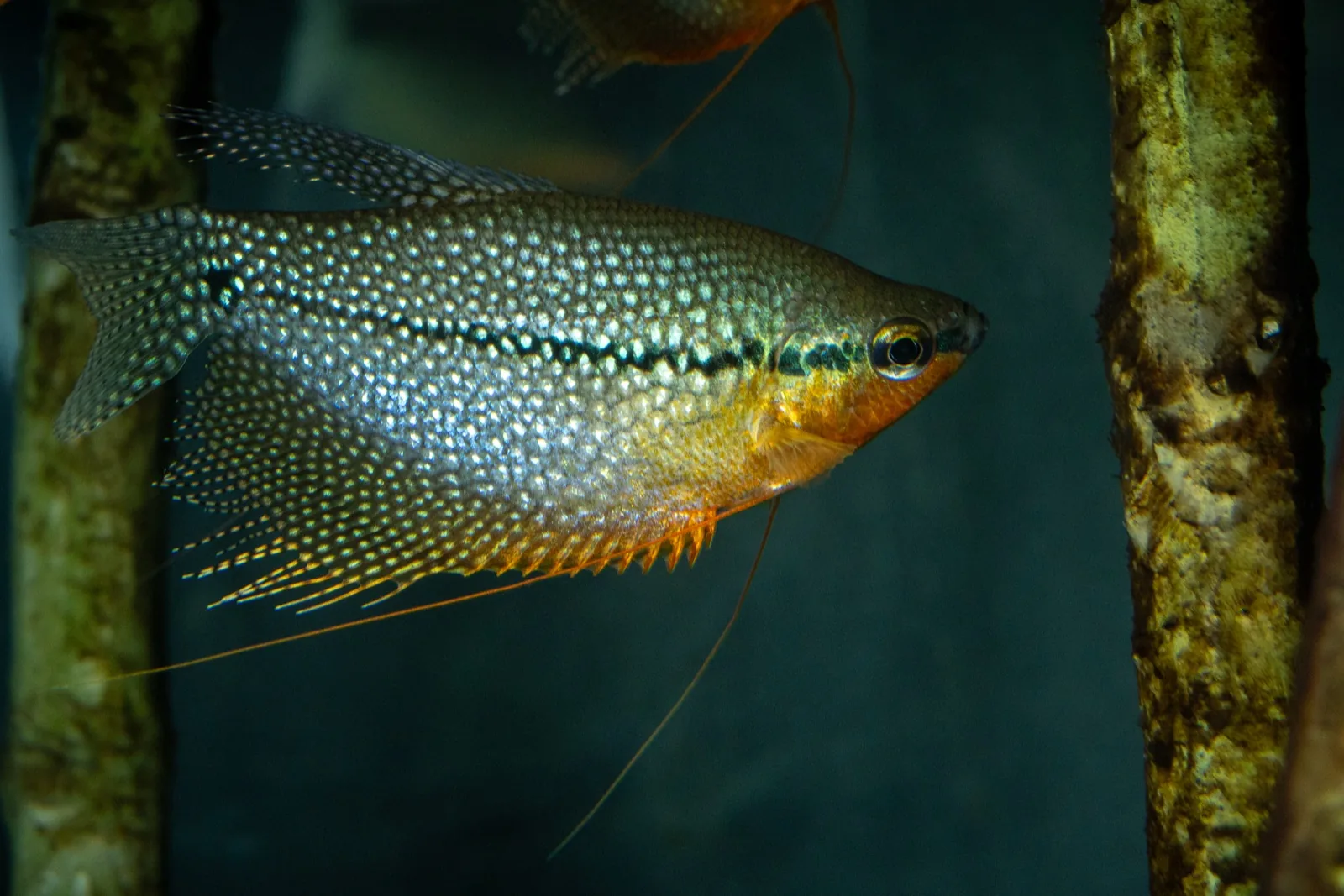
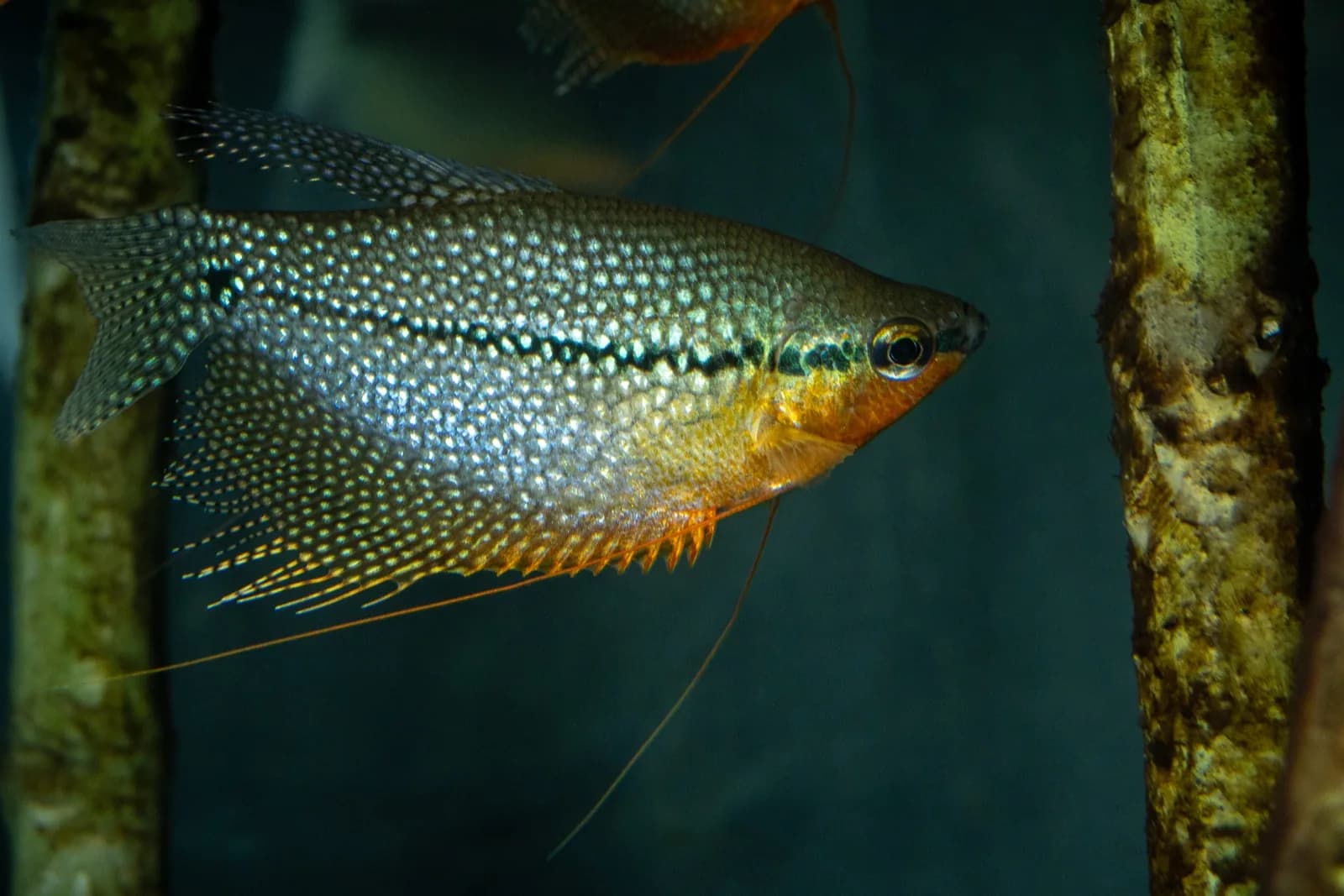
The centrepiece gourami, fully grown males develop coppery throats, extended pelvic feelers, and pearl-spotted bodies. Genuinely peaceful when kept as 1 male + 2 females. Needs a tall tank for vertical territorial display and surface access for the labyrinth organ.

Pearl Gourami (Trichopodus leerii) reaches 10–12 cm as an adult and needs a minimum tank of 150 L. Native to Southeast Asia (Malay Peninsula, Sumatra, Borneo), it lives in the mid to top water column with a peaceful temperament. Aim for 24–28 °C, pH 5.5–7.5, and 2–15 dGH hardness. Lifespan is 4–8 years with good care. Keep pearl gourami in groups of 2+, pair or trio schoolers need numbers to display natural behaviour. Diet: omnivore, Flake, pellets, frozen bloodworms, mosquito larvae, blanched veg. Plant-safe: Yes. Shrimp-safe: Mostly (may eat very small shrimp).

  • Min tank150 L
  • TemperamentPeaceful
  • Plant-safeYes
  • Shrimp-safeMostly (may eat very small shrimp)

Care at a glance

The centrepiece gourami, fully grown males develop coppery throats, extended pelvic feelers, and pearl-spotted bodies. Genuinely peaceful when kept as 1 male + 2 females. Needs a tall tank for vertical territorial display and surface access for the labyrinth organ.

By Updated 2 min read

Part of our complete guide to aquarium fish for the planted tank.

Pearl Gourami (Trichopodus leerii)
Mattia Nocciola · CC BY-SA 4.0Source
Pearl Gourami (Trichopodus leerii)
Rakesh from Bangalore · CC BY-SA 2.0Source
Pearl Gourami (Trichopodus leerii)
G.Garitan · CC BY-SA 4.0Source
Pearl Gourami (Trichopodus leerii)
Phalinn Ooi from Kuala Lumpur, Malaysia · CC BY 2.0Source
Pearl Gourami (Trichopodus leerii)
Phalinn Ooi from Kuala Lumpur, Malaysia · CC BY 2.0Source

Hero photo by Mattia Nocciola · CC BY-SA 4.0 · Wikipedia

Tank fit

The parameters that decide whether pearl gourami fits in your tank.

Parameters

Temperature24–28 °C
15 °C20 °C25 °C30 °C
pH5.5–7.5
4.05.06.07.08.0
Hardness2–15 dGH
0 dGH5 dGH10 dGH15 dGH20 dGH25 dGH
Adult size10–12 cm
0481115
Water column

Mid to Top

Schooling

No

Best as a pair or trio

FlowStill to Low
Still
Low
Medium
High
V. high

Profile

Family

Osphronemidae

Diet

Omnivore

Flake, pellets, frozen bloodworms, mosquito larvae, blanched veg.

Lifespan

4–8 yrs

Breeding

Medium (bubble-nester)

Habitat

Acidic lowland swamps and peat bogs of Borneo

Southeast Asia (Malay Peninsula, Sumatra, Borneo)

Who it lives with

Tank-mate safety and the species this one is documented to thrive (or fail) alongside.

Good tank mates

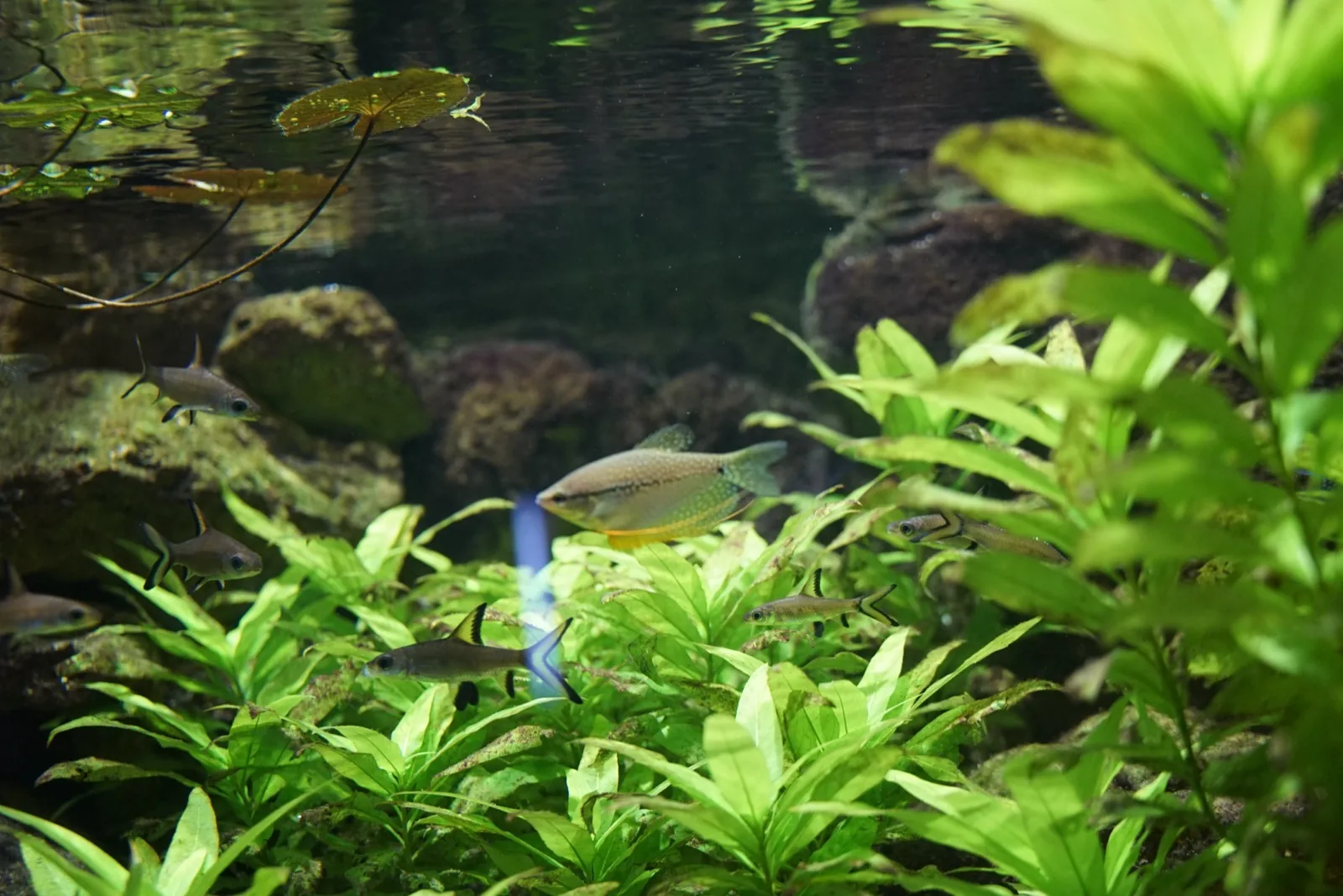
Community fish at similar size or smaller — harlequin rasboras, cardinal tetras, corydoras, otocinclus, kuhli loaches.

Avoid

Other large gouramis (territorial conflicts), aggressive species, fin-nippers, cichlids that compete for mid-water territory.

See full compatibility cross-reference

Pro tips

Hard-won lessons from the tank.

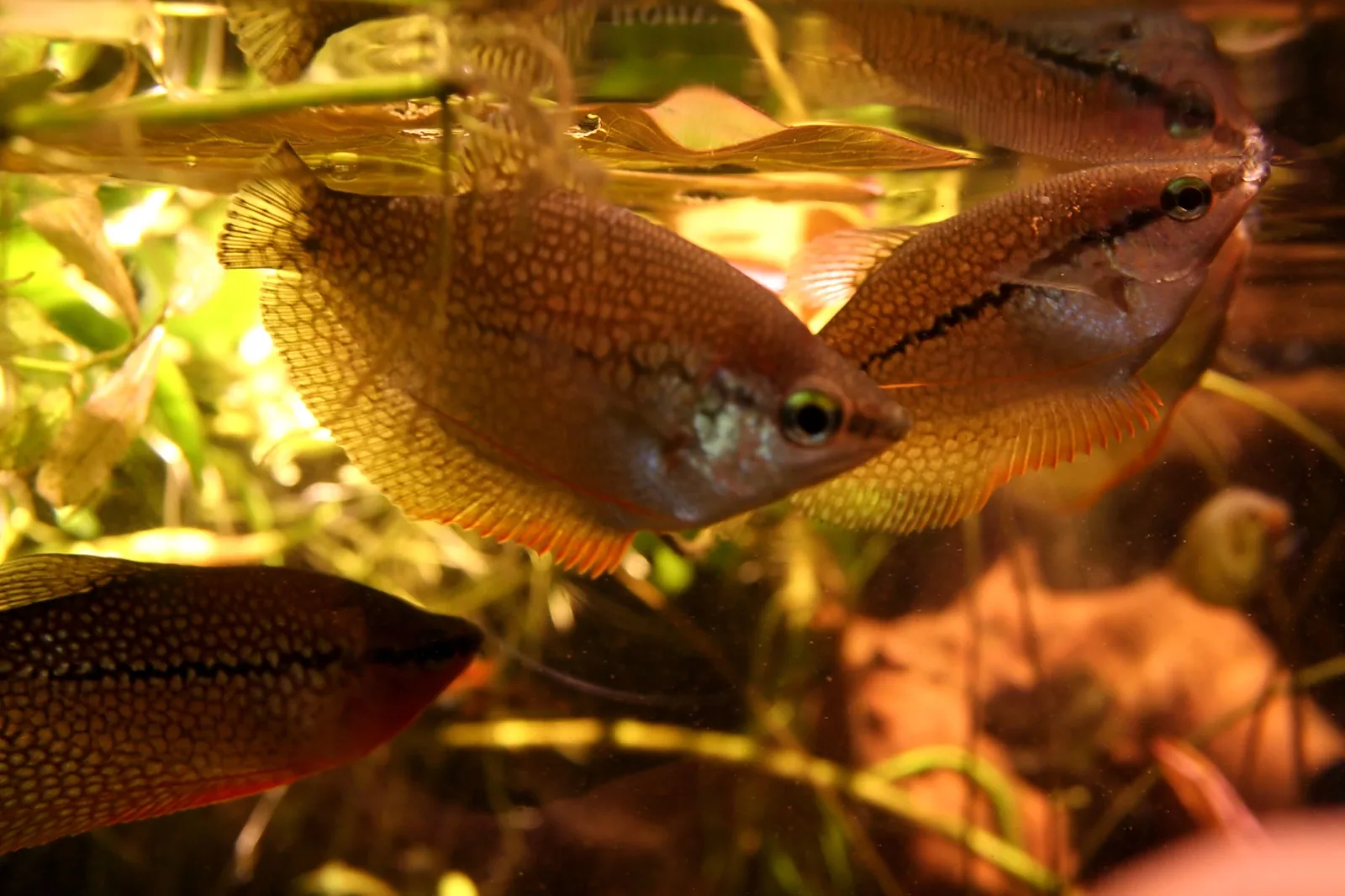
The pelvic 'feelers' are sensory organs — males stroke courting females with them. In a tall planted tank with one male and two females, courtship displays are continuous and fascinating. Pearl gouramis live 5+ years in good care; one of the longer-lived commonly-sold tropical fish.

Etymology

Genus 'Trichopodus' = 'hair foot' for the elongated pelvic 'feelers'. Species 'leerii' honours German aquarist Heinrich van der Leer.

Things to watch for

What can go wrong and how to spot it.

Things to watch for

Failure modes, in order of how dramatic the fix is.

Health

Common diseases

Susceptible to bacterial infections in dirty water and the labyrinth-organ chilling that affects all gouramis from cold air. Always keep a lid; the air above the water needs to stay warm.

Often wrong

Misconceptions

Mature pearl gouramis are spectacular but the juveniles in shop tanks look unimpressive — silver fish with vague spots. Buy them young and watch the transformation over 6–9 months as the spots sharpen and the male's throat colours up.

How to care for it

The practical routine, read top to bottom.

  1. Tank setup

    150 L+. Tall tank for vertical territorial display. Heavy planting along the back and edges with open mid-water swimming. Surface plants for security. Tannins from catappa leaves. Sponge or low-flow canister filter.

  2. Quarantine

    3 weeks. Provide cover.

Background

Where it comes from, how it behaves, and the variants you'll see at retail.

Show background

In the wild

Where it lived before it came home.

Native rangeMalay PeninsulaSumatraBorneoSoutheast Asia
Origin · Southeast Asia (Malay Peninsula, Sumatra, Borneo)

Slow lowland swamps, ditches, and forest pools across the Malay Peninsula, Sumatra, and Borneo. Tannin-stained soft acidic water with dense surface and edge vegetation.

Wild diet

Insect larvae, small crustaceans, biofilm, occasional plant matter. Surface and mid-water feeders.

Conservation status

Habitat loss is a real concern across Southeast Asia. Most stock is captive-bred in Asian fish farms.

Behavior & breeding

How they pair, reproduce, and grow.

  1. Stage 1
    Telling them apart

    Sexing

    Males have a coppery-orange throat (intensifying in breeding condition) and extended dorsal rays. Females stay silver-white with shorter dorsal fins. Both sexes show the pearl-spotted body pattern.

  2. Stage 2
    Pairing & spawning

    Breeding

    Bubble-nesters. Male builds a small nest under floating plants. Soft acidic water at 27–29 °C, very low flow. After spawning, male guards the nest aggressively — remove the female. Fry are tiny and need infusoria for the first week.

Variants & identification

The named cultivars and the lookalikes worth flagging.

Color forms

Wild type. Occasional 'mosaic gourami' (T. leerii) selectively bred for more uniform spotting. Avoid dyed variants.

Frequently asked questions

Direct answers to the questions search engines and AI assistants surface most often about this species.

What is the minimum tank size for Pearl Gourami?

Pearl Gourami (Trichopodus leerii) needs a minimum tank of 150 L. They live in the mid to top water column and should be kept in groups of 2+, so a longer footprint matters more than depth.

What water parameters do Pearl Gourami need?

Target 24–28 °C, pH 5.5–7.5, and 2–15 dGH hardness. Acclimate slowly when moving them between water sources.

Are Pearl Gourami safe with shrimp?

Shrimp safety: Mostly (may eat very small shrimp). Plant safety: Yes.

What do Pearl Gourami eat?

Pearl Gourami are omnivore. Flake, pellets, frozen bloodworms, mosquito larvae, blanched veg.

Are Pearl Gourami beginner-friendly?

On Fin & Stem's 1–5 difficulty scale this species rates 2/5. Forgiving, beginner-friendly once the tank is cycled. Breeding difficulty: medium (bubble-nester).

How long do Pearl Gourami live?

Typical lifespan in a well-maintained tank is 4–8 years.

Sources & further reading

Cross-references

Build the rest of the tank.

A planted tank is a system. Pair this fish with one entry from each other pillar to plan the whole scape.