Fin & Stem logo
Cockatoo Dwarf Cichlid (Apistogramma cacatuoides)
Fish

Cockatoo Dwarf Cichlid

Apistogramma cacatuoides

Upper Amazon basin, Peru & BrazilIntermediate

TL;DR, Cockatoo Dwarf Cichlid

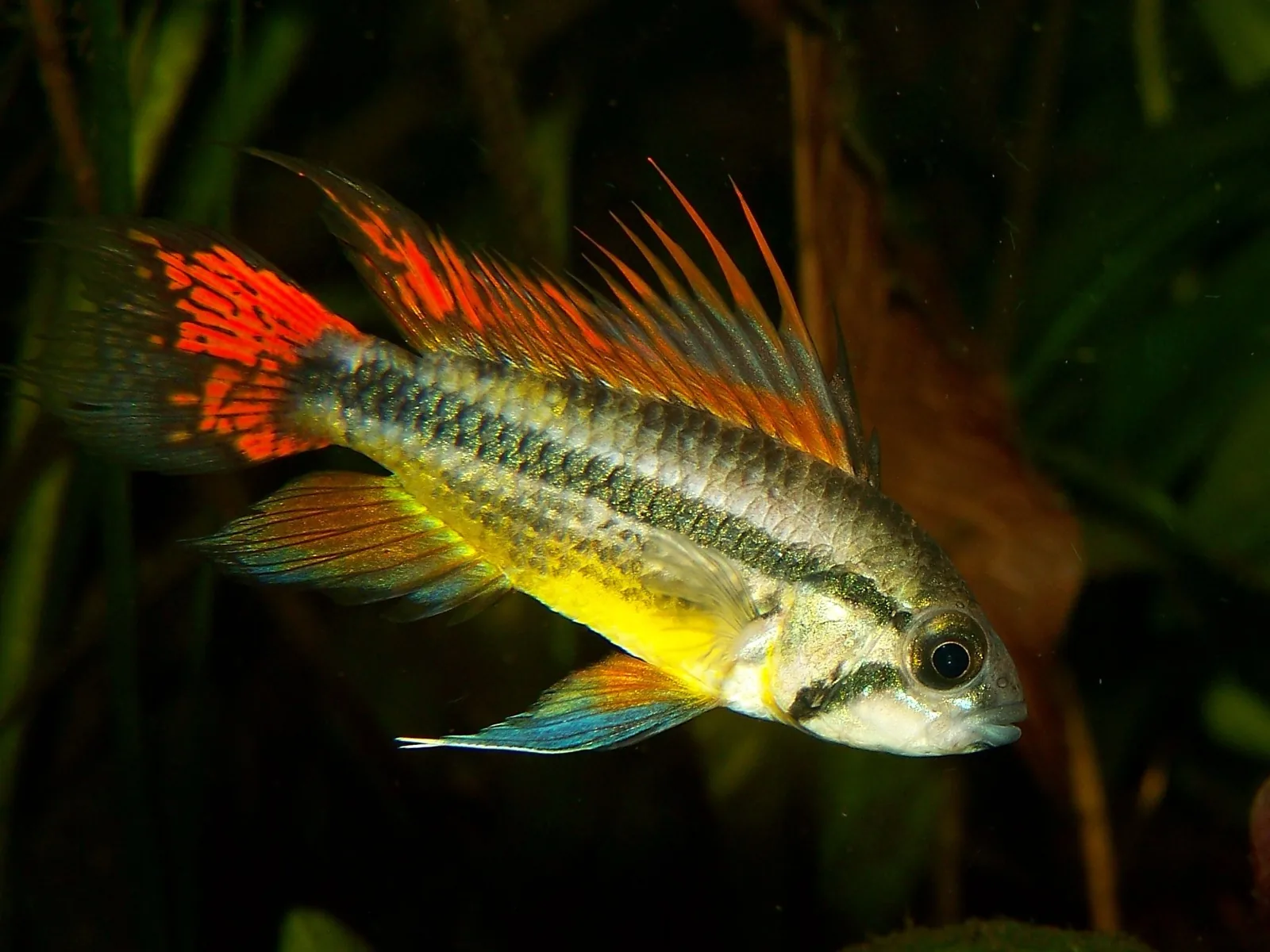
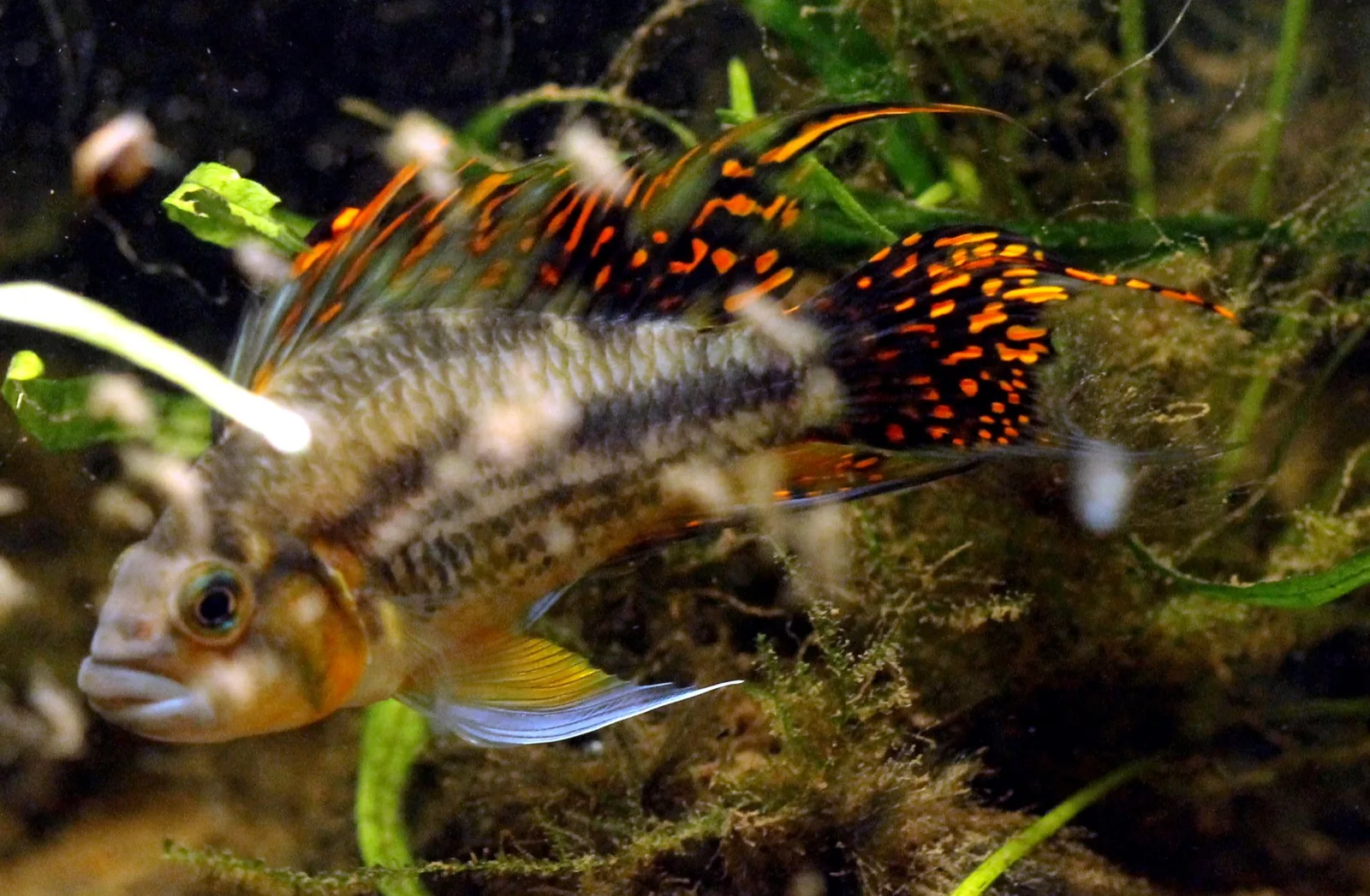
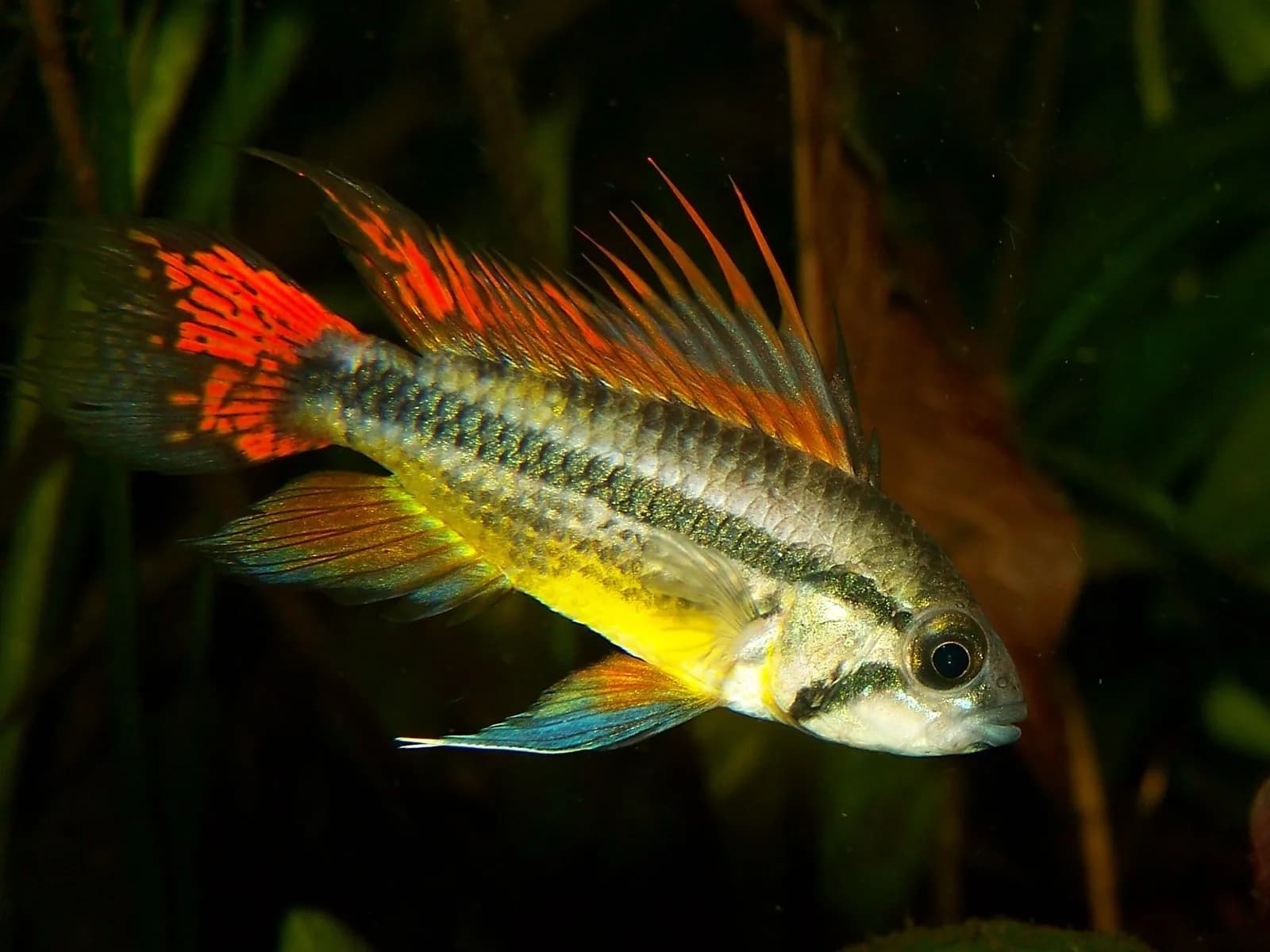
Far more forgiving than rams and just as charismatic. Males flare extended dorsal rays like a cockatoo crest. Harem-breeding species, give each female her own cave (half coconut shell, terracotta pot).

Cockatoo Dwarf Cichlid (Apistogramma cacatuoides) reaches 6–8 cm (male), 4–5 cm (female) as an adult and needs a minimum tank of 75 L (pair). Native to Upper Amazon basin, Peru & Brazil, it lives in the mid to bottom water column with a peaceful (territorial when breeding) temperament. Aim for 24–28 °C, pH 5.5–7.5, and 2–15 dGH hardness. Lifespan is 3–5 years with good care. Keep cockatoo dwarf cichlid in groups of 2+, harem (1 male, 2–3 females) schoolers need numbers to display natural behaviour. Diet: carnivore, Frozen bloodworms, brine shrimp, micro pellets. Live food triggers breeding behaviour. Plant-safe: Yes. Shrimp-safe: Risky with dwarf shrimp.

  • Min tank75 L (pair)
  • TemperamentPeaceful (territorial when breeding)
  • Plant-safeYes
  • Shrimp-safeRisky with dwarf shrimp

Care at a glance

Far more forgiving than rams and just as charismatic. Males flare extended dorsal rays like a cockatoo crest. Harem-breeding species, give each female her own cave (half coconut shell, terracotta pot).

By Updated 3 min read

Part of our complete guide to aquarium fish for the planted tank.

Cockatoo Dwarf Cichlid (Apistogramma cacatuoides)
William Kreijkes · CC BY-SA 3.0Source
Cockatoo Dwarf Cichlid (Apistogramma cacatuoides)
Waylah · CC BY-SA 3.0Source
Cockatoo Dwarf Cichlid (Apistogramma cacatuoides)
Britzke · CC BY-SA 2.0Source
Cockatoo Dwarf Cichlid (Apistogramma cacatuoides)
Suiso · Public domainSource
Cockatoo Dwarf Cichlid (Apistogramma cacatuoides)
Made be Uploader · CC BY-SA 3.0Source

Hero photo by William Kreijkes · CC BY-SA 3.0 · Wikipedia

Tank fit

The parameters that decide whether cockatoo dwarf cichlid fits in your tank.

Parameters

Temperature24–28 °C
15 °C20 °C25 °C30 °C
pH5.5–7.5
4.05.06.07.08.0
Hardness2–15 dGH
0 dGH5 dGH10 dGH15 dGH20 dGH25 dGH
Adult size6–8 cm
0481115
Water column

Mid to Bottom

Schooling

No

Harem · 1 male, 2–3 females

FlowLow
Still
Low
Medium
High
V. high

Profile

Family

Cichlidae

Diet

Carnivore

Frozen bloodworms, brine shrimp, micro pellets. Live food triggers breeding behaviour.

Lifespan

3–5 yrs

Breeding

Easy

Habitat

Leaf-littered Amazonian forest streams and floodplains

Upper Amazon basin, Peru & Brazil

Who it lives with

Tank-mate safety and the species this one is documented to thrive (or fail) alongside.

Good tank mates

Mid- and upper-level dither fish like cardinal tetras, rummynose tetras, hatchetfish. Otocinclus for algae. Sterbai corydoras tolerate the warm water.

Avoid

Other dwarf cichlids (territorial overlap), anything that competes for caves, fin-nipping species. Will eat dwarf shrimp.

See full compatibility cross-reference

Pro tips

Hard-won lessons from the tank.

Buy 6–8 juveniles unsexed and let pairs form naturally — bonded pairs are far more stable than randomly paired adults. Once a pair spawns, the male's role is essentially perimeter defence; expect him to chase ALL other fish during fry-rearing. Plant the tank dense enough that dither fish always have escape routes.

Etymology

Genus 'Apistogramma' = 'unreliable line' (refers to incomplete lateral-line scales). Species 'cacatuoides' = 'like a cockatoo' — for the male's flared dorsal rays.

Things to watch for

What can go wrong and how to spot it.

Things to watch for

Failure modes, in order of how dramatic the fix is.

Health

Common diseases

Robust compared to rams. Sensitive to nitrate above 30 ppm. Watch for hexamita ('hole-in-the-head') in chronically stressed or poor-water individuals; treat with metronidazole.

Often wrong

Misconceptions

Often described as a 'beginner cichlid' — they ARE forgiving but they're still cichlids with territorial demands. A male and a single female often ends with the female harassed to death; harem stocking with multiple females and caves spreads aggression.

How to care for it

The practical routine, read top to bottom.

  1. Tank setup

    75 L+ for a single pair; 120 L+ for harem of 1 male and 2–3 females. Soft fine sand substrate, heavy planting, multiple caves spaced apart (terracotta pots, half coconut shells, dedicated breeding caves). Leaf litter and tannins. Sponge or low-flow filter.

  2. Quarantine

    4 weeks. Observe for hexamita signs (pitted forehead, white stringy faeces) and finrot.

Background

Where it comes from, how it behaves, and the variants you'll see at retail.

Show background

In the wild

Where it lived before it came home.

Native rangeUpper Amazon basinPeruBrazil
Origin · Upper Amazon basin, Peru & Brazil

Shaded forest streams and floodplain pools across the western Amazon basin in Peru, Colombia, and Brazil. Soft to moderately hard water, slightly acidic to neutral, with leaf litter, sunken wood, and abundant cover.

Wild diet

Insect larvae, small crustaceans, fallen invertebrates. Carnivorous — micropredator.

Conservation status

Not threatened. Captive-bred globally; wild-collected specimens are rare in the trade.

Behavior & breeding

How they pair, reproduce, and grow.

  1. Stage 1
    Telling them apart

    Sexing

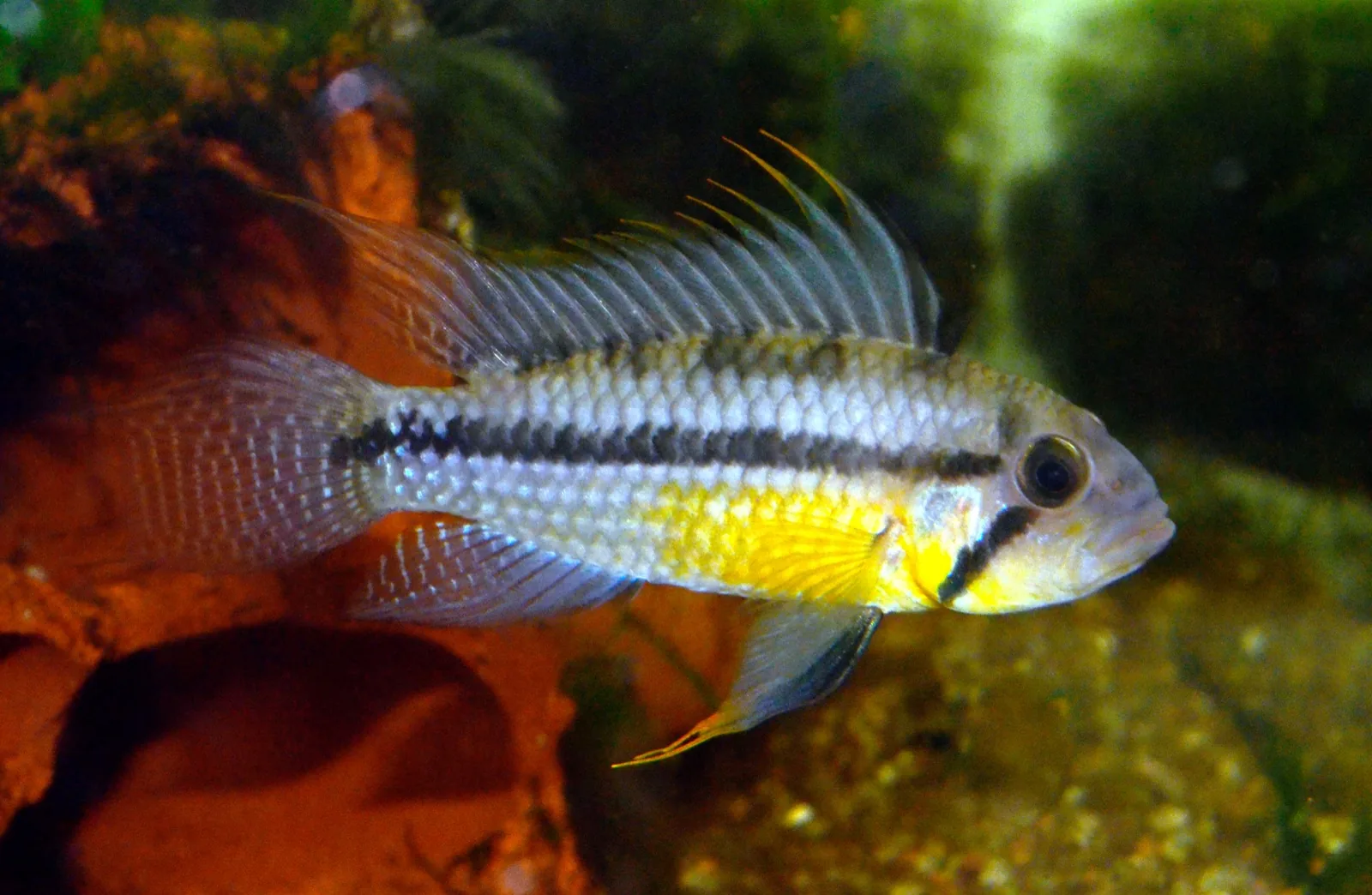
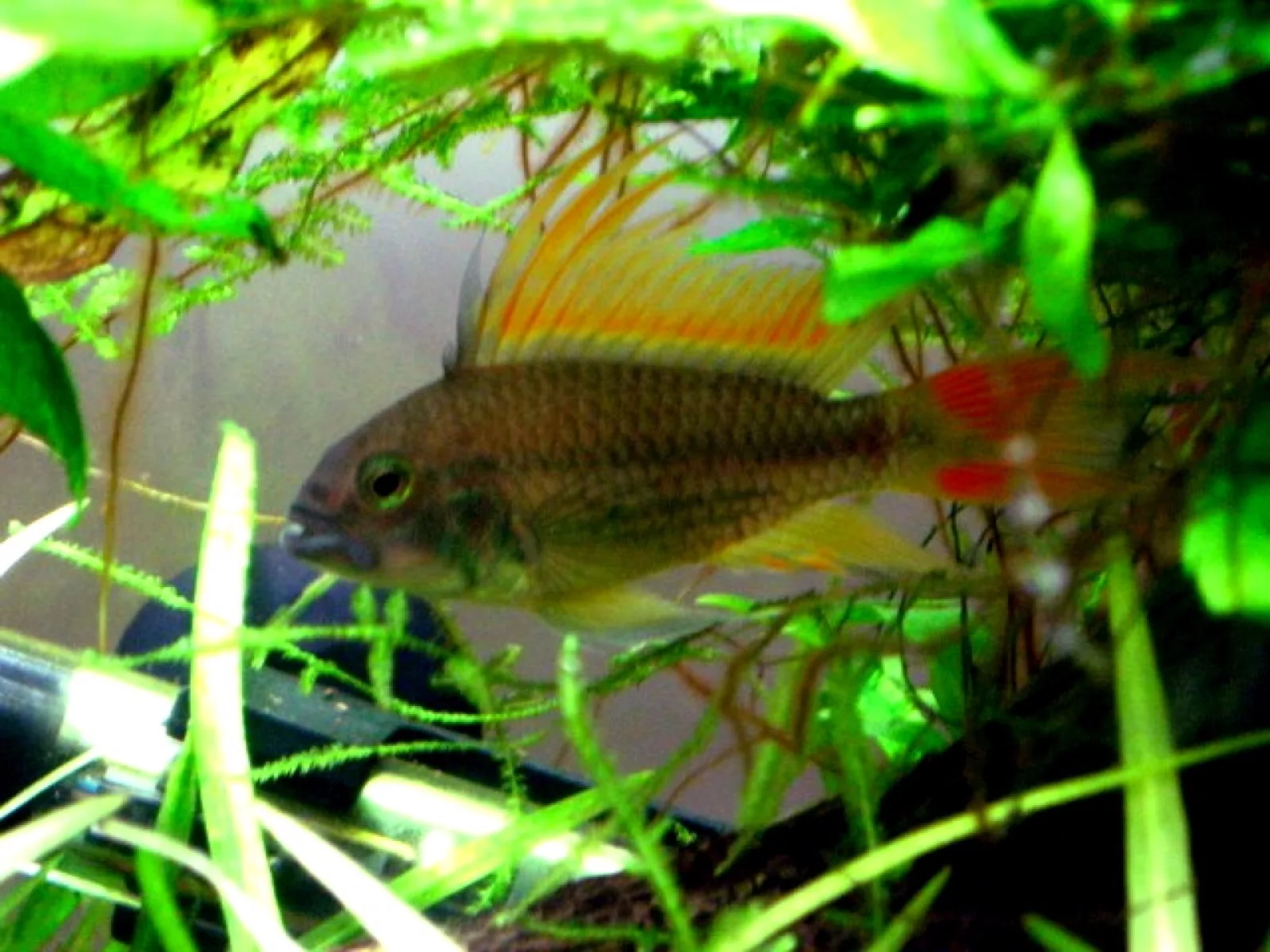
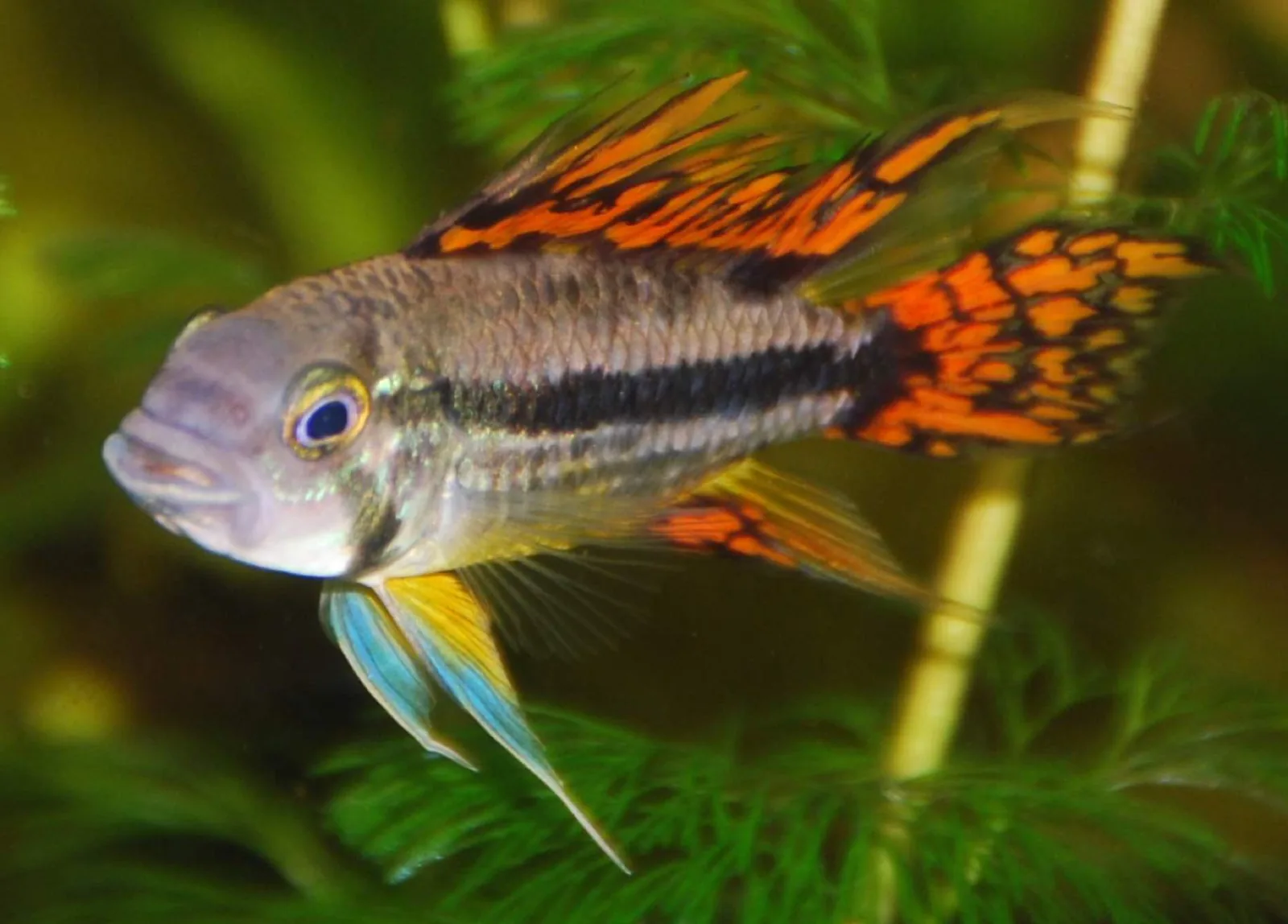
    Extreme sexual dimorphism. Males are 6–8 cm with elongated extended dorsal rays (the 'cockatoo crest'), large lyre-shaped caudal fin, and intense orange/red/yellow colour depending on line. Females are 4–5 cm, pale brown-grey out of breeding, neon-yellow with black accents when defending eggs.

  2. Stage 2
    Pairing & spawning

    Breeding

    Among the easiest cichlids to breed. Cave spawners — female deposits eggs on the cave ceiling, guards them ferociously. Soft slightly acidic water (pH 6.0–7.0), temperature 26–28 °C, plenty of caves (each female claims one). Female cares for fry; male defends the harem perimeter. Free-swimming fry eat baby brine shrimp and microworms.

Variants & identification

The named cultivars and the lookalikes worth flagging.

Color forms
Double RedTriple RedOrange FlashSuper RedGoldFire Red

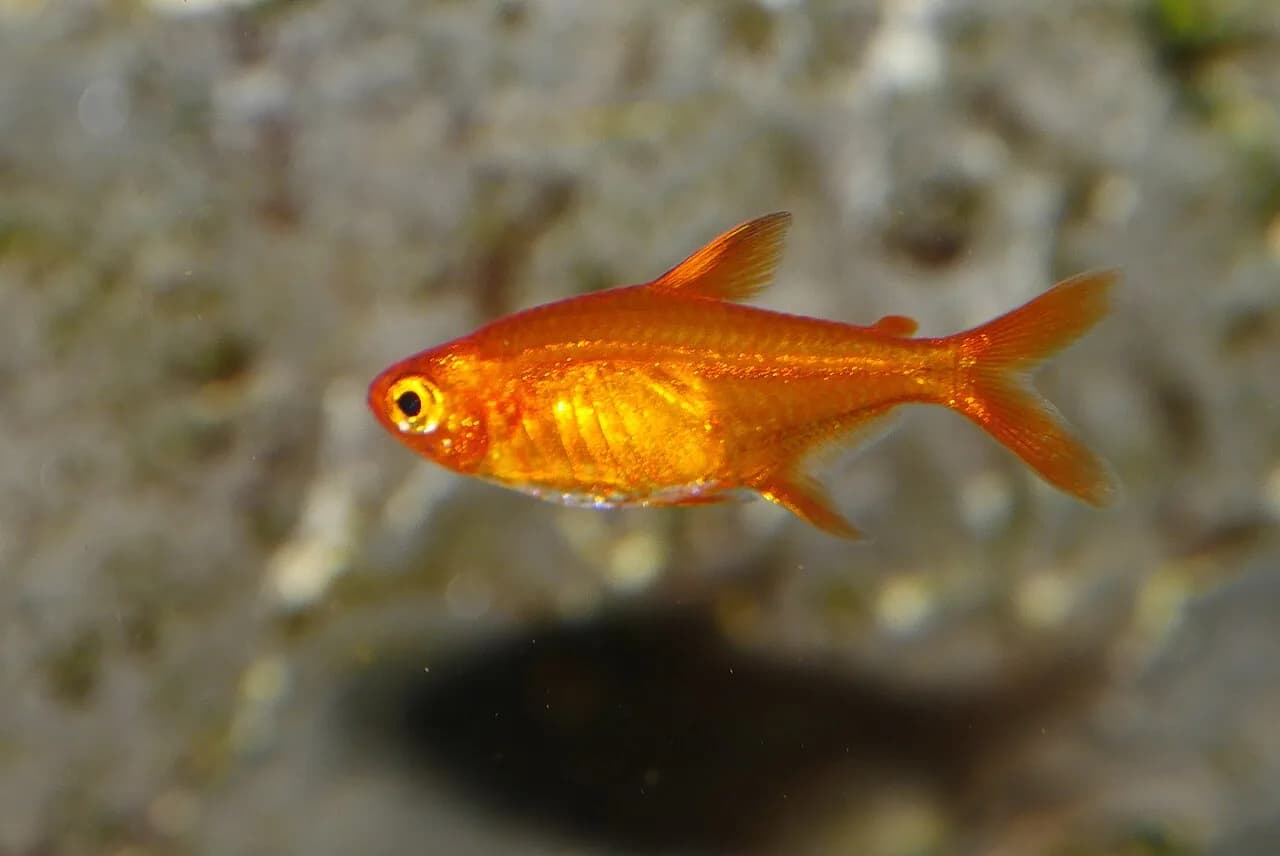
Wild type plus extensive selective breeding: 'Double Red', 'Triple Red', 'Orange Flash', 'Super Red', 'Gold', 'Fire Red'. Long-finned variants also common. All same care — colour is the only difference.

Frequently asked questions

Direct answers to the questions search engines and AI assistants surface most often about this species.

What is the minimum tank size for Cockatoo Dwarf Cichlid?

Cockatoo Dwarf Cichlid (Apistogramma cacatuoides) needs a minimum tank of 75 L (pair). They live in the mid to bottom water column and should be kept in groups of 2+, so a longer footprint matters more than depth.

What water parameters do Cockatoo Dwarf Cichlid need?

Target 24–28 °C, pH 5.5–7.5, and 2–15 dGH hardness. Acclimate slowly when moving them between water sources.

Are Cockatoo Dwarf Cichlid safe with shrimp?

Shrimp safety: Risky with dwarf shrimp. Plant safety: Yes.

What do Cockatoo Dwarf Cichlid eat?

Cockatoo Dwarf Cichlid are carnivore. Frozen bloodworms, brine shrimp, micro pellets. Live food triggers breeding behaviour.

Are Cockatoo Dwarf Cichlid beginner-friendly?

On Fin & Stem's 1–5 difficulty scale this species rates 3/5. Intermediate, stable parameters and a mature tank matter. Breeding difficulty: easy.

How long do Cockatoo Dwarf Cichlid live?

Typical lifespan in a well-maintained tank is 3–5 years.

Sources & further reading

Cross-references

Build the rest of the tank.

A planted tank is a system. Pair this fish with one entry from each other pillar to plan the whole scape.