Fin & Stem logo
Dwarf Puffer (Carinotetraodon travancoricus)
Fish

Dwarf Puffer

Carinotetraodon travancoricus

Western Ghats rivers and pools, India (Kerala)Advanced

TL;DR, Dwarf Puffer

The smallest freshwater puffer, pea-sized with full puffer personality. Recognises and interacts with keepers. Snail-only diet means a parallel snail culture tank is essentially required. Each puffer has a temperament; some are docile, others territorial, observe individuals before adding tank mates.

Dwarf Puffer (Carinotetraodon travancoricus) reaches 2.5–3.5 cm as an adult and needs a minimum tank of 40 L (single); 75 L for a small group. Native to Western Ghats rivers and pools, India (Kerala), it lives in the mid water column with a semi-aggressive temperament. Aim for 22–28 °C, pH 6.5–7.5, and 5–15 dGH hardness. Lifespan is 4–5 years with good care. Dwarf Puffer can be kept singly or in a small group. Diet: carnivore (snail specialist), Live/frozen snails (ramshorn, MTS), frozen bloodworms, mysis shrimp, blackworms. Beak-wearing requires hard-shelled food, pellets rejected. Plant-safe: Yes. Shrimp-safe: No (will eat shrimp).

  • Min tank40 L (single); 75 L for a small group
  • TemperamentSemi-aggressive
  • Plant-safeYes
  • Shrimp-safeNo (will eat shrimp)

Care at a glance

The smallest freshwater puffer, pea-sized with full puffer personality. Recognises and interacts with keepers. Snail-only diet means a parallel snail culture tank is essentially required. Each puffer has a temperament; some are docile, others territorial, observe individuals before adding tank mates.

By Updated 3 min read

Part of our complete guide to aquarium fish for the planted tank.

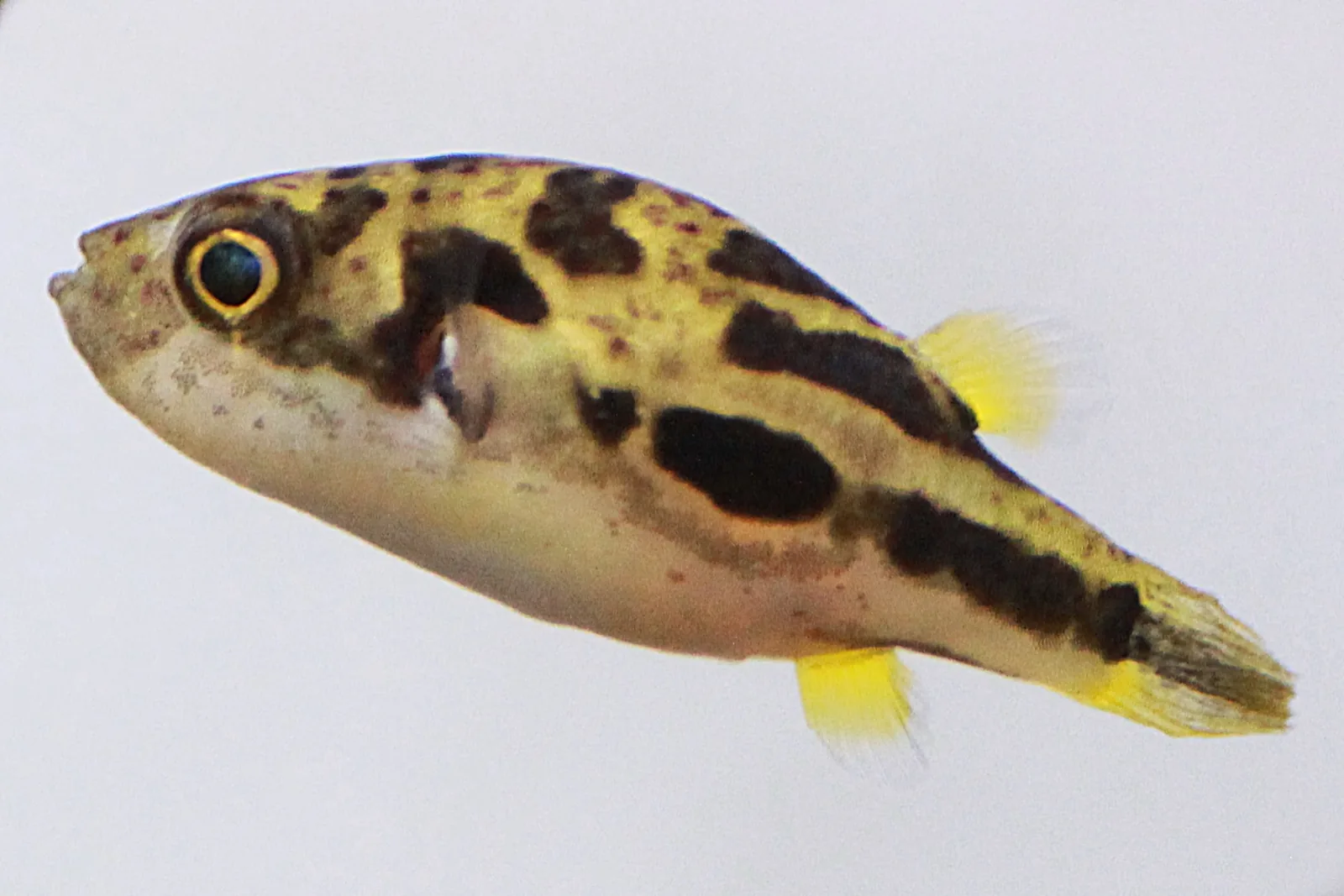
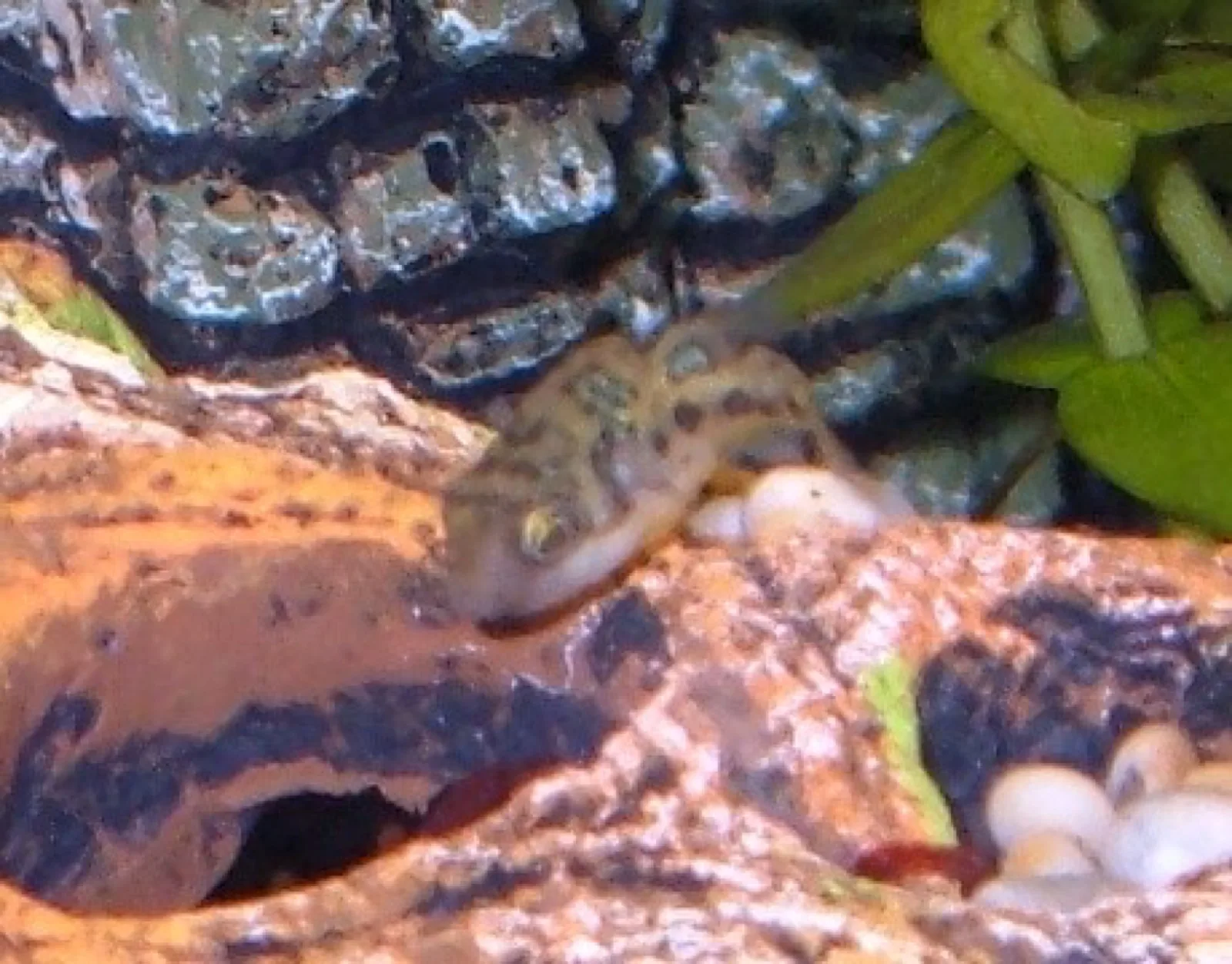
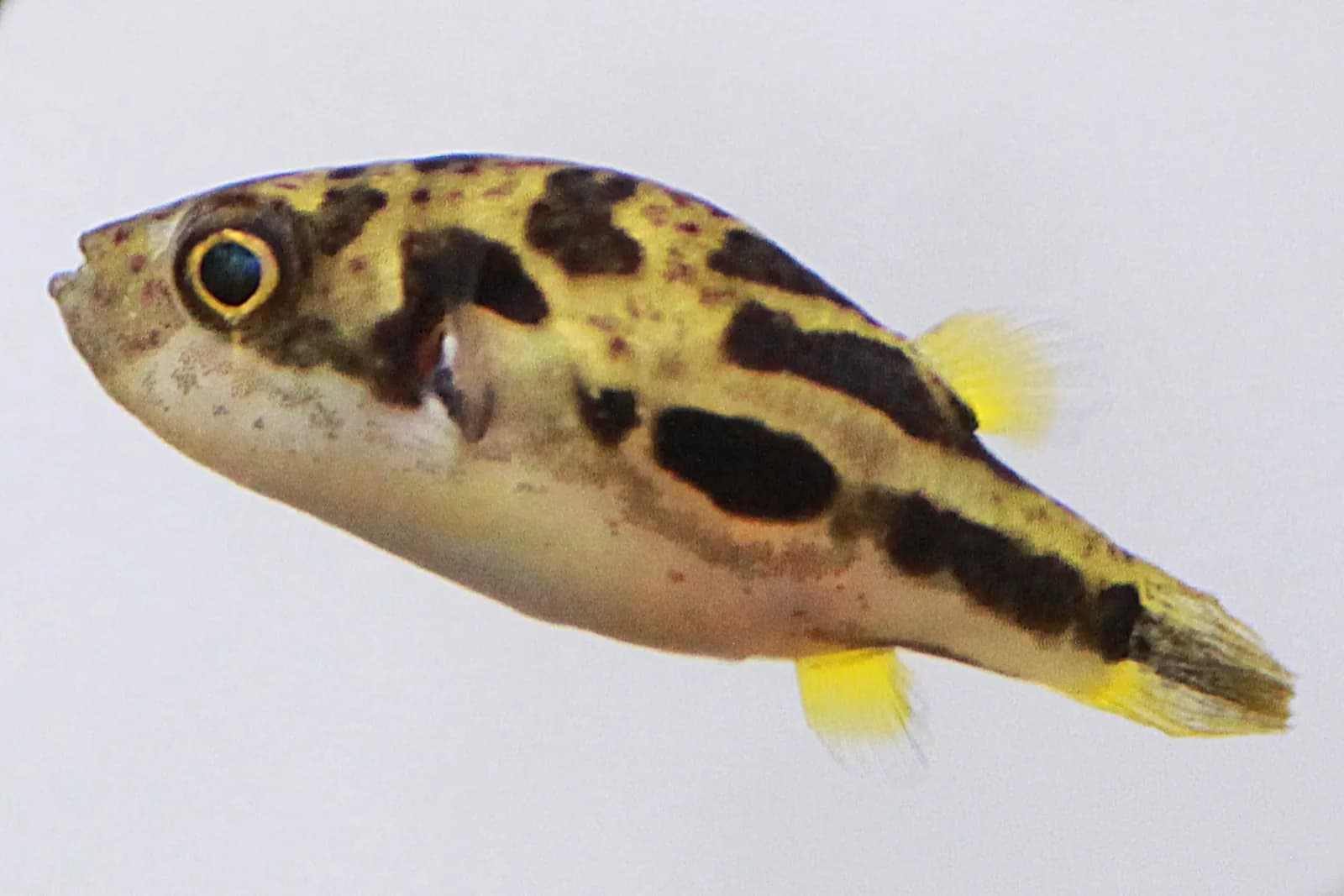
Dwarf Puffer (Carinotetraodon travancoricus)
Chunbin · CC BY-SA 4.0Source
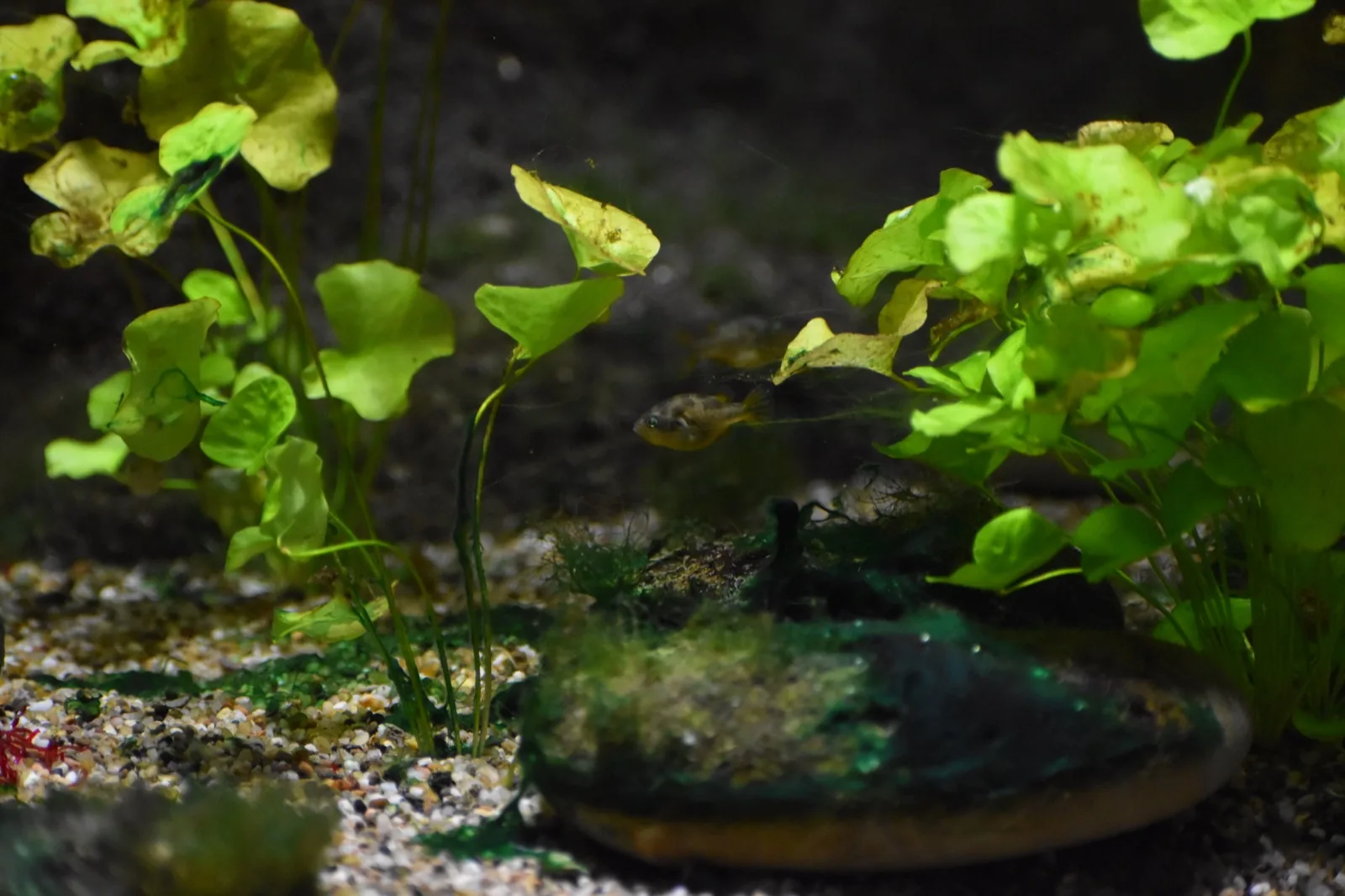
Dwarf Puffer (Carinotetraodon travancoricus)
Tylwyth Eldar · CC BY-SA 4.0Source
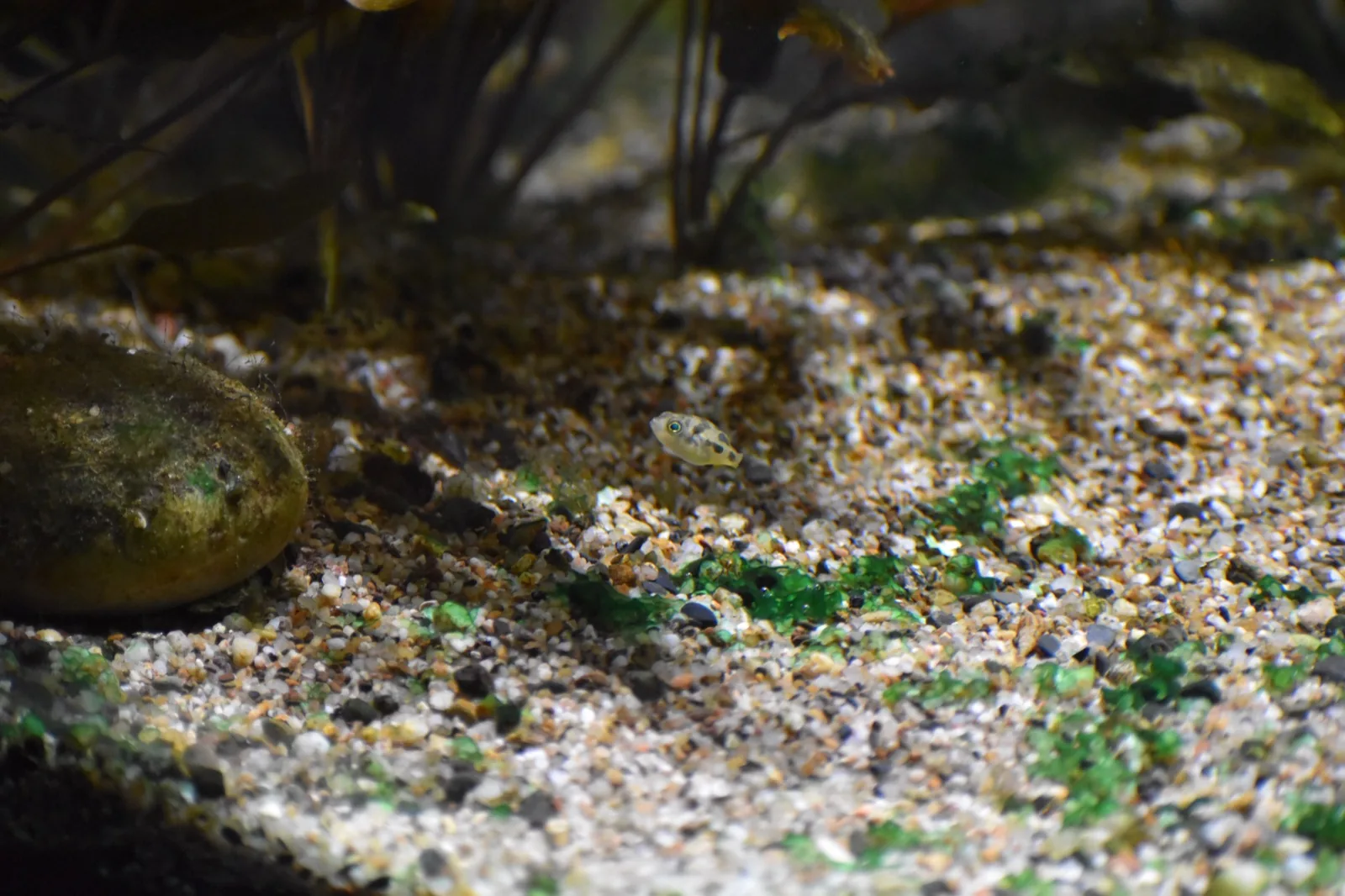
Dwarf Puffer (Carinotetraodon travancoricus)
Tylwyth Eldar · CC BY-SA 4.0Source
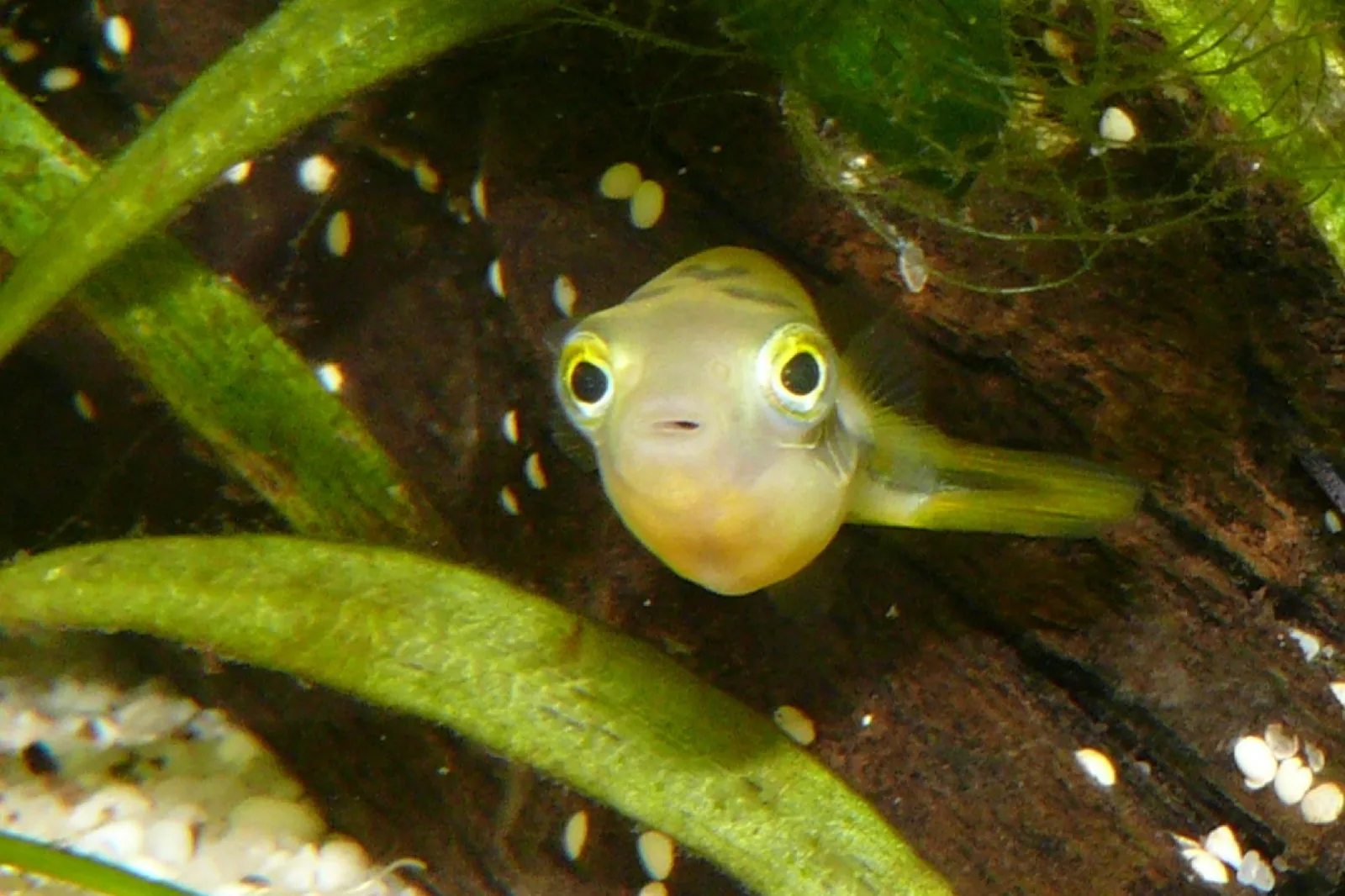
Dwarf Puffer (Carinotetraodon travancoricus)
Haplochromis · CC BY-SA 3.0Source
Dwarf Puffer (Carinotetraodon travancoricus)
w:User:Jamie C · Public domainSource

Hero photo by Chunbin · CC BY-SA 4.0 · Wikipedia

Tank fit

The parameters that decide whether dwarf puffer fits in your tank.

Parameters

Temperature22–28 °C
15 °C20 °C25 °C30 °C
pH6.5–7.5
4.05.06.07.08.0
Hardness5–15 dGH
0 dGH5 dGH10 dGH15 dGH20 dGH25 dGH
Adult size2.5–3.5 cm
0481115
Water column

Mid

Schooling

No

Harem · 1M:2F+

FlowLow
Still
Low
Medium
High
V. high

Profile

Family

Tetraodontidae

Diet

Carnivore (snail specialist)

Live/frozen snails (ramshorn, MTS), frozen bloodworms, mysis shrimp, blackworms. Beak-wearing requires hard-shelled food, pellets rejected.

Lifespan

4–5 yrs

Breeding

Medium

Habitat

Slow weedy rivers of the Western Ghats, India

Western Ghats rivers and pools, India (Kerala)

Who it lives with

Tank-mate safety and the species this one is documented to thrive (or fail) alongside.

Good tank mates

Best species-only. Otocinclus survives in some setups. Each puffer's temperament must be assessed individually — some are docile, others territorial.

Avoid

Shrimp (will be eaten), small nano fish (will be nipped), other puffers in undersized tanks, anything that can't get out of their way.

See full compatibility cross-reference

Pro tips

Hard-won lessons from the tank.

Set up a parallel 'snail farm' tank (small tank with ramshorn or MTS snails breeding on rotting veg). Drop adult snails into the puffer tank as feeders. Without continuous shelled food, the puffer's beak overgrows and the fish eventually starves. They recognise individual keepers and 'beg' at the glass during feeding — one of the most interactive small fish in the hobby.

Etymology

Genus 'Carinotetraodon' = 'keeled four-toothed' (referring to the beak structure). Species 'travancoricus' = 'from Travancore' (the Kerala region's historical name).

Things to watch for

What can go wrong and how to spot it.

Things to watch for

Failure modes, in order of how dramatic the fix is.

Health

Common diseases

Susceptible to ich and bacterial infections during stress. Most issues stem from inappropriate diet (commercial pellets cause beak overgrowth without shelled food).

Often wrong

Misconceptions

Marketed as 'community-safe nano puffers' — they are NOT. Every dwarf puffer has individual temperament; some are tolerant, many are nippers, all will eat shrimp. Plan for species-only unless willing to rehome.

How to care for it

The practical routine, read top to bottom.

  1. Tank setup

    40 L+ for a single puffer; 75 L+ for a small group. Heavy planting (live plants only — they shred fake plants). Multiple sightline breaks to dilute aggression in groups. Sponge or low-flow canister filter. Tight lid (they don't jump much but small puffers escape via filter housings).

  2. Quarantine

    4 weeks. Provide live snails to assess feeding behaviour — refusal to eat snails signals serious health issues.

Background

Where it comes from, how it behaves, and the variants you'll see at retail.

Show background

In the wild

Where it lived before it came home.

Native rangeWestern Ghats, IndiaIndia
Origin · Western Ghats rivers and pools, India (Kerala)

Slow rivers and pools of the Western Ghats of southern India (Kerala state). Soft to moderately hard, slightly acidic to neutral water with abundant vegetation and snail populations.

Wild diet

Snails, micro-crustaceans, insect larvae, occasional small worms. Strict carnivore with a specialised snail-shell-crushing beak.

Conservation status

Listed as Vulnerable in IUCN Red List. Habitat loss from agricultural conversion and over-collection is significant. Captive breeding is encouraged but rare; most trade stock remains wild-caught. Buy from breeders if possible.

Behavior & breeding

How they pair, reproduce, and grow.

  1. Stage 1
    Telling them apart

    Sexing

    Males develop a dark belly wrinkle line (the 'gluttony line') and brighter yellow ventral colour. Females stay rounder and paler with a more uniform belly.

  2. Stage 2
    Pairing & spawning

    Breeding

    Possible in species-only tanks. Soft slightly acidic water, dense moss, paired adults. Eggs scattered into moss. Fry need infusoria initially, microworms after a week. Adults will eat fry — separate after spawning.

Variants & identification

The named cultivars and the lookalikes worth flagging.

Color forms

Wild type only. Occasionally hand-painted or dyed specimens appear — strictly avoid.

Frequently asked questions

Direct answers to the questions search engines and AI assistants surface most often about this species.

What is the minimum tank size for Dwarf Puffer?

Dwarf Puffer (Carinotetraodon travancoricus) needs a minimum tank of 40 L (single); 75 L for a small group. They live in the mid water column and can be kept singly, so a longer footprint matters more than depth.

What water parameters do Dwarf Puffer need?

Target 22–28 °C, pH 6.5–7.5, and 5–15 dGH hardness. Acclimate slowly when moving them between water sources.

Are Dwarf Puffer safe with shrimp?

Shrimp safety: No (will eat shrimp). Plant safety: Yes.

What do Dwarf Puffer eat?

Dwarf Puffer are carnivore (snail specialist). Live/frozen snails (ramshorn, MTS), frozen bloodworms, mysis shrimp, blackworms. Beak-wearing requires hard-shelled food, pellets rejected.

Are Dwarf Puffer beginner-friendly?

On Fin & Stem's 1–5 difficulty scale this species rates 4/5. Advanced, demands dialled-in CO₂/dosing or precise water chemistry. Breeding difficulty: medium.

How long do Dwarf Puffer live?

Typical lifespan in a well-maintained tank is 4–5 years.

Sources & further reading

Cross-references

Build the rest of the tank.

A planted tank is a system. Pair this fish with one entry from each other pillar to plan the whole scape.