
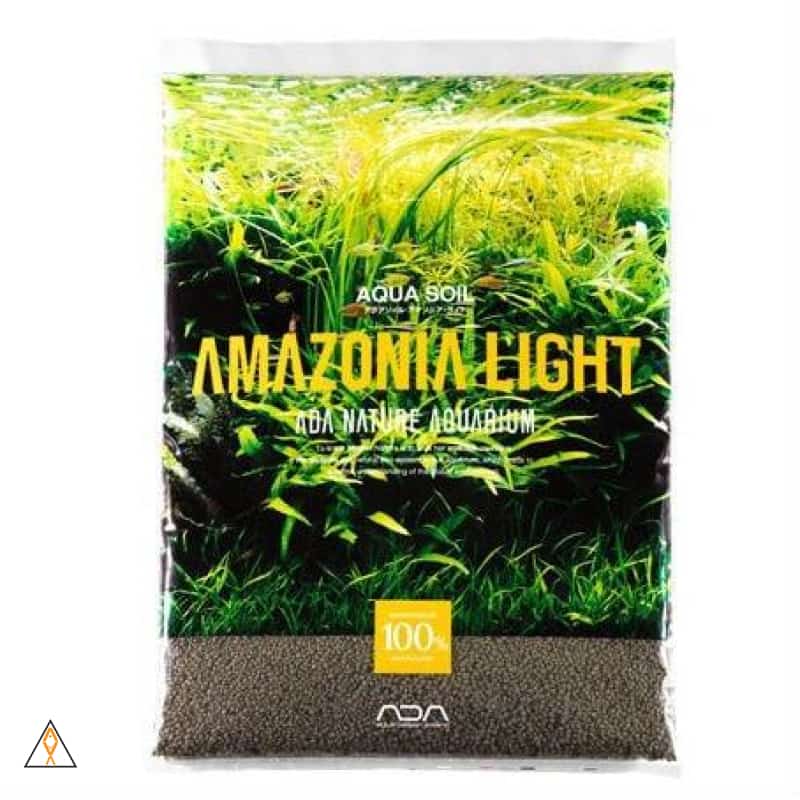
ADA · Active aquasoil
ADA Aqua Soil Amazonia Light Ver.2
Japan · Dark brown · grain 2 to 5 mm
External link to adana.co.jp, opens in a new tab.
TL;DR, ADA Aqua Soil Amazonia Light Ver.2
Amazonia Light Ver.2 is ADA's lighter-buffering sister to the original Amazonia. The ammonia release is roughly a third as strong and the cycle finishes in two to three weeks instead of six, so first-time aquasoil users meet less drama at startup.
Full specs
- Brand
- ADA
- Country of origin
- Japan
- Category
- Active aquasoil
- Colour
- Dark brown
- Grain size
- 2 to 5 mm
- pH target
- 6.2 to 6.8
- pH effect
- Lowers (gentle)
- KH effect
- Lowers (gentle)
- Ammonia release
- Light
- Nutrient content
- High
- Buffering longevity
- 12 to 18 months
- Recommended water
- Tap water tolerable, RO optional
- Difficulty
- 2 / 5
- Shrimp-safe
- Yes
- Best for
- first planted tank, Neocaridina shrimp, community tanks
How it works
Amazonia Light uses the same Japanese black soil substrate as the original but with fewer added humic and nitrogen-rich granules. The result is a gentler initial ammonia spike, weaker pH buffering, and a substrate that is forgiving with tap water. Plants get plenty of root nutrition for the first 12 to 18 months before liquid root tabs become useful.
Best use cases
The right choice for a first planted tank, a Neocaridina (cherry shrimp) tank where the lower buffering target matches the genus better, or any community tank where the keeper does not want to commit to RO water. It is also the ADA soil to pick when the target fish are mid-range pH species like rainbowfish or rasboras.
Common mistakes
Expecting Caridina-grade buffering. Amazonia Light does not hold pH below 6.0 reliably, so Crystal Red or Bee shrimp will struggle long-term. Treat it as a soft-water planted soil, not a Caridina shrimp soil.
Pro tips
A four-week fishless cycle with the tank planted and the filter running is enough to clear residual ammonia. Cap with sand only if a finer aesthetic is preferred; the substrate already looks tidy as-is.
Plants that thrive in this substrate
Hand-curated pairings based on the substrate category, not a relational query.
- Cryptocoryne WendtiiCryptocoryne wendtiiHeavy root feeder, thrives on the strong ammonia and nutrients leaching from new aquasoil.
- Amazon SwordEchinodorus grisebachiiBackground rosette with extensive root system, builds tall on the rich substrate.
- Rotala RotundifoliaRotala rotundifoliaStem plant that colours strongest under low pH + high nutrient soil conditions.
- Monte CarloMicranthemum tweedieiCarpeting plant that pearls quickly when rooted directly into aquasoil with CO2.
- Ludwigia 'Super Red'Ludwigia palustris 'Super Red'Reds deepen on active aquasoil thanks to the consistent micro-nutrient release.
Sources & further reading
Compare against another substrate.
Line up to four substrates side by side. Spec table, pH effect, ammonia release, nutrient content, shrimp safety.
Open the compare tool