
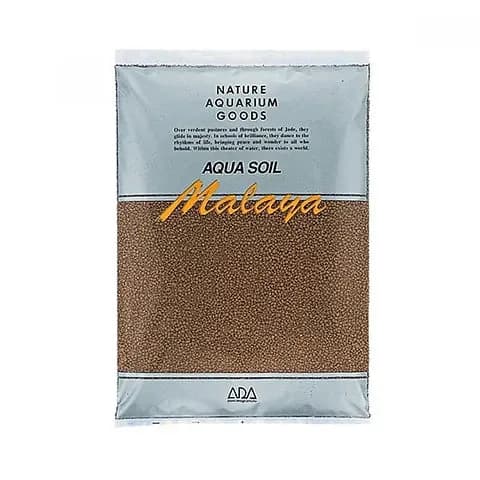
ADA · Active aquasoil
ADA Aqua Soil Malaya
Japan · Light brown to ochre · grain 2 to 4 mm
External link to adana.co.jp, opens in a new tab.
TL;DR, ADA Aqua Soil Malaya
Malaya is the warm-toned member of the ADA Aqua Soil family. The colour reads ochre rather than black, which suits Southeast Asian biotopes and any aquascape where the substrate is meant to be visible rather than recede.
Full specs
- Brand
- ADA
- Country of origin
- Japan
- Category
- Active aquasoil
- Colour
- Light brown to ochre
- Grain size
- 2 to 4 mm
- pH target
- 6.4 to 6.9
- pH effect
- Lowers (gentle)
- KH effect
- Lowers (gentle)
- Ammonia release
- Light
- Nutrient content
- Medium to high
- Buffering longevity
- 12 to 18 months
- Recommended water
- Tap water tolerable
- Difficulty
- 2 / 5
- Shrimp-safe
- Yes
- Best for
- South-east Asian biotopes, warm-toned aquascapes, rasbora and gourami tanks
How it works
Malaya is built on red-brown Indonesian volcanic clay rather than Japanese black soil. The buffering chemistry is similar to Amazonia Light, weaker than the original Amazonia, but the visual identity is completely different. Iron content is slightly higher, which deepens leaf colours on red plants like Ludwigia and Rotala.
Best use cases
Southeast Asian biotopes featuring chocolate gouramis, harlequin rasboras, or sparkling gouramis. Also the right choice when the aquascaping intent is a warm desert or savanna palette where black soil would clash. Pairs visually with seiryu stone and spider wood.
Common mistakes
Treating Malaya as a Caridina substrate. It buffers more gently than the original Amazonia and is closer to Amazonia Light in chemistry. Caridina keepers should pick Amazonia or Africana.
Pro tips
Malaya tones down over the first two months as the surface dust washes off. Photograph the scape during the first week if the freshly-bagged red-brown colour is the goal.
Plants that thrive in this substrate
Hand-curated pairings based on the substrate category, not a relational query.
- Cryptocoryne WendtiiCryptocoryne wendtiiHeavy root feeder, thrives on the strong ammonia and nutrients leaching from new aquasoil.
- Amazon SwordEchinodorus grisebachiiBackground rosette with extensive root system, builds tall on the rich substrate.
- Rotala RotundifoliaRotala rotundifoliaStem plant that colours strongest under low pH + high nutrient soil conditions.
- Monte CarloMicranthemum tweedieiCarpeting plant that pearls quickly when rooted directly into aquasoil with CO2.
- Ludwigia 'Super Red'Ludwigia palustris 'Super Red'Reds deepen on active aquasoil thanks to the consistent micro-nutrient release.
Sources & further reading
Compare against another substrate.
Line up to four substrates side by side. Spec table, pH effect, ammonia release, nutrient content, shrimp safety.
Open the compare tool