
Seachem · Inert nutrient
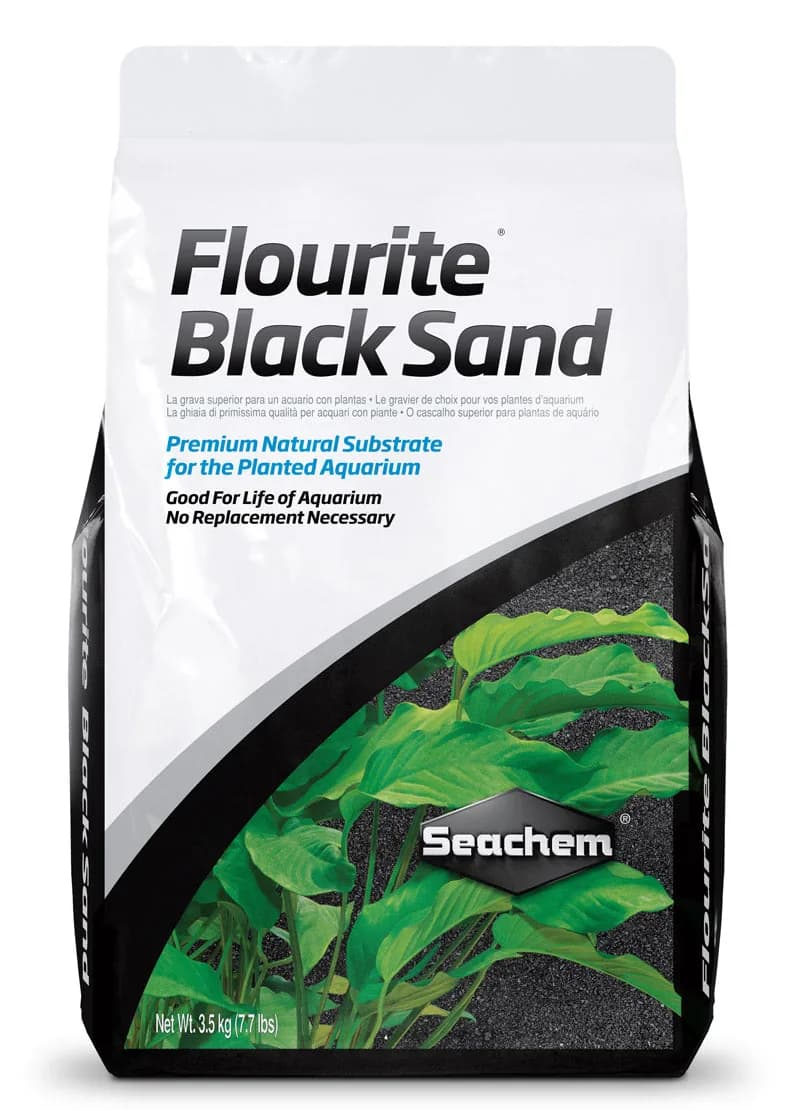
Seachem Flourite Black Sand
United States · Black · grain 0.5 to 1 mm (sand)
External link to seachem.com, opens in a new tab.
TL;DR, Seachem Flourite Black Sand
Flourite Black Sand is the fine-grain variant of standard Flourite Black. Planted tanks stocked with corydoras catfish or other barbel-bearing species.
Full specs
- Brand
- Seachem
- Country of origin
- United States
- Category
- Inert nutrient
- Colour
- Black
- Grain size
- 0.5 to 1 mm (sand)
- pH target
- Neutral
- pH effect
- Neutral
- KH effect
- Neutral
- Ammonia release
- None
- Nutrient content
- Medium (iron-rich clay base)
- Buffering longevity
- Permanent
- Recommended water
- Tap or RO (any hardness)
- Difficulty
- 2 / 5
- Shrimp-safe
- Yes
- Best for
- Corydoras and bottom-dwellers, smooth visual finish, planted nano tanks
How it works
Flourite Black Sand is the fine-grain variant of standard Flourite Black. Same composition and behaviour, smaller grain. The finer grain protects corydoras barbels and produces a smoother visual texture, but the dust problem is amplified.
Best use cases
Planted tanks stocked with corydoras catfish or other barbel-bearing species. Display tanks where a smooth substrate finish matters more than the maximum nutrient delivery to plant roots.
Common mistakes
Skimping on the pre-rinse. Sand-grade Flourite is much dustier than the gravel variant. Plan for at least 30 minutes of bucket rinsing before adding to the tank.
Pro tips
Slope the substrate front-to-back during initial setup; sand-grade substrates settle to a flat plane over time but the initial slope buys visual depth for the first six months.
Plants that thrive in this substrate
Hand-curated pairings based on the substrate category, not a relational query.
- Vallisneria SpiralisVallisneria spiralisLong-runner background grass that pulls iron and trace minerals from Flourite/Eco-Complete.
- Amazon SwordEchinodorus grisebachiiTolerates inert nutrient substrates well if root tabs are dosed every 3 to 6 months.
- Cryptocoryne WendtiiCryptocoryne wendtiiAdapts to inert substrates with the help of root tabs at planting time.
- Bacopa CarolinianaBacopa carolinianaStem plant that draws most of its nutrients from the water column anyway, so inert is fine.
Sources & further reading
Compare against another substrate.
Line up to four substrates side by side. Spec table, pH effect, ammonia release, nutrient content, shrimp safety.
Open the compare tool