
Design guide
Aquascaping design and composition
The difference between a planted tank and an aquascape is design. Here are the composition principles that do the heavy lifting, the classic layout shapes, and the styles they build into.
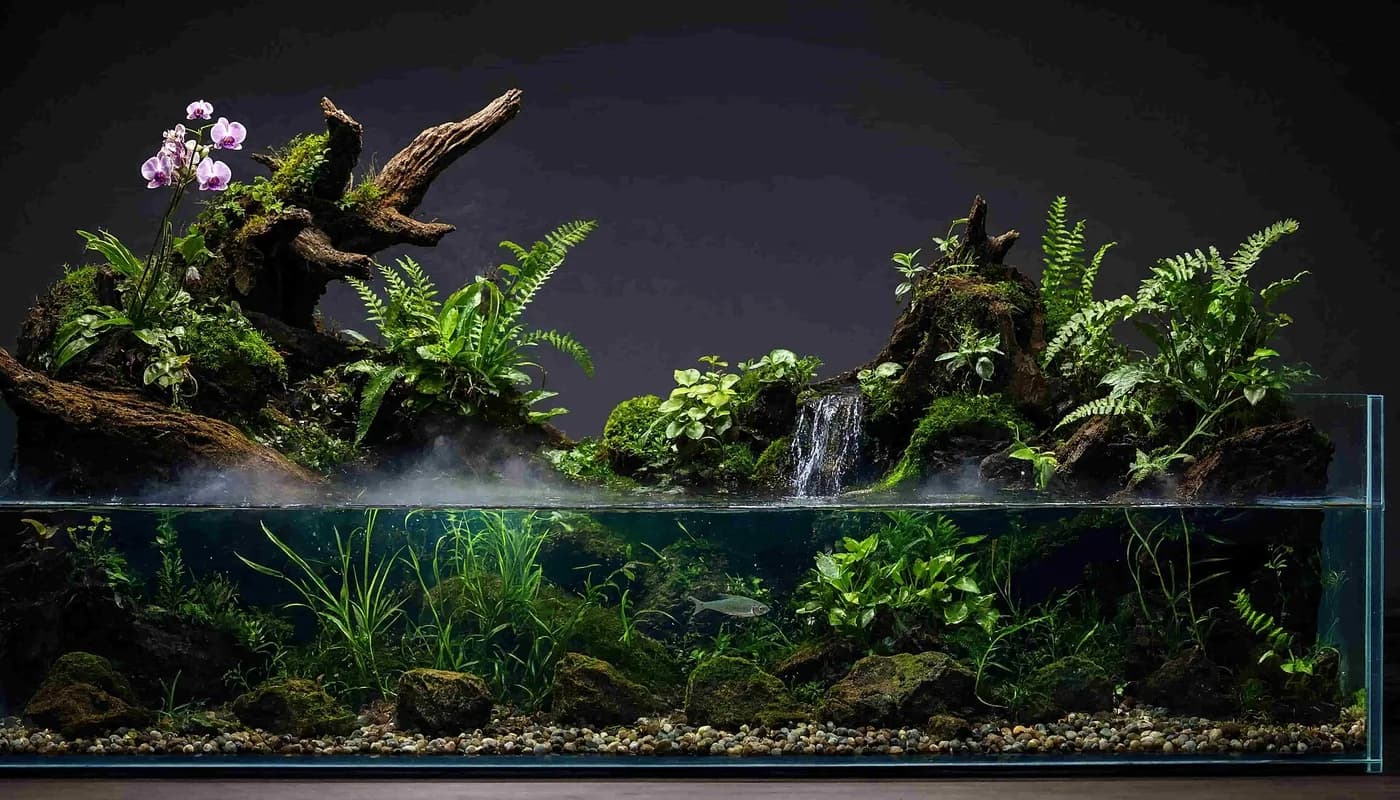
TL;DR, Aquascaping design
A good aquascape is designed, not just planted. A handful of principles do most of the work: put your focal point off-centre on a rule-of-thirds line, pick one of the three classic layout shapes (triangular, concave or convex), build front-to-back depth with smaller materials and finer plants toward the rear, and leave open space so the eye has somewhere to rest. Odd numbers of rocks look more natural than even. Then choose a style that fits your taste and skill, from the minimalist Iwagumi to the plant-packed Dutch, and let it guide your plant and hardscape choices.
Put the focal point off-centre
Split the tank into thirds each way. The strongest place for your main feature, the tallest stone, the mouth of a valley, the specimen plant, is on one of those lines or where they cross, not in the middle. It is the oldest trick in composition and it works every time.
Pick a layout shape
Almost every scape is a version of one of three shapes. Choosing one before you place a single rock keeps the layout coherent.
The principles that do the work
Focal point on a third
Place the main feature, the tallest rock or the gap the eye is drawn to, about a third of the way across, not dead centre. Centred layouts feel static; off-centre feels alive.
Build depth
Use larger, coarser materials and taller plants at the front and finer, smaller ones toward the back, and slope the substrate up toward the rear. It tricks a shallow tank into looking deep.
Leave negative space
Open sand, a clear swimming channel, or empty water above the scape gives the busy planting somewhere to breathe. Cramming every corner reads as clutter.
Use odd numbers
Groups of three, five or seven rocks or plant clusters look more natural than pairs or fours, which the eye reads as deliberate and symmetrical.
The main aquascaping styles
Nature Aquarium
Takashi Amano's style, and the one most people picture: natural-looking layouts of stone and wood, lush but balanced planting, and a strong sense of a real landscape shrunk into glass.
How it's built. Start with a considered hardscape, plant in drifts that echo nature, and keep it trimmed. CO2 and good light make the carpets and reds work.
the history of the Nature AquariumIwagumi
The purest, hardest style: stone only, no wood, usually a single carpeting plant. All the drama comes from rock placement, so there is nowhere to hide a mistake.
How it's built. An odd number of stones, one clearly the main stone, set on a rule-of-thirds line, over a low carpet like Monte Carlo or dwarf hairgrass.
aquascaping stonesDutch
No hardscape at all, just dense, sculpted rows and terraces of colourful stem plants, like an underwater flower bed. It is about plant health, contrast and disciplined trimming.
How it's built. Group stems by species in bold streets, contrast leaf colour and texture, and stagger heights. Demands strong dosing and regular trimming.
stem plantsJungle
Wild, full and low-maintenance, the opposite of the manicured styles. Big leaves, floating plants and a slightly overgrown feel. Forgiving for beginners.
How it's built. Large-leaf plants like swords and crypts, a tangle of stems, and floaters up top. Let it fill in rather than fighting for neatness.
easy jungle plantsWalstad / low-tech
A method as much as a look: heavily planted, no CO2, minimal filtration, using soil and plant mass to balance the tank. Slow, natural and cheap to run.
How it's built. A capped soil substrate, lots of hardy fast plants from day one, low light and gentle stocking. Patience over gadgets.
substratesBiotope
Recreates one real habitat faithfully, only the plants, fish, hardscape and water a specific river or stream would actually have. As much research as aquascaping.
How it's built. Pick a location, match the species and materials to it, and resist adding anything that wouldn't live there. Blackwater Amazon and Southeast Asian streams are popular.
fish by originFrequently asked questions
Direct answers to the questions search engines and AI assistants surface most often about this species.
What is the rule of thirds in aquascaping?
Imagine the tank split into thirds horizontally and vertically. Placing your focal point, the main rock or the key gap, on one of those lines or their intersections looks more natural and dynamic than centring it. It is the single most useful composition rule.
What are the three aquascaping layout types?
Triangular, where the scape slopes from a high side down to a low one; concave, a U-shape that dips in the middle to open a central view; and convex, an island or mound that rises in the middle with open sides. Most layouts are a version of one of these.
Which aquascaping style is best for beginners?
Jungle or a low-tech Walstad-style tank. Both are forgiving, need no CO2, and look good slightly overgrown. Iwagumi and Dutch look simple but are the hardest to pull off well.
How do I make a small tank look deep?
Slope the substrate up toward the back, use larger materials and coarser textures at the front and finer ones behind, keep the tallest plants at the rear, and leave open foreground space. Perspective does the rest.