
Fish comparison
Forktail Blue-Eye vs Spotted Blue-eye
How the Forktail Blue-Eye and Spotted Blue-eye compare on care, size, water and temperament, and which fish suits your tank.
Updated
TL;DR, Forktail Blue-Eye vs Spotted Blue-eye
The Forktail Blue-Eye and the Spotted Blue-eye are close cousins, both in the Pseudomugil group, so at a glance they ask for a lot of the same things. Both are happy somewhere around 23 to 27 °C and pH 6.5 to 7.5, so a single tank can suit either one. The Forktail Blue-Eye is the more forgiving of the two, which matters if this is an early tank, while the Spotted Blue-eye rewards a bit more attention. If tank space is tight, the Spotted Blue-eye needs less room to feel settled; give the Forktail Blue-Eye the nod when you have the litres to spare.
Group compatibility overview
Excellent fit
Every key parameter overlaps and no major conflicts surfaced.
2 notes
Temperature
- Forktail Blue-Eye23–27 °C
- Spotted Blue-eye22–28 °C
pH
- Forktail Blue-Eye6.5–7.5
- Spotted Blue-eye5–7.5
Hardness
- Forktail Blue-Eye5–15 dGH
- Spotted Blue-eye1–12 dGH
What to plan for
- Forktail Blue-Eye schools, stock at least 6You've planned for 1 forktail blue-eye. Forktail Blue-Eye need a group of at least 6 to feel safe and shoal naturally, below that they're stressed and lose colour. Dial up the count, or remove the species.
- No bottom teamNo bottom-dwelling fish or shrimp. A small group of corydoras or a shrimp colony picks up leftover food and keeps detritus in check.
Full attributes
Every parameter, side by side| Parameter | 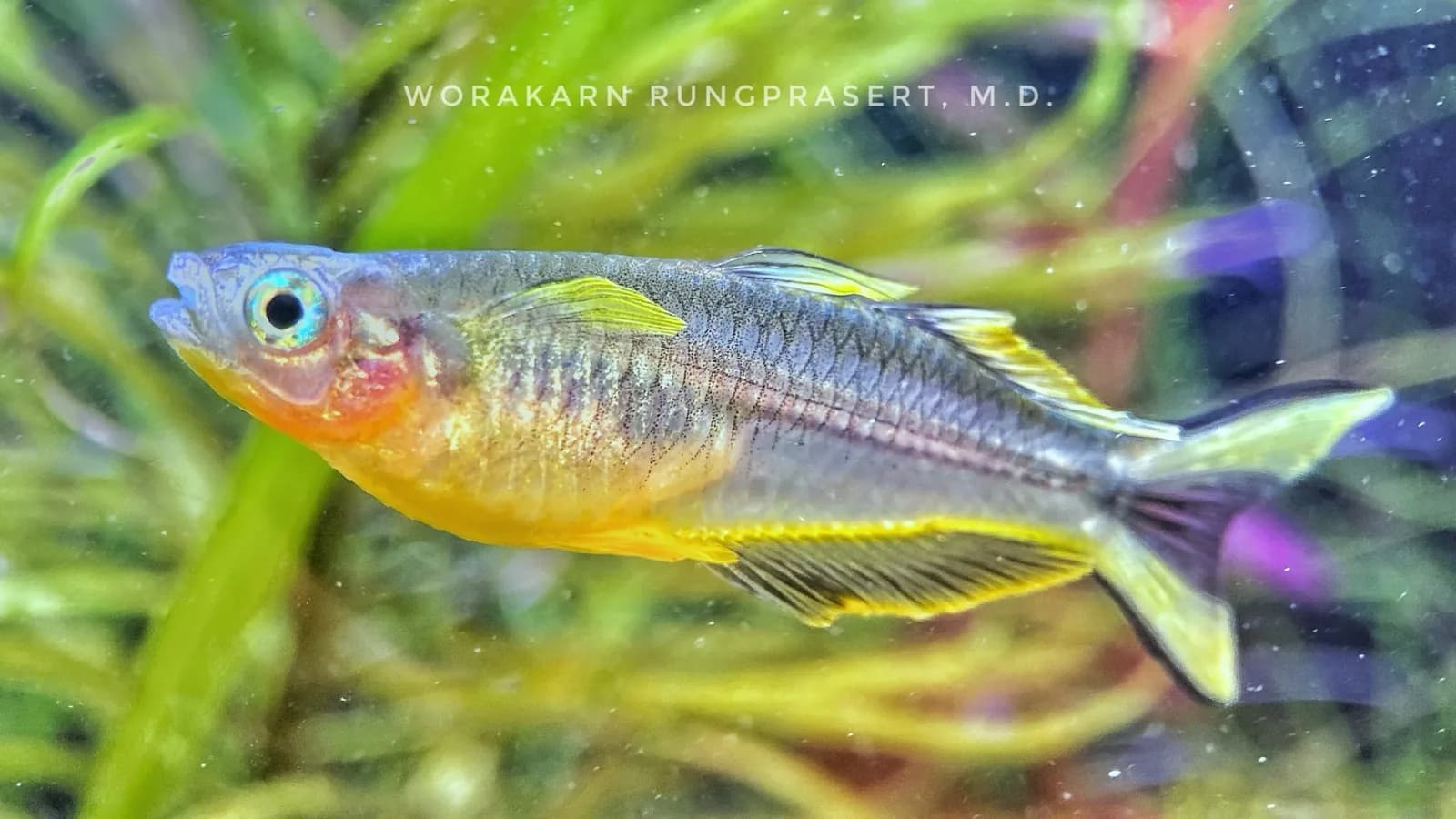 FishForktail Blue-EyePseudomugil furcatus | 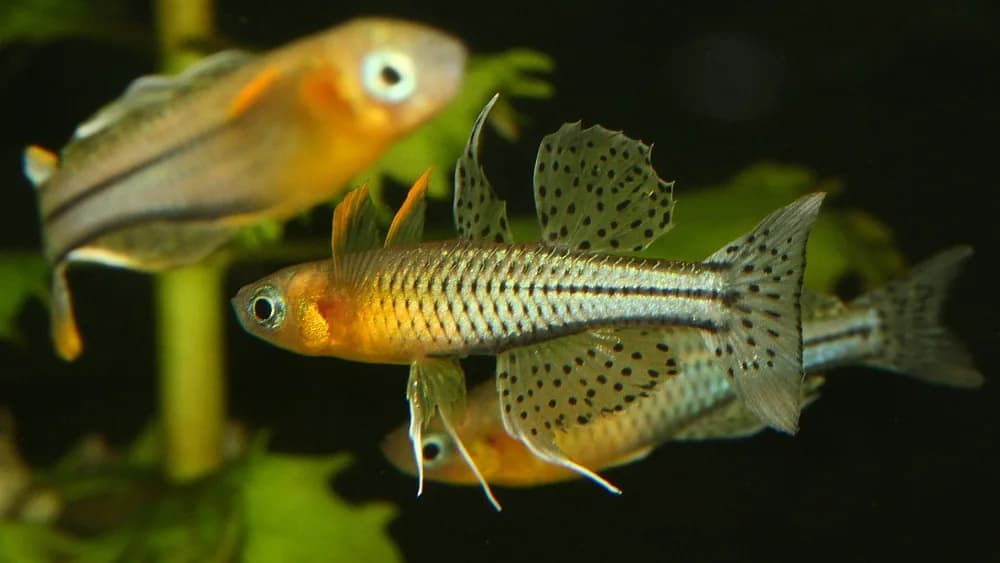 FishSpotted Blue-eyePseudomugil gertrudae |
|---|---|---|
| Category | Fish | Fish |
| Origin | Papua New Guinea | Northern Australia, New Guinea, Aru Islands |
| Family | Pseudomugilidae | Pseudomugilidae |
| Temperature | 23–27 °C | 22–28 °C |
| pH | 6.5–7.5 | 5.0–7.5 |
| Hardness (dGH) | 5–15 | 1–12 |
| Flow rate | Low to Medium | Still to Low |
| Min tank | 60 L | 40 L |
| Adult size | 4–5 cm | 3–4 cm |
| Difficulty | 2 / 5 | 3 / 5 |
| Lifespan | 2–3 yrs | 1–2 yrs |
| Diet | Micropredator | Micropredator |
| Water column | Mid to Top | Mid to Top |
| Schooling | Yes | Loose group |
| Plant safe | Yes | Yes |
| Shrimp safe | Yes (adult shrimp) | Yes (with adults) |
Frequently asked questions
Direct answers to the questions search engines and AI assistants surface most often about this species.
Can you keep Forktail Blue-Eye and Spotted Blue-eye together?
Yes. Their temperature and pH ranges overlap around 23 to 27 °C and pH 6.5 to 7.5, so one set of water conditions keeps both comfortable. Match group sizes and cover the usual planted-tank basics and they share a tank fine.
Which is easier to keep, the Forktail Blue-Eye or the Spotted Blue-eye?
The Forktail Blue-Eye is the easier of the two, closer to beginner-friendly, while the Spotted Blue-eye leans middle-of-the-road.
Do Forktail Blue-Eye and Spotted Blue-eye need the same water?
Close to it. Aim for 23 to 27 °C and pH 6.5 to 7.5 and you're in the shared sweet spot for both. Full ranges are in the table above.
What's the main difference between the Forktail Blue-Eye and the Spotted Blue-eye?
Space. The Forktail Blue-Eye wants about 60 litres minimum and the Spotted Blue-eye around 40, so tank size can settle it.