
Stone
Slate
Also called slate rock
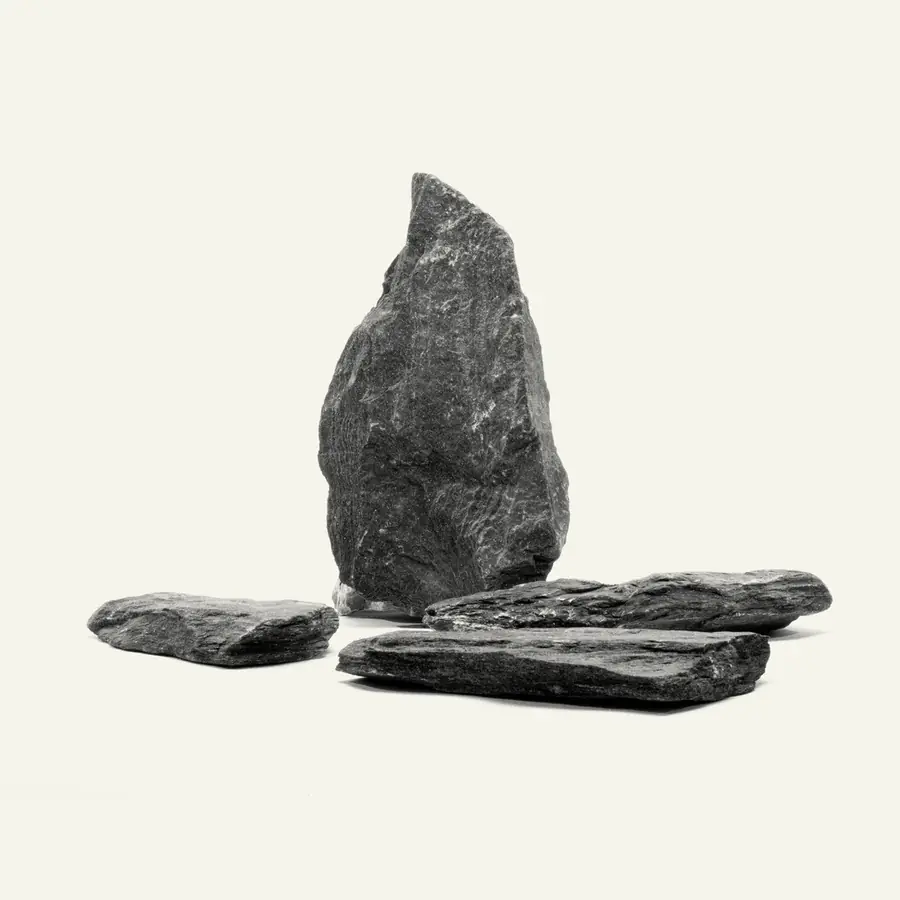
TL;DR, Slate
Slate is flat, grey, layered stone that splits into thin sheets, which makes it handy for jobs other rock cannot do. It is inert, so no effect on water, and its flat faces are ideal for ledges, caves, and as a base to glue plants or stack a wall. It is cheap and widely available. Not the most dramatic stone on its own, but a workhorse for structure.
What it looks like
Grey to charcoal flat stone in thin layered slabs, sometimes with rusty streaks.
What it does to your water
Inert. No change to pH or hardness.
How to prepare it
Rinse off dust. Ready to use, it sinks and does not leach.
Using it in a scape
Perfect for flat ledges, cave roofs, and tiled backgrounds, or as a hidden flat base to seat other stones. Epoxy or superglue holds plants to the smooth faces.
Slate you can actually buy
Supplier photos of real pieces, with the sizes they come in, so you can see the colour and texture before you order.
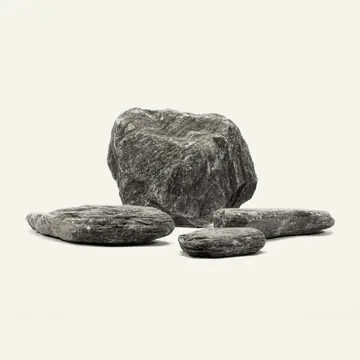
UNS · Stone
Black River Slate
Dark-toned layouts and cave stacks where you want slate that disappears into shadow.
4 models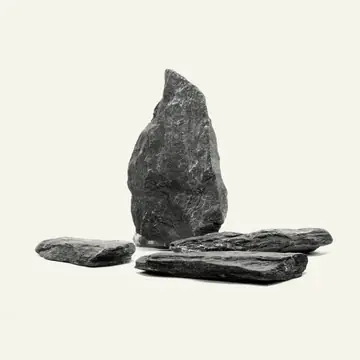
UNS · Stone
Black Slate
Cave builds, terraces and moss stones in any size of tank.
4 models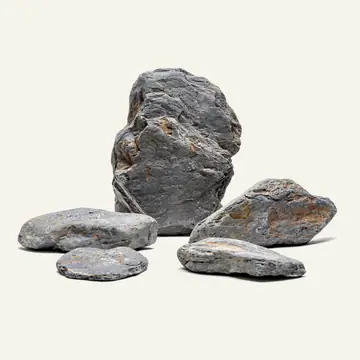
UNS · Stone
Dark Blue Slate Stone
Stacked cave and ledge builds, and as a stable, hidden base for wood layouts.
4 models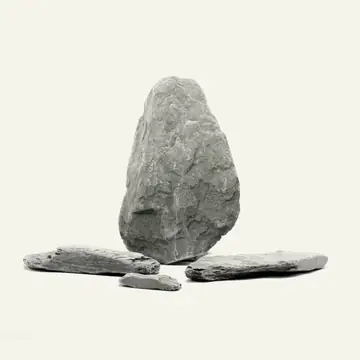
UNS · Stone
Grey River Slate
Stacked builds, caves, and as a stable base under wood layouts.
4 models
Frequently asked questions
Direct answers to the questions search engines and AI assistants surface most often about this species.
Is slate aquarium safe?
Yes, ordinary slate is inert and safe. Rinse it first, and check it does not have metallic ore veins, which are rare but worth a glance.