
Wood
Spider Wood
Also called azalea root, redmoor root
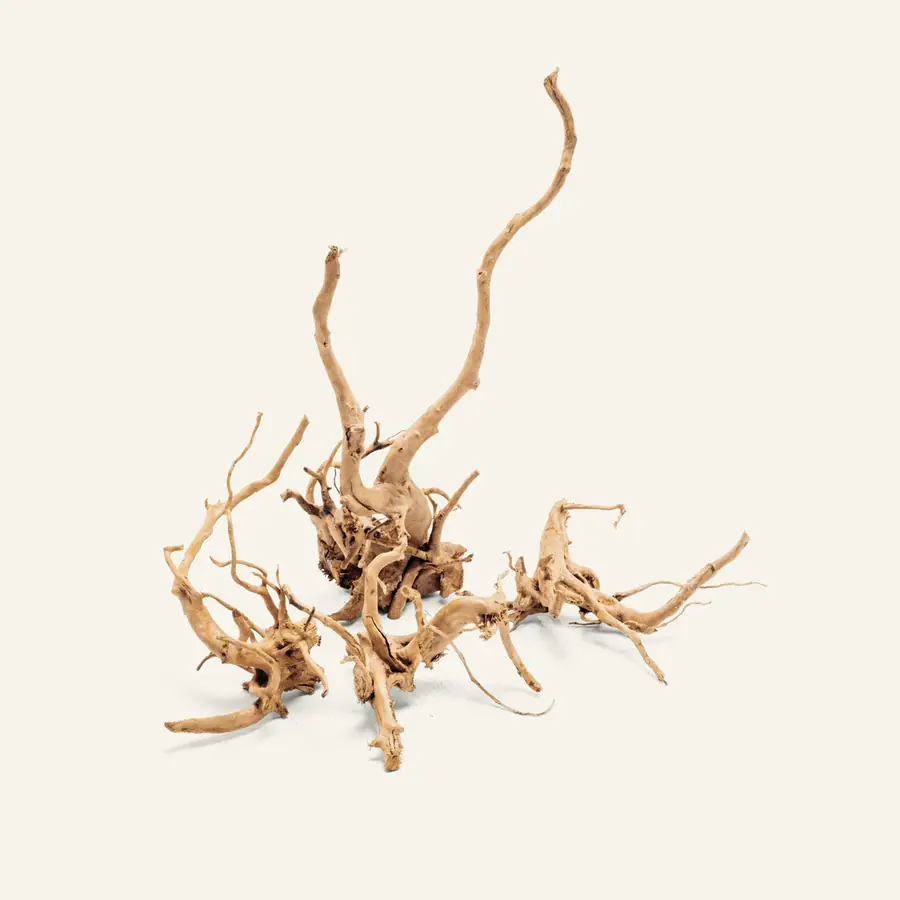
TL;DR, Spider Wood
Spider wood is the pale, finely branching root wood that fans out into thin twisting fingers, and it is one of the most popular scaping woods for good reason. It creates instant structure and looks fantastic with moss tied along it. Two things to expect: it floats until it waterlogs, so soak it or weigh it down for a week or two, and it grows a white biofilm at first, which is harmless and vanishes once shrimp and otos graze it. It leaches mild tannins that tint the water lightly.
What it looks like
Light tan branching root, thin and twiggy, splitting into fine tips. Reads as delicate, wintry branchwork in a scape.
What it does to your water
Chemically close to inert, but it leaches moderate tannins early on, which tint the water a light tea colour and nudge pH down a touch, more so in soft, low-buffered water. The staining fades over weeks and with water changes.
How to prepare it
Soak it submerged for one to two weeks, or weigh it down, until it waterlogs and sinks. Boiling speeds this up and cuts the initial tannins. Expect a white biofilm bloom for the first couple of weeks.
Using it in a scape
Brilliant for branchy, tree-like layouts and for draping moss, bucephalandra and anubias. Glue or tie plants along the branches before it goes in while it is easy to handle.
Spider Wood you can actually buy
Supplier photos of real pieces, with the sizes they come in, so you can see the colour and texture before you order.
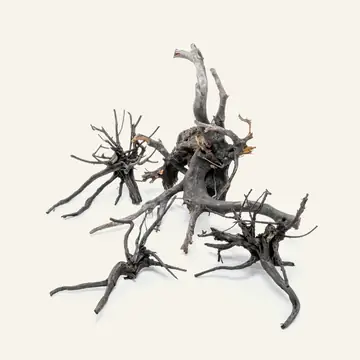
UNS · Wood
Black Forest Spider Wood
Moody, dark scapes where you want branchy wood that contrasts with bright plants.
3 models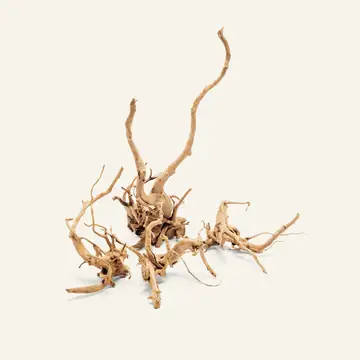
UNS · Wood
Spider Wood
Forest, root and bonsai-inspired layouts in any tank size, often perched on Dragon stone or Seiryu.
5 models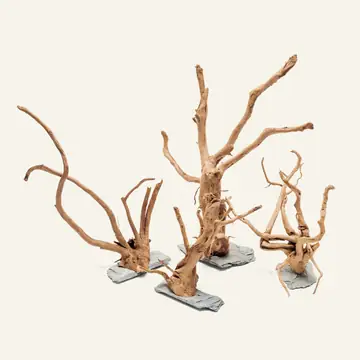
UNS · Wood
Spider Wood on Slate Stone
Beginners and quick setups that want branchy wood without the floating problem.
5 models
Frequently asked questions
Direct answers to the questions search engines and AI assistants surface most often about this species.
Why is my spider wood growing white fuzz?
That white fuzz is a harmless biofilm that new wood grows as it breaks down at the surface. It clears on its own within a couple of weeks, and shrimp, otocinclus and snails graze it happily.
How do I stop spider wood floating?
Soak it fully submerged for one to two weeks until it waterlogs, or weigh it down with stone in the meantime. Boiling it first speeds up the soaking and reduces the early tannins.