
Equipment guide
Aquarium Filtration
How much filter flow you need, and which filter type suits your tank.
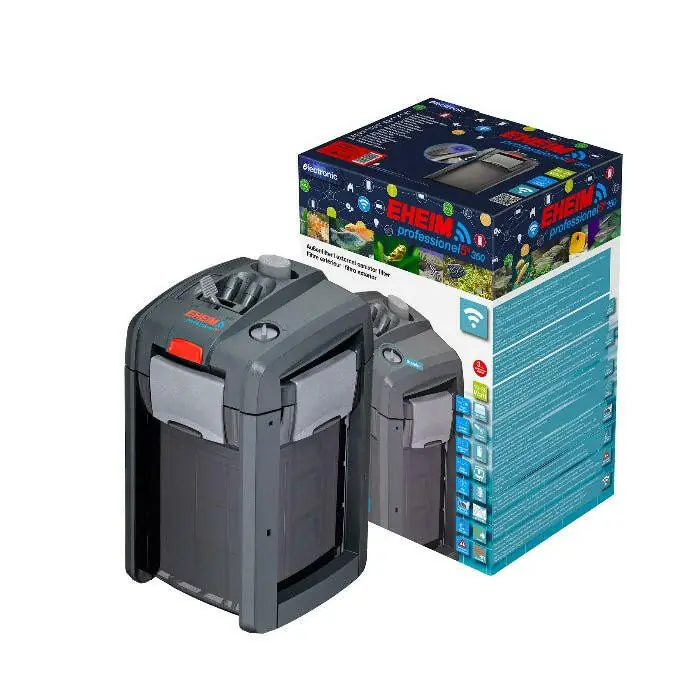
TL;DR, Aquarium Filtration
Filtration does two jobs: it moves water so nothing stagnates, and it houses the bacteria that process waste. For a planted community, aim for a turnover of roughly four to six times the tank volume per hour, more for a heavily stocked or hillstream tank, less for a gentle shrimp setup. Rated flow is optimistic once media is in, so size up a little. Sponge filters suit shrimp and nano tanks, canisters suit larger planted tanks, and a HOB is the easy middle ground.
Turnover targets
Filter flow as a multiple of tank volume per hour. Rated flow drops with media.
- Shrimp / nano (gentle)
- 3 to 5x per hour
- Planted community
- 4 to 6x per hour
- Heavily stocked / hillstream
- 8 to 10x per hour
- Reality check
- Real flow is ~30% below the rated figure once full
How much flow
Turnover is the filter's rated litres per hour divided by the tank volume. Four to six times the tank volume per hour is a good target for a planted community. A shrimp or nano tank can run gentler, around three to five times, while a messy or high-flow tank wants eight to ten. Remember rated figures assume an empty filter, so real turnover drops by a third or so once it is full of media.
Filter types
Sponge filters are cheap, gentle and shrimp-safe, ideal for nano and breeding tanks. Hang-on-back filters are easy to service and fine for small to mid community tanks. Canisters hide under the tank, hold the most media and push the most water, which makes them the go-to for larger planted tanks. Internal filters are a compact backup option.
Biological media is what matters
The mechanical floss and the chemical media are secondary. The heart of a filter is the biological media, the porous surface where bacteria live and process ammonia. Never rinse all of it at once or replace it wholesale, or you knock back the colony and risk an ammonia spike. Rinse it gently in old tank water and only when flow drops.
How to layer the media
Water should hit the coarsest mechanical stage first and the finest last, so debris is caught progressively without clogging everything at once. In a canister that means coarse sponge, then finer sponge or floss, then the bulk of the biological media, with any chemical media like carbon last and only when you actually need it. Getting the order right keeps flow up and means you can rinse the mechanical stages often while leaving the biological media undisturbed.
Compare real filters
All 65 in the catalogueOur gear catalogue lists specs for every model and filters by your tank size.
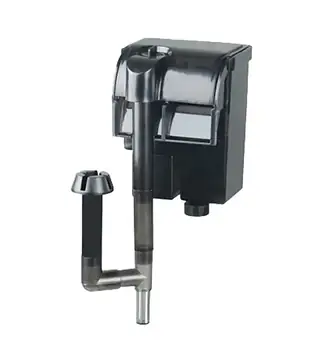
SunSun · Hang-on-backLow tech
HBL Series Hang-On Filter
- Flow
- 300–800 L/h
Nano and small planted tanks, shrimp tanks and quarantine setups.
12 models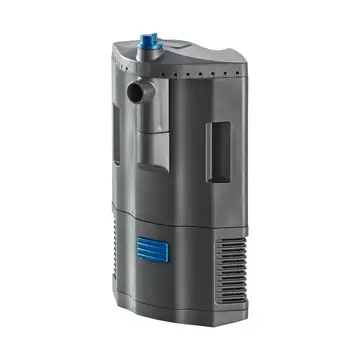
Oase · InternalLow tech
BioPlus
- Flow
- 350–650 L/h
- Tank size
- up to 200 L
Small to mid-sized tanks where you want a simple internal filter that is easy to service.
6 models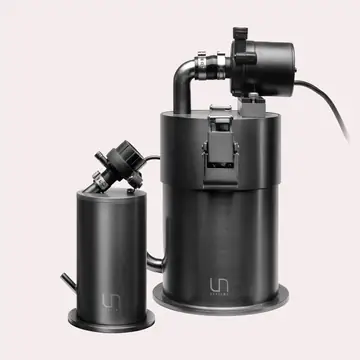
UNS · Canister
Blitz Stainless Steel Filter
- Flow
- 57–208 L/h
- Tank size
- up to 45 L
Nano and desktop tanks where the filter sits on show next to the aquarium.
2 models
Frequently asked questions
Direct answers to the questions search engines and AI assistants surface most often about this species.
What size filter do I need?
Aim for a filter rated at four to six times your tank volume per hour for a planted community, and size up a little because real flow drops once the filter is full of media. The tank planner works out the range for your exact volume.
How often should I clean my filter?
Only when the flow noticeably drops, and never all the media at once. Rinse the biological media gently in old tank water so you keep the bacteria alive. Cleaning too thoroughly can trigger an ammonia spike.