
Equipment guide
CO2 Injection
Whether you actually need CO2, and how to run it safely if you do.
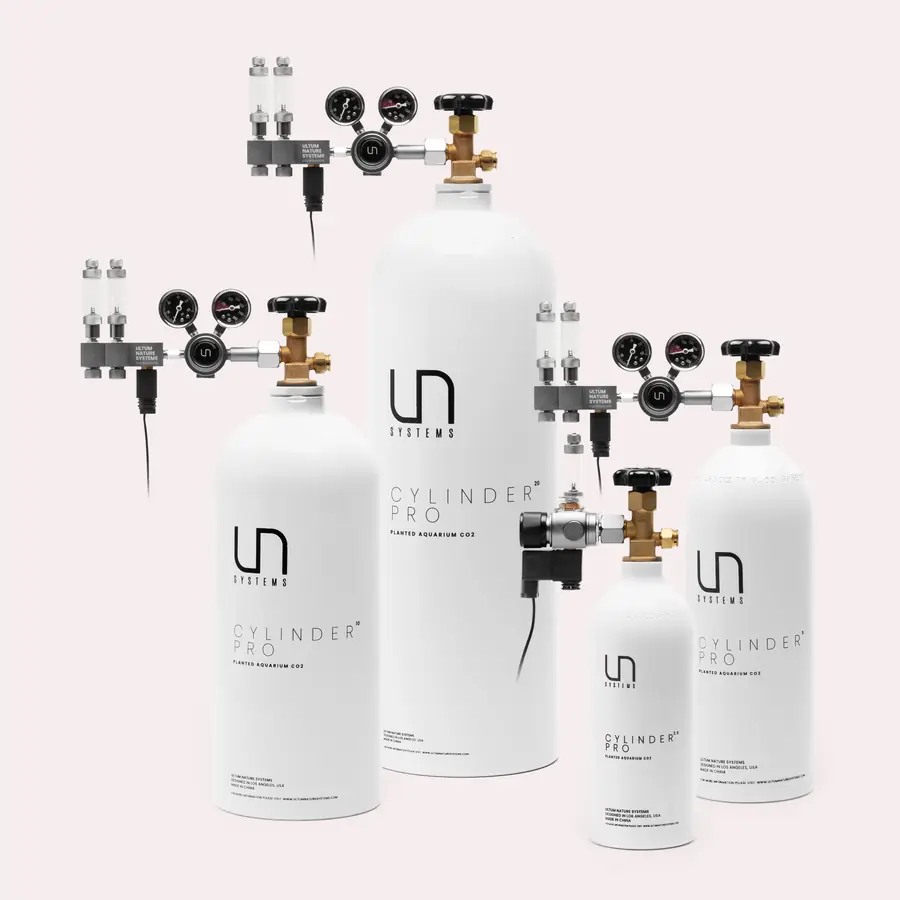
TL;DR, CO2 Injection
CO2 is the single biggest lever for demanding plants, but it is optional, not compulsory. A low-tech tank of anubias, ferns, crypts and mosses grows fine without it. Carpets, red stems and fast lush growth really want it. If you inject, use a drop checker and aim for green, ramp the bubble rate up slowly over days, turn the gas on an hour or two before the lights and off before lights out, and never let it climb far enough to gas the fish. Stability matters more than a high number.
The CO2 chain, in order
Gas flows from the cylinder through each part to the tank.
- Cylinder
- Holds the pressurised CO2
- Regulator + solenoid
- Drops pressure; the timer switches it on and off
- Needle valve + bubble counter
- Set and see the bubble rate
- Check valve
- Stops water siphoning back up the line
- Diffuser or reactor
- Dissolves the gas into the water
- Drop checker
- Blue = low, green = target, yellow = danger
- Timing
- On 1 to 2h before lights, off ~1h before lights out
Do you need CO2
No, for a low-tech tank built around easy plants. Yes, if you want a tight carpet, deep reds, or fast dense growth. The honest middle path is to pick plants that suit whether you will inject or not, rather than fighting demanding plants in a tank with no CO2, which is a reliable route to algae and melt.
Methods
Pressurised CO2 from a cylinder and regulator is the proper way, steady and controllable. DIY yeast bottles are cheap but drift and run out, so they suit only small tanks. Liquid carbon products are not true CO2 and give a modest boost at best, though they double as a spot treatment for algae. For anything beyond easy plants, pressurised is the one that works.
The parts of a CO2 system
A pressurised setup is a chain of parts, each doing one job. The cylinder holds the gas. The regulator steps the high tank pressure down to a usable working pressure, and its built-in solenoid is the electric valve that lets a timer switch the gas on and off. A needle valve fine-tunes the flow, and a bubble counter lets you see and set the rate in bubbles per second. A check valve stops water siphoning back up the line when the gas is off. Finally a diffuser or inline reactor dissolves the CO2 into the water, and a drop checker hangs in the tank as your gauge. Buy a regulator with the solenoid and needle valve already integrated, it saves a lot of fiddling.
Setting it up, step by step
Screw the regulator onto the cylinder with its sealing washer and check it is snug. Fit the bubble counter and check valve in line, then run tubing to the diffuser low in the tank, under good flow so the mist spreads. Put the solenoid on the same timer as, or just ahead of, the lights. Fill the drop checker with 4 dKH reference fluid and hang it away from the diffuser so it reads the tank, not the bubbles. Open the needle valve slowly to a slow bubble rate to start, then leave it a day before adjusting. Always turn a fresh cylinder on gently and check every joint for leaks with soapy water.
Dialling it in
A drop checker with 4 dKH reference fluid is your gauge, though it lags by an hour or so, so read it against the clock. Blue means too little CO2, green is the sweet spot, and yellow means too much, which is dangerous for livestock. Start low, raise the bubble rate a little each day, and watch the fish. If they gasp at the surface, back off at once and add surface agitation.
Compare real co2
All 19 in the catalogueOur gear catalogue lists specs for every model and filters by your tank size.
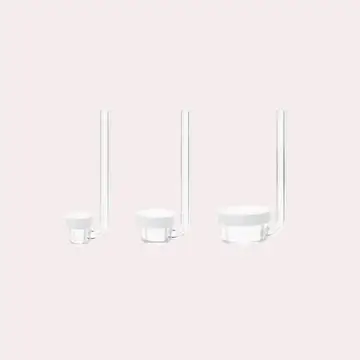
UNS · DiffuserHigh tech
CO2 Diffuser
- Tank size
- 197–197 L
Any pressurised CO2 tank where you want a simple, low-cost in-tank diffuser.
3 models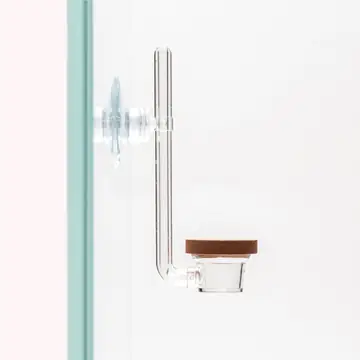
Twinstar · DiffuserHigh tech
CO2 Diffuser
- Tank size
- 121–121 L
Small to large planted tanks where you want a tough, tidy in-tank diffuser with the bubble counter included.
3 models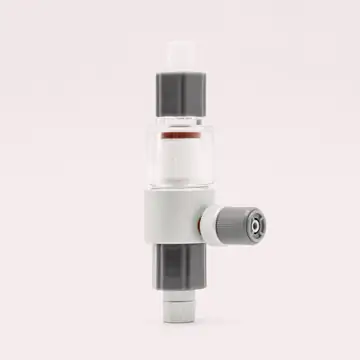
Qanvee · DiffuserHigh tech
Inline CO2 Atomizer
Planted tanks with a canister filter, especially 190 L and up, where you want hidden CO2 hardware.
2 models
Frequently asked questions
Direct answers to the questions search engines and AI assistants surface most often about this species.
Do I need CO2 for a planted tank?
Not for easy low-light plants like anubias, java fern, crypts and mosses. You do need it for carpets, red stems and fast lush growth. Pick plants that suit whichever way you go.
Is CO2 dangerous for fish?
It can be if you overdo it. Too much CO2 starves fish of oxygen, which is why the drop checker turning yellow is a warning. Ramp up slowly, keep it green, and turn it off before lights out.