
Equipment guide
Aquarium Lighting
How much light your plants actually need, and why brighter isn't better.
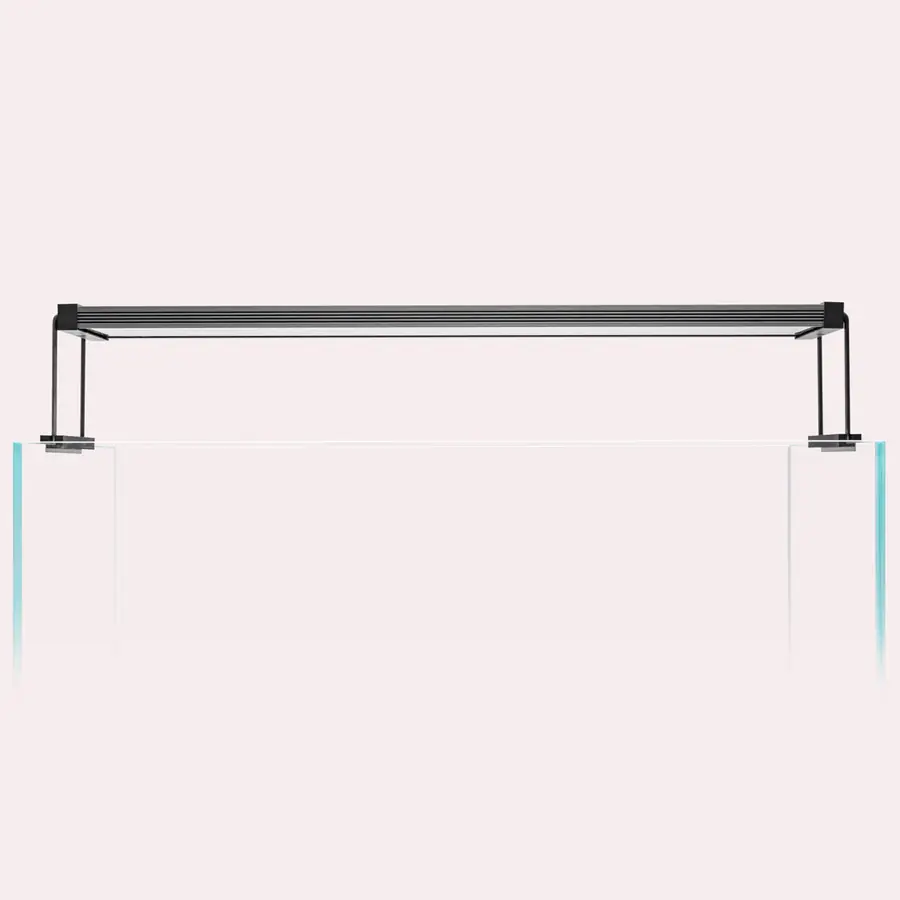
TL;DR, Aquarium Lighting
Light drives plant growth, but it drives algae just as hard, so the goal is to match light to what your plants and CO2 can keep up with, not to fit the brightest fixture you can find. Low-light plants like anubias, java fern, crypts and mosses want modest light and no CO2. Demanding carpets and red stems want strong light plus CO2, or they melt and hand the extra light to algae instead. Run six to eight hours on a timer and adjust from there.
Light demand by plant type
Rough PAR at the substrate. Pair high light with CO2.
- Low (anubias, java fern, crypts, mosses)
- ~15 to 30 PAR, no CO2 needed
- Medium (most stems, easy carpets)
- ~30 to 50 PAR
- High (demanding carpets, red stems)
- 50+ PAR, CO2 required
- Colour temperature
- ~6500K for a natural planted look
- Photoperiod
- 6 to 8 hours on a timer
How much light you need
Plant demand is usually described in PAR, the amount of usable light reaching the substrate. Easy plants are happy in low light, most stems and easy carpets want medium, and demanding carpets and reds need high light and the CO2 to match. If you give high light without CO2 and nutrients to back it, the plants can't use the extra and algae takes it instead. When in doubt, start lower and raise it slowly.
Photoperiod
Six to eight hours a day suits most planted tanks, on a timer so it stays consistent. Longer does not mean more growth, it mostly means more algae. If you get algae, shorten the day before you reach for anything else. A consistent schedule matters more than the exact length.
Depth and spread
Light falls off fast with depth, so a tall tank needs a stronger fixture to reach the same PAR at the substrate as a shallow one. Spread matters too: a single spotlight leaves dark corners where plants sulk and algae settles. Aim for even coverage across the whole footprint.
Colour temperature and spectrum
Colour temperature, measured in Kelvin, is about how the tank looks and how well plants show their colour, not really about growth. Plants grow across a wide spectrum, so this is mostly aesthetic. Around 6500K is a clean, natural daylight that suits most planted tanks and makes greens and reds pop. Warmer, lower-Kelvin light looks yellow; cooler, higher-Kelvin light looks blue and clinical. A fixture with a bit of red and blue in the mix flatters plant colour, which is why full-spectrum planted lights look richer than a plain white shop light.
Compare real lights
All 50 in the catalogueOur gear catalogue lists specs for every model and filters by your tank size.
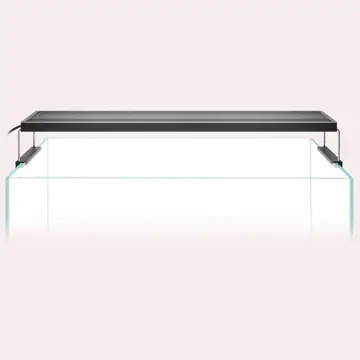
Chihiros · Bar / clip-onHigh tech
WRGB II Pro
- Made for tanks
- 30–120 cm tanks
- Power
- 37–138 W
High-tech planted tanks and deeper aquariums where you want lots of output and control over colour.
6 models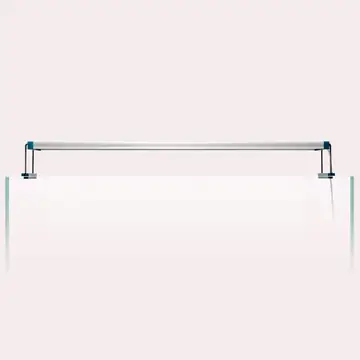
Twinstar · Bar / clip-onLow tech
C Series
- Made for tanks
- 20–135.1 cm tanks
- Power
- 16–62 W
Low to medium light tanks where you want flexible fitting across tank sizes and don't need an app.
6 models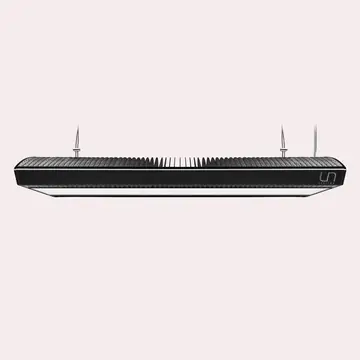
UNS · PendantHigh tech
Titan 1 RGB LED
- Made for tanks
- 60–90 cm tanks
- Power
- 90 W
Mid-size high-tech planted tanks where you want a pendant hung above an open-top rimless tank.
1 model
Frequently asked questions
Direct answers to the questions search engines and AI assistants surface most often about this species.
Is too much light bad for a planted tank?
Yes. Light the plants can't use, because they're short on CO2 or nutrients, goes straight to feeding algae. Match light to your plants and CO2, and start lower rather than higher.
How long should aquarium lights be on?
Six to eight hours a day on a timer suits most planted tanks. Longer mostly grows more algae, not more plant. If algae appears, shorten the photoperiod first.