Fin & Stem logo
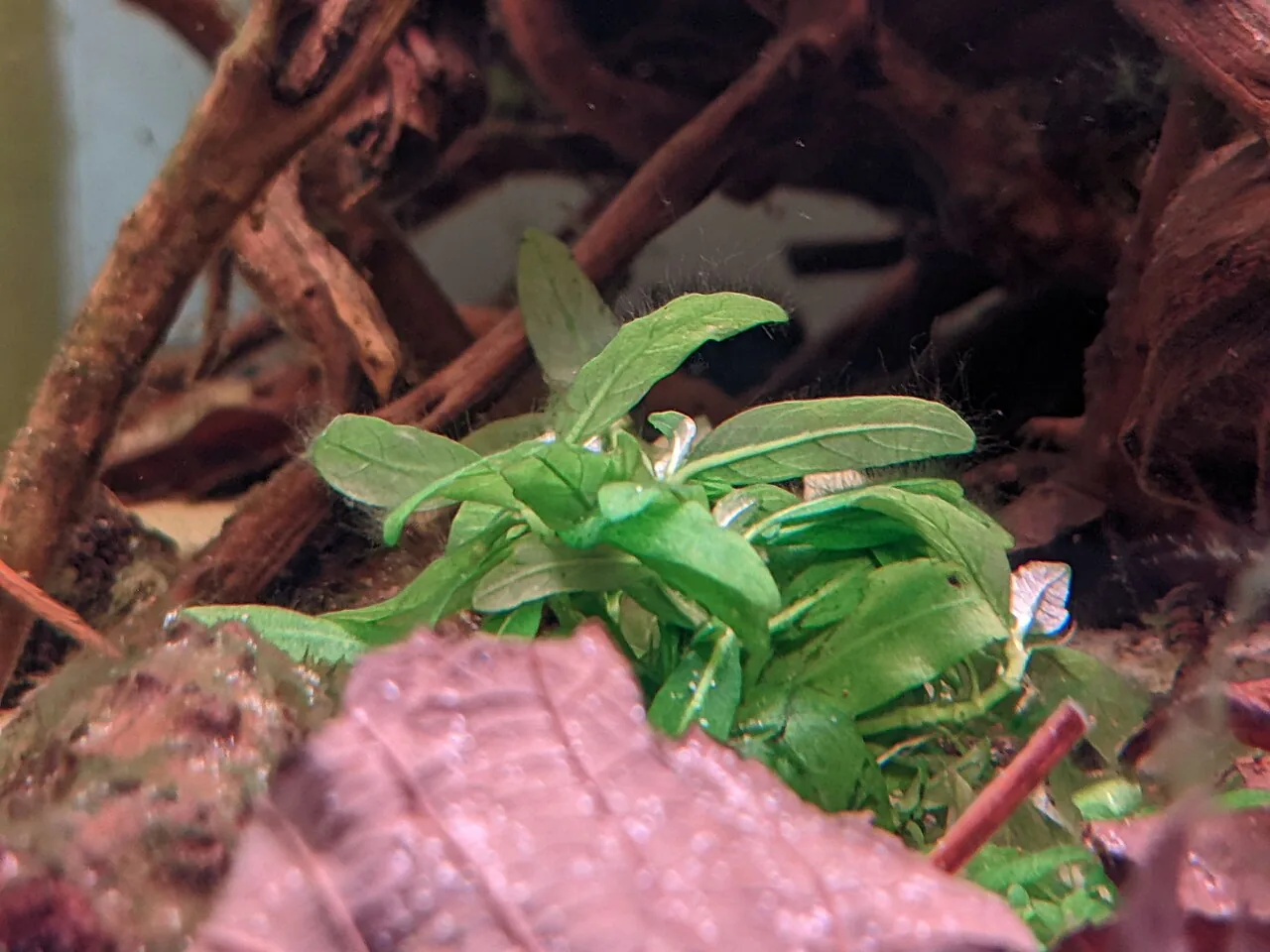
Staurogyne Repens (Staurogyne repens)
PlantStem

Staurogyne Repens

Staurogyne repens

Rio Cristalino basin, BrazilEasy

TL;DR, Staurogyne Repens

The easiest 'carpet without CO₂' plant. Compact rosette of small bright-green leaves that branches and creeps horizontally when trimmed. Much more forgiving than Monte Carlo or HC Cuba, great low-tech alternative.

Staurogyne Repens (Staurogyne repens) is a stem (creeping) aquatic plant for the foreground to midground of a planted tank. It reaches 5–10 cm under good conditions and grows at a slow to medium rate. Light: medium. CO₂: optional. Target 20–28 °C, pH 6.0–7.5, and 2–15 dGH. Substrate: Nutrient-rich substrate + root tabs help. Propagate via cuttings (lateral shoots).

  • LightMedium
  • CO₂Optional

Care at a glance

The easiest 'carpet without CO₂' plant. Compact rosette of small bright-green leaves that branches and creeps horizontally when trimmed. Much more forgiving than Monte Carlo or HC Cuba, great low-tech alternative.

By Updated 2 min read

Part of our complete guide to the planted aquarium.

Staurogyne Repens (Staurogyne repens)
호로조 · CC BY-SA 3.0Source

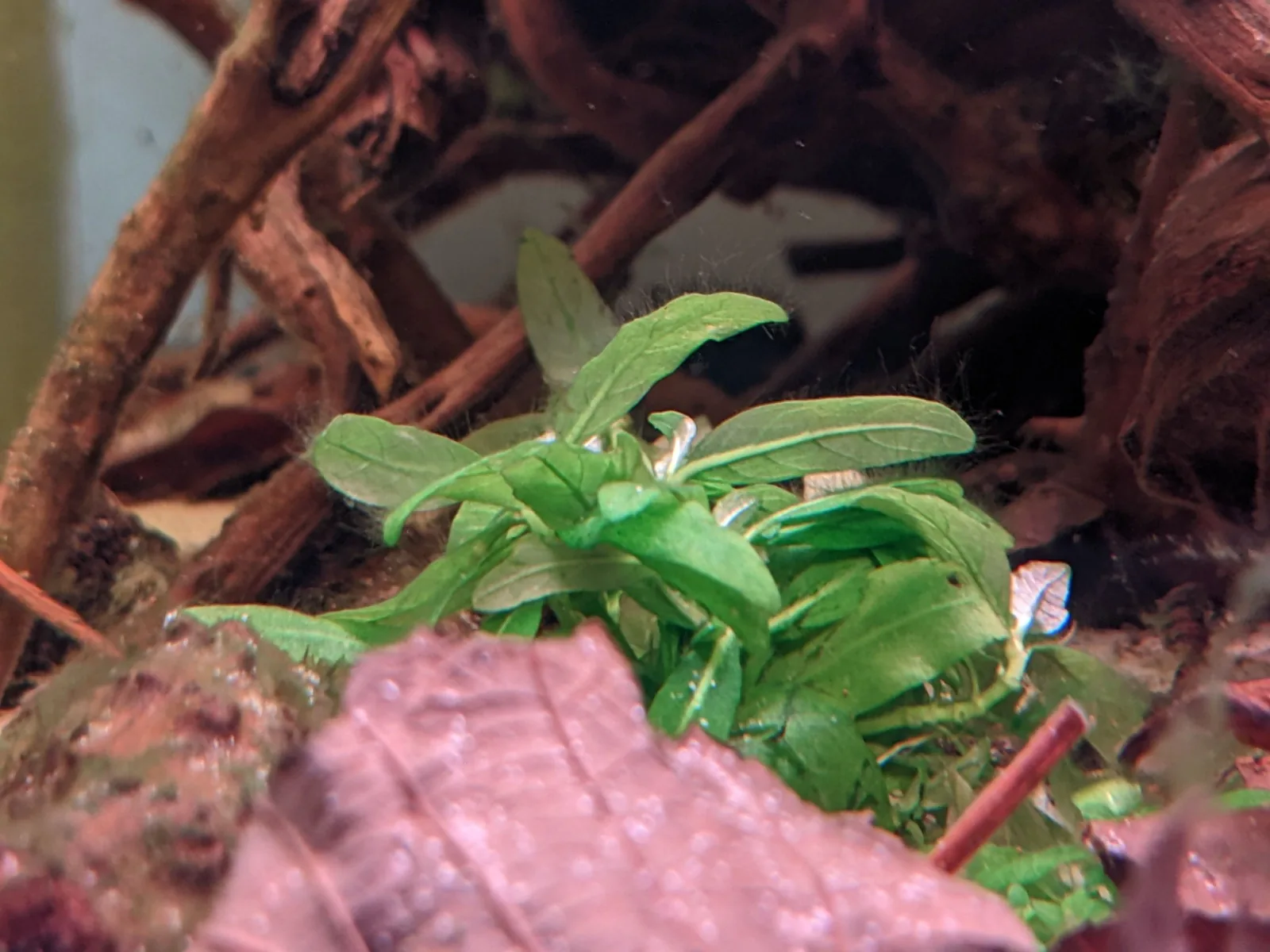
Hero photo by 호로조 · CC BY-SA 3.0 · Wikipedia

Tank fit

The parameters that decide whether staurogyne repens fits in your tank.

Parameters

Temperature20–28 °C
15 °C20 °C25 °C30 °C
pH6.0–7.5
4.05.06.07.08.0
Hardness2–15 dGH
0 dGH5 dGH10 dGH15 dGH20 dGH25 dGH
Height5–10 cm
020406080
LightMedium
Low
Medium
High
CO₂Optional
None
Optional
Recommended
Required
GrowthSlow to Medium
Slow
Medium
Fast
V. fast
FlowLow to Medium
Still
Low
Medium
High
V. high

Profile

Family

Acanthaceae

Type

Stem (creeping)

Position

Foreground to Midground

Substrate

Nutrient-rich substrate + root tabs help

Propagation

Cuttings (lateral shoots)

Habitat

Riverbanks of the Cristalino basin, Brazil

Rio Cristalino basin, Brazil

Who it lives with

Tank-mate safety and the species this one is documented to thrive (or fail) alongside.

Pro tips

Hard-won lessons from the tank.

The forgiveness of Anubias with the look of HC Cuba. Plant 2 cm apart in a grid; the bush form fills in over 3–4 months. Once established, it spreads horizontally via lateral shoots — ideal foreground/midground transition plant. Works under LED tank lights without CO₂, which is rare for any 'carpet-like' plant.

Things to watch for

What can go wrong and how to spot it.

Things to watch for

Failure modes, in order of how dramatic the fix is.

Nutrition

Common deficiencies

Pale: iron + nitrogen. Stretchy upward growth: insufficient light. Yellow new growth: trace mineral deficiency.

Algae

Algae issues

Slow growth = some algae attaches to old leaves. BBA particularly on lower leaves. Stable CO₂ (if dosed) and limited light hours during establishment prevent this.

How to care for it

The practical routine, read top to bottom.

  1. Fertilization

    Moderate root and column feeder. Root tabs every 4 months accelerate growth. EI-style column dosing keeps colour bright green.

  2. Trimming

    Top every 4–6 weeks. Cut just above a node; the cut stem branches and sends out horizontal runners. Replanted cuttings root within a week.

Background

Where it comes from, how it behaves, and the variants you'll see at retail.

Show background

In the wild

Where it lived before it came home.

Native rangeRio Cristalino, BrazilBrazil
Origin · Rio Cristalino basin, Brazil

Rio Cristalino basin in southwestern Brazil. Grows partially submerged on stream banks during the wet season, fully emersed during dry months.

Emersed form

Compact bushy emersed habit, slightly stiffer leaves. Submerged form is taller and more open. Almost all wholesale is tissue-culture emersed.

Flowering

Tiny white flowers emersed; almost never flowers submerged.

Variants & identification

The named cultivars and the lookalikes worth flagging.

Variants / cultivars

Standard S. repens is the most common. S. brown ('Brown Staurogyne') is a related species with reddish-brown tones. S. porto velho is a larger Brazilian relative.

Misidentification

Often confused with Hygrophila pinnatifida (creeping, similar habit but different leaf), or with Pogostemon helferi (also bushy compact). The bright lime-green colour and small ovate leaves are the giveaway.

Frequently asked questions

Direct answers to the questions search engines and AI assistants surface most often about this species.

Does Staurogyne Repens need CO₂?

CO₂ requirement: optional. Light requirement: medium. Under low-tech conditions the plant grows at a slow to medium rate.

What light level does Staurogyne Repens need?

Staurogyne Repens (Staurogyne repens) needs medium light. Run a photoperiod of 6–8 hours; longer photoperiods invite algae unless CO₂ and dosing are dialled in.

Where should Staurogyne Repens be planted?

Position: foreground to midground. Substrate: Nutrient-rich substrate + root tabs help It typically reaches 5–10 cm.

How do you propagate Staurogyne Repens?

Propagation method: Cuttings (lateral shoots). Staurogyne Repens is a stem (creeping) plant.

What water parameters does Staurogyne Repens tolerate?

Target 20–28 °C, pH 6.0–7.5, and 2–15 dGH. Flow tolerance: low to medium.

Is Staurogyne Repens suitable for beginners?

Difficulty: 2/5. Forgiving, beginner-friendly once the tank is cycled.

Sources & further reading

Cross-references

Build the rest of the tank.

A planted tank is a system. Pair this plant with one entry from each other pillar to plan the whole scape.