Fin & Stem logo
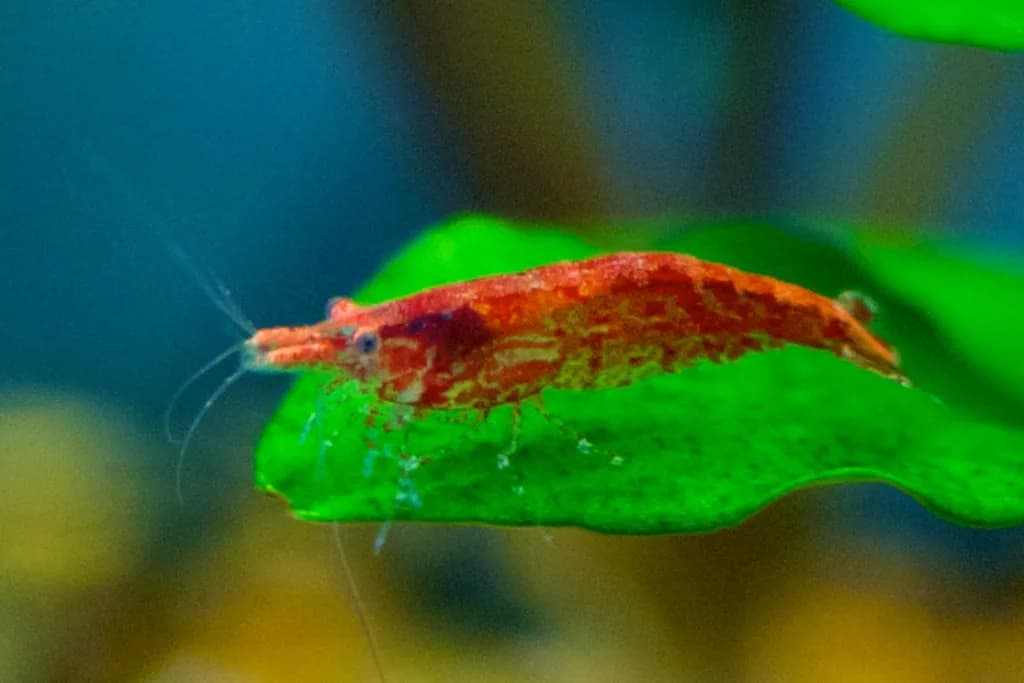
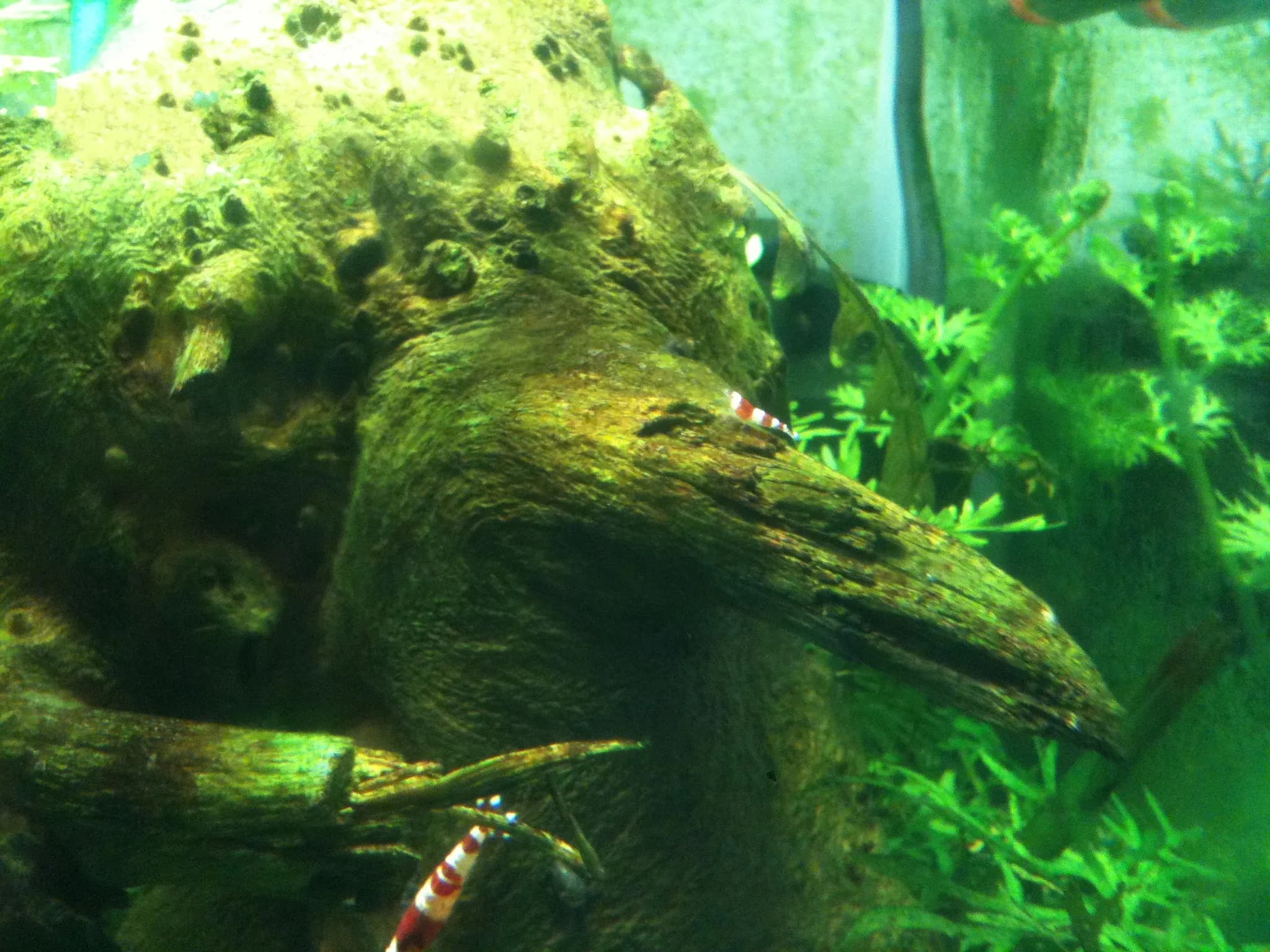
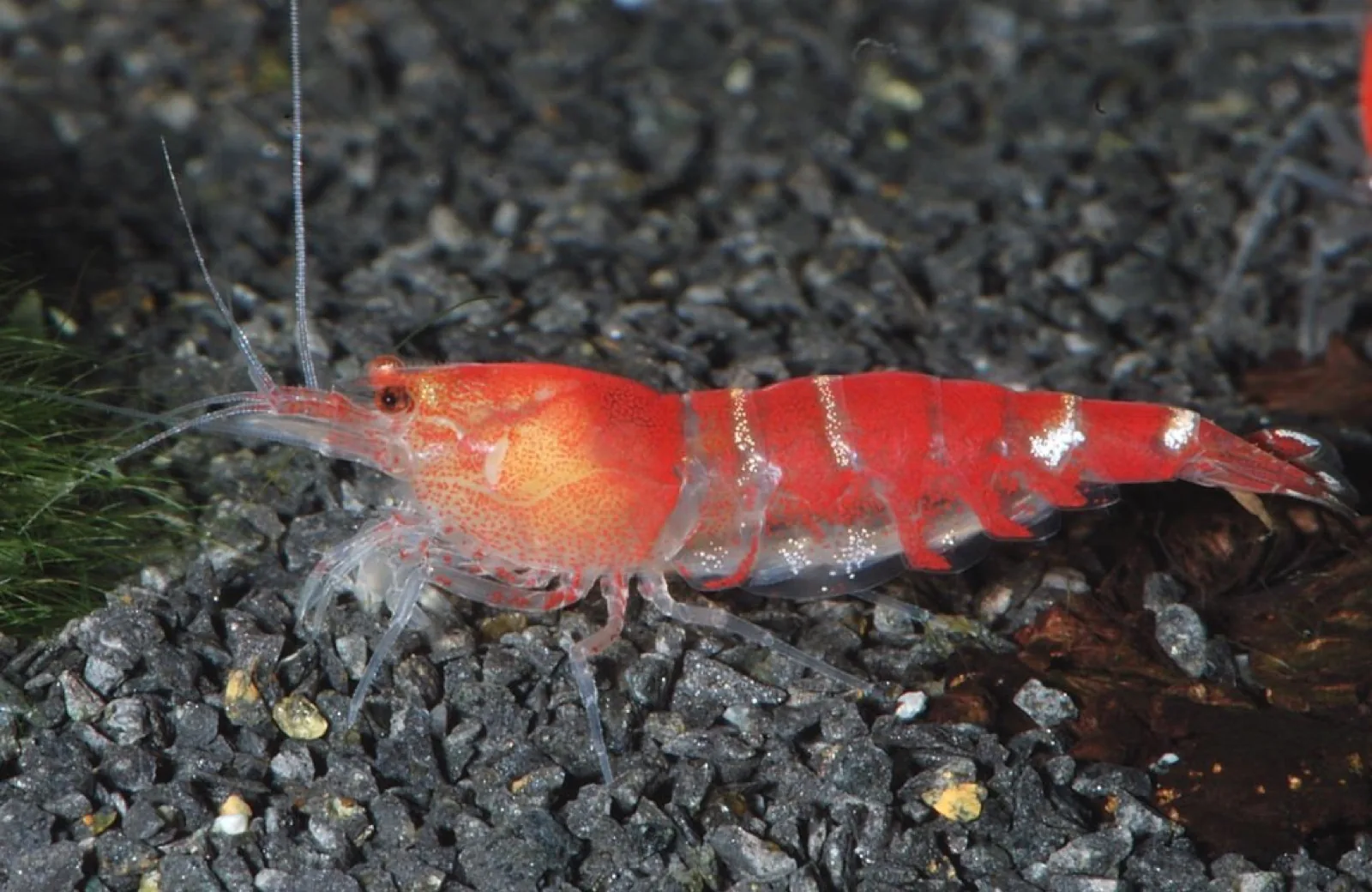
Crystal Red Shrimp (Caridina cantonensis) — adult with distinctive red-and-white banding plus a juvenile
Shrimp

Crystal Red Shrimp

Caridina cantonensis 'CRS'

Selectively bred from Hong Kong wild stockAdvanced

TL;DR, Crystal Red Shrimp

Premium 'caridina' shrimp. Active soil (ADA Amazonia, UNS Controsoil) lowers pH and is effectively required. RO water + remineraliser is standard.

Crystal Red Shrimp (Caridina cantonensis 'CRS') reaches 2.5–3 cm and needs a minimum tank of 30 L with a colony of 10+. Native to Selectively bred from Hong Kong wild stock. Aim for 20–24 °C, pH 5.8–6.8, 3–6 dGH, and 100–160 ppm TDS. Lifespan: 1.5 years. Breeding: medium, requires stable soft, acidic water. Diet: omnivore / detritivore, Specialised CRS foods (Shirakura, Mosura), biofilm, blanched spinach. Plant-safe: Yes. Tank-mates: Species-only or with otocinclus only.

  • Colony10+
  • Plant-safeYes
  • Tank-mate safeSpecies-only or with otocinclus only

Care at a glance

Premium 'caridina' shrimp. Active soil (ADA Amazonia, UNS Controsoil) lowers pH and is effectively required. RO water + remineraliser is standard.

By Updated 2 min read

Part of our complete freshwater shrimp guide.

Crystal Red Shrimp (Caridina cantonensis 'CRS')
DirkBlankenhaus · CC BY-SA 3.0Source

Hero photo by Christophe cagé · CC BY-SA 3.0 · Wikipedia

Tank fit

The parameters that decide whether crystal red shrimp fits in your tank.

Parameters

Temperature20–24 °C
15 °C20 °C25 °C30 °C
pH5.8–6.8
4.05.06.07.08.0
Hardness3–6 dGH
0 dGH5 dGH10 dGH15 dGH20 dGH25 dGH
Adult size2.5–3 cm
035810
TDS100–160 ppm
50 ppm150 ppm250 ppm350 ppm500 ppm
FlowLow
Still
Low
Medium
High
V. high

Profile

Colony minimum

10+

Diet

Omnivore / detritivore

Specialised CRS foods (Shirakura, Mosura), biofilm, blanched spinach.

Clean-up crew
Solid
Breeding

Medium, requires stable soft, acidic water

Lifespan

1.5 yrs

Habitat

Bred from Bee shrimp, wild kin in southern Chinese streams

Selectively bred from Hong Kong wild stock

Who it lives with

Tank-mate safety and the species this one is documented to thrive (or fail) alongside.

Good tank mates

None recommended. Otocinclus possible with caution. Other Caridina colour morphs (will crossbreed but compatible).

Avoid

All fish bigger than otos. Neocaridina (parameter mismatch — they want harder water).

See full compatibility cross-reference

Pro tips

Hard-won lessons from the tank.

Stability is everything. A 'perfect' parameter list isn't as important as keeping that perfect list IDENTICAL for years. Top off with RO + remineralised water only — never raw tap. Use TDS pen and KH/GH test kit weekly. Buy 10+ from one breeder to start your colony — genetics matter.

Things to watch for

What can go wrong and how to spot it.

Things to watch for

Failure modes, in order of how dramatic the fix is.

Health

Diseases

More fragile than Neocaridina. Susceptible to bacterial infections during parameter changes. Quality of source colony matters enormously — buy from breeders, not chains.

Common mistakes

Common mistakes

1) Mixing CRS with Neocaridina — different water needs. 2) Using regular gravel instead of active soil. 3) Topping off with tap water. 4) Buying mixed-grade colonies and being disappointed when shrimplets are random.

How to care for it

The practical routine, read top to bottom.

  1. Tank setup

    30 L+ DEDICATED to CRS. Active soil substrate (ADA Amazonia, UNS Controsoil, Akadama) — non-negotiable, the soil buffers pH down to 5.8–6.5. RO water + remineraliser (Salty Shrimp GH+). Sponge filter only. Stable temp 21–24 °C. NO fish.

Background

Where it comes from, how it behaves, and the variants you'll see at retail.

Show background

In the wild

Where it lived before it came home.

Native rangeHong Kong
Origin · Selectively bred from Hong Kong wild stock

Selectively bred from C. cantonensis (Hong Kong region) — the CRS strain is purely a captive creation, no wild equivalent.

Behavior & breeding

How they pair, reproduce, and grow.

  1. Stage 1
    Telling them apart

    Sexing

    Same as Neocaridina — females larger, saddle visible, curved underside. Patterns may differ slightly between sexes but grading applies equally.

  2. Stage 2
    Molting cycle

    Molting

    Every 4–6 weeks. Sensitive to KH/GH shifts — failed molts more common than in Neocaridina.

  3. Stage 3
    Life stages

    Lifecycle

    Females carry 20–30 eggs for ~30 days. Same direct-development pattern as Neocaridina. Mature at 3 months.

Variants & identification

The named cultivars and the lookalikes worth flagging.

Color grades / variants

Lowest to highest by white-to-red ratio and pattern crispness: C → B (most common, 'V' band) → A (more white, hinomaru spot) → S (full white head, red body bands) → S+ → SS → SSS (mostly white, crisp red marks). Higher grades exponentially more expensive.

Frequently asked questions

Direct answers to the questions search engines and AI assistants surface most often about this species.

What tank size do Crystal Red Shrimp need?

Minimum tank: 30 L with a colony of 10+. Crystal Red Shrimp (Caridina cantonensis 'CRS') reach 2.5–3 cm as adults.

What water parameters do Crystal Red Shrimp need?

Target 20–24 °C, pH 5.8–6.8, 3–6 dGH, and 100–160 ppm TDS. Mature, cycled, low-nitrate water is non-negotiable.

Are Crystal Red Shrimp safe with fish?

Tank-mate notes: Species-only or with otocinclus only. Plant safety: Yes.
How do Crystal Red Shrimp breed?

Breeding: Medium, requires stable soft, acidic water. In a stable colony of 10+ adults you will see berried females naturally once parameters and food are right.

What do Crystal Red Shrimp eat?

Diet: omnivore / detritivore, Specialised CRS foods (Shirakura, Mosura), biofilm, blanched spinach. Algae-eating rating: 3/5.

How long do Crystal Red Shrimp live?

Typical lifespan: 1.5 years.

Sources & further reading

Cross-references

Build the rest of the tank.

A planted tank is a system. Pair this shrimp with one entry from each other pillar to plan the whole scape.