
Algae fix guide
Black Beard Algae
Also called BBA, black brush algae
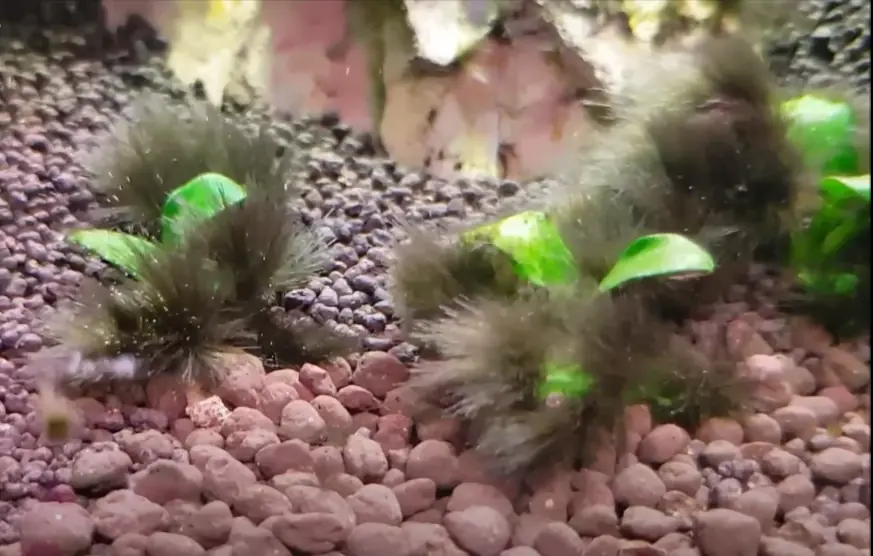
Dark grey to black tufts on leaf edges, hardscape and equipment, worst where flow hits.
TL;DR, Black Beard Algae
Black beard algae is the dark, bristly stuff that grows in tufts on leaf edges, wood, and inflow pipes, usually where flow is strongest. It is one of the most hated types because it clings hard, and it is almost always a CO2 problem. Unstable or low CO2 combined with too much organic waste is what feeds it. Get CO2 steady, keep the water clean, and spot treat the tufts with liquid carbon or diluted hydrogen peroxide. A Siamese algae eater is one of the few fish that will actually eat it.
How to spot it
Short dark tufts, grey-green to nearly black, with a bristly beard-like texture. It anchors on hard edges: leaf margins, driftwood, rocks, spray bars and filter intakes.
What causes it
- Fluctuating or low CO2, the number one cause
- A build-up of organic waste and detritus
- Slow or dead flow spots where debris settles
How to fix it
- Get CO2 stable and sufficient, a steady level matters more than a high one; check the drop checker stays green all day.
- Improve flow so no corner stagnates, and clean the filter to cut organic waste.
- Spot treat tufts with liquid carbon or 3% hydrogen peroxide, dosed onto the algae with the pump off for a few minutes.
- Add a Siamese algae eater, which is one of the few fish that eats softened black beard algae.
- Remove heavily coated leaves and hardscape and treat them out of the tank.
Keep it from coming back
Keep CO2 rock steady day to day, stay on top of filter cleaning and water changes, and make sure flow reaches every corner. BBA hates a stable, clean tank.
What eats it
A clean-up crew won’t fix the cause, but these species graze it and keep the last of it down:
Treating it and steadying CO2
From our gear catalogue

Frequently asked questions
Direct answers to the questions search engines and AI assistants surface most often about this species.
What causes black beard algae?
Unstable or low CO2 is the main driver, usually alongside a build-up of organic waste and some dead flow spots. Fix the CO2 and the flow and you take away what it lives on.
How do I get rid of black beard algae for good?
Stabilise CO2, clean up organics and flow, spot treat the tufts with liquid carbon or peroxide, and let a Siamese algae eater graze the rest. It takes a few weeks but it does not come back if the CO2 stays steady.