
Comparison
Java Moss vs Christmas Moss: Which to Choose
Java moss and Christmas moss look alike but grow differently. Christmas is for ornament, Java is for shrimp tanks. Here is the full comparison.
Updated 6 min read
Part of our complete aquatic-moss guide.
The short answer
Java moss (Taxiphyllum barbieri) and Christmas moss (Vesicularia montagnei) are the two most-asked-about aquarium mosses, and they get confused with each other constantly. The defining difference is structure. Christmas moss grows in a distinctive triangular fan pattern that looks like a fir tree branch when trimmed properly. Java moss is shaggier and stringier with no clear pattern. Christmas moss is tidier and more ornamental but needs slightly more light and CO2 to keep its fan shape; Java moss tolerates almost anything but goes ragged if left untrimmed. For a shrimp tank nursery, Java is the better pick. For an ornamental scape with moss trees or stone accents, Christmas is the better pick. Both attach to wood and stone the same way and cost roughly the same at retail.
Side-by-side comparison
| Feature | Java Moss | Christmas Moss |
|---|---|---|
| Scientific name | Taxiphyllum barbieri | Vesicularia montagnei |
| Family | Hypnaceae | Hypnaceae |
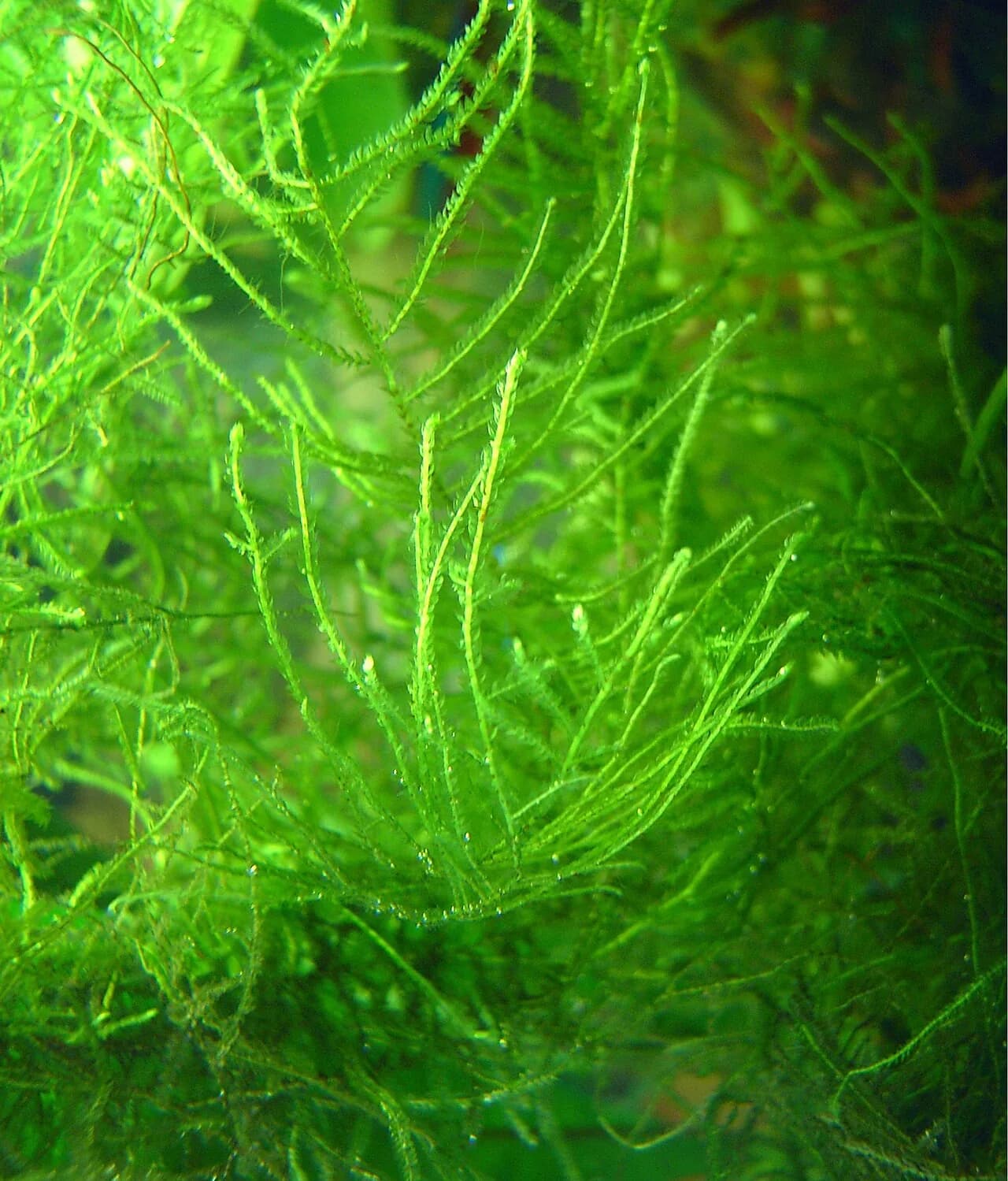
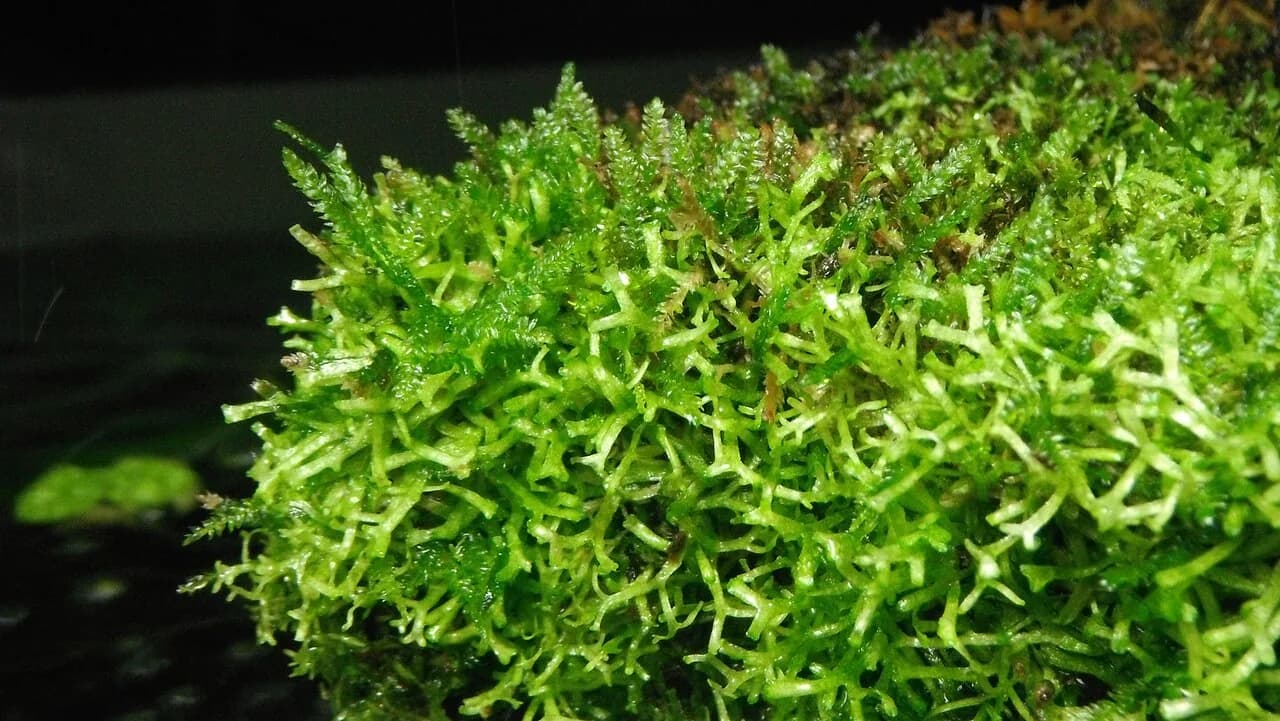
| Frond pattern | Stringy, shaggy, untidy | Triangular fan, fir-tree shape |
| Light | Low to medium | Medium |
| CO2 | None to optional | Optional to recommended |
| Growth rate | Fast | Medium |
| Temperature | 18 to 30 degrees C | 20 to 28 degrees C |
| pH | 5.5 to 8.0 | 5.5 to 7.5 |
| Difficulty | 1/5 | 2/5 |
| Trimming frequency | Every 2 to 4 weeks | Every 3 to 4 weeks, flat trim |
| Best use | Shrimp tank, walls, general | Moss trees, ornamental accents |
The visual difference
The fastest way to tell them apart is to look at the frond pattern.
Java Moss
Taxiphyllum barbieri
Southeast Asia
Java moss grows in shaggy, irregular tufts with no clear directional pattern. New growth comes off the older fronds in random directions. Left alone, it forms a thick green blanket that looks pleasantly natural but messy.
Christmas Moss
Vesicularia montagnei
Asia (tropical)
Christmas moss grows in flat triangular fans where each main branch has progressively shorter side branches running off it, like the silhouette of a Christmas tree. Trimmed flat against a piece of wood, Christmas moss looks intentional in a way Java moss never quite does.
When a portion bought as one species grows in the wrong pattern, it is almost certainly the other species. Naming chaos in the retail trade is real.
Care requirement differences
The two mosses split on two parameters: light and CO2.
Java moss tolerates almost anything. It grows in low light, no-CO2 tanks. It tolerates temperatures from cool (18 degrees C) to tropical (30 degrees C). The pH range it handles is wider than most aquarists ever encounter. The only practical limit is liquid carbon dosing, which can melt some moss species, though Java is generally hardy against it.
Christmas moss is fussier. Without medium light (around 30 to 40 PAR at substrate) and at least liquid carbon or low-pressure CO2, it loses the fan pattern and starts to look like a less attractive version of Java moss. The species still survives in low-tech tanks, but the ornamental quality drops noticeably.
For a tank without CO2 and without a high-quality stable low-tech setup over at least three months, Java moss is the safer choice. Christmas moss will disappoint.
Trimming difference
Trimming technique matters more than people expect.
Java moss wants regular hard trimming. Cutting it back to the attached layer every two to four weeks works well. New growth comes back fast and dense. A thick uncut mass of Java moss eventually dies in the inner core from no light and the whole thing detaches in clumps.
Christmas moss wants flat trimming with sharp scissors every three to four weeks. The technique is to cut the surface horizontally, parallel to the wood or stone the moss is attached to. This forces the moss to branch sideways rather than upward, which is what gives the triangular fan pattern its prominence. Christmas moss trimmed the same way as Java moss (random hacking) never develops the species' signature shape.
Best use cases
Different scapes ask different things of the moss.
Moss trees and bonsai
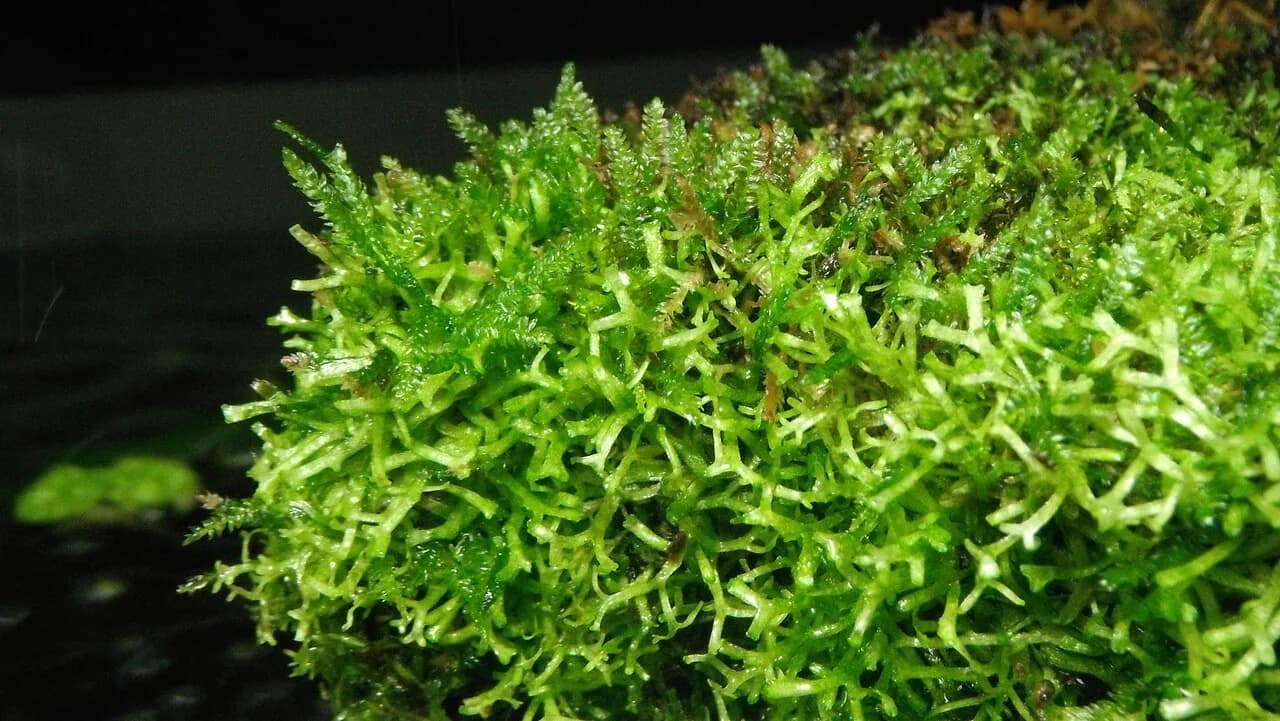
Christmas moss is the canonical pick. The fan pattern looks like canopy foliage when attached to the branches of a piece of upright driftwood. Mini Christmas moss (a smaller cultivar) is even better for nano bonsai trees.
Mini Christmas Moss
Vesicularia sp.
Asia
Underwater walls
Either works. Java moss fills in faster. Christmas moss looks tidier once established. Both attach the same way: pressed thinly between two sheets of stainless mesh, weighted to a back wall, left to grip the mesh over six to eight weeks.
Shrimp tank nursery
Red Cherry Shrimp
Neocaridina davidi
Taiwan (selectively bred)
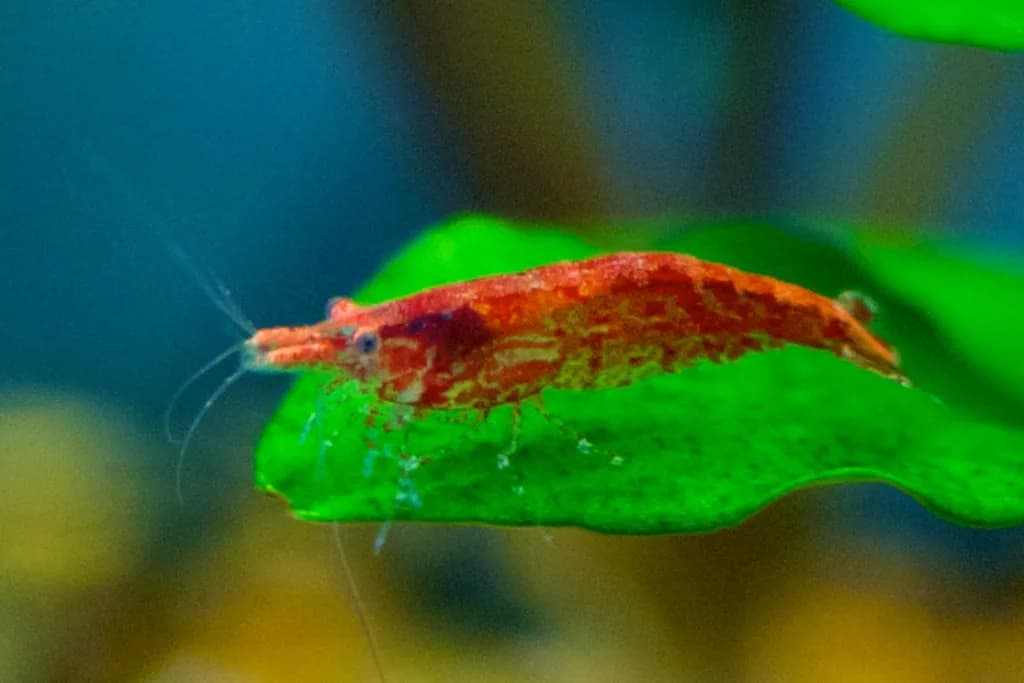
Java moss is the standard. The messy, dense fronds trap biofilm (the shrimplets' first food) and provide refuge from any tank mates. A cherry shrimp colony alongside fish lives or dies on moss volume. See can neon tetras live with cherry shrimp for the cover-density math.
Stone accents and crevice fillers
Christmas moss looks better. The fan pattern hugging a contoured stone is one of the more striking small-scale aquascape effects.
General-purpose green coverage
Java moss. It is faster, cheaper, and easier.
Cousins worth knowing
Several other Hypnaceae mosses sell under similar names.
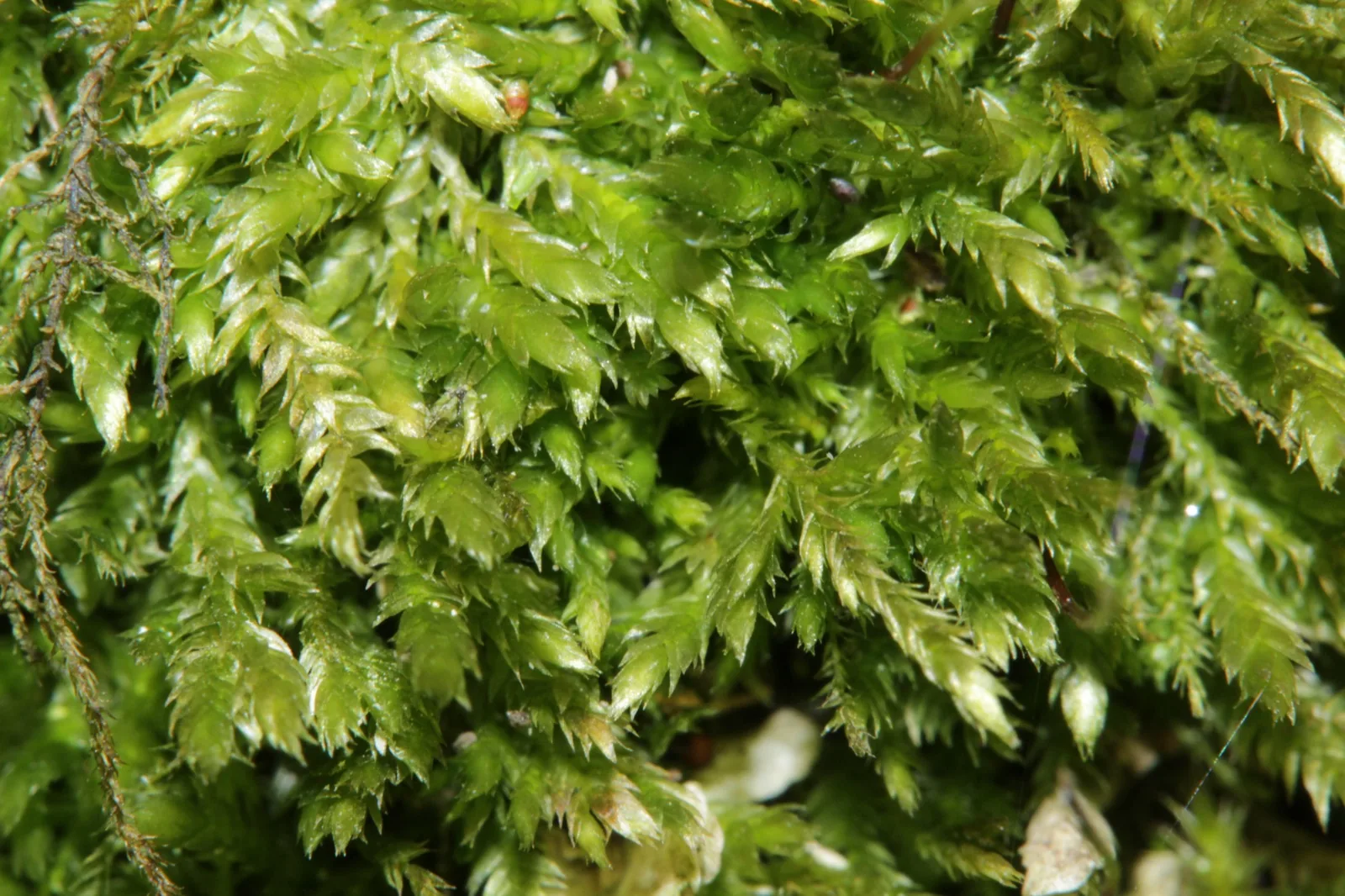
Flame Moss
Taxiphyllum 'Flame'
Asia
Flame moss grows upward in distinctive twisting columns. It looks like green fire. Sensitive to temperatures above 26 degrees C.
Weeping Moss
Vesicularia ferriei
China
Weeping moss droops downward. Attached to a high point on driftwood, it creates a willow-canopy effect.
Spiky Moss, Peacock Moss, and Phoenix Moss (Fissidens fontanus, which is in a different family and is technically a different organism but is sold alongside the others) also exist in the trade. All have specific aesthetic uses. For a quick overview of every moss in the catalogue, the aquatic moss guide pillar lays them out side by side.
How to attach moss to wood and stone
Two methods cover every situation.
Cotton thread method. Spread the moss in a thin layer (no thicker than 5mm) against the surface. Wrap cotton sewing thread around the wood or stone, securing the moss in a tight criss-cross pattern. The thread should be tight enough to hold but not so tight that it cuts the moss. The moss will send out rhizoids that grip the surface over six to eight weeks. The cotton thread rots and falls off in roughly the same window. Best for porous surfaces (driftwood, lava rock, ohko stone).
Cyanoacrylate gel method. Cyanoacrylate gel super glue (gel, not liquid; the liquid runs and turns white in water) works well. A few small dabs of glue on the dry wood or stone surface, then a thin layer of moss pressed into the glue and held for 10 seconds. The glue sets underwater and holds the moss permanently. Faster and tidier than thread but small white glue patches are visible until the moss grows over them. Best for stones and smooth driftwood.
Both methods work for both Java and Christmas moss.
Plan the moss attachment
The compare tool lays both species' care parameters side by side. The compatibility tool anchored to Java moss shows every fish, shrimp, and plant that tolerates the same water parameters.
Related reading
- Best fish for a 30 litre planted tank
- Can neon tetras live with cherry shrimp?
- Low-light aquarium plants that don't need CO2
Sources
Frequently asked questions
Direct answers to the questions search engines and AI assistants surface most often about this species.
Which moss is easier: Java or Christmas?
Java moss. It tolerates almost any parameters, any light level, and grows fast enough to recover from neglect. Christmas moss is fussier and only keeps its triangular fan pattern under medium light with stable CO2 or a low-tech tank that is at least three months mature.
Can Christmas moss grow without CO2?
Yes, but it will not hold the fan pattern as cleanly. Without CO2, Christmas moss reverts toward a stringier appearance similar to Java moss. To keep the classic triangular fronds, at least liquid carbon (Easy Carbo or Excel) or low-pressure CO2 is needed.
How does moss attach to driftwood?
Two methods. Cotton thread: wrap a thin layer of moss against the wood, tie with thread, wait six to eight weeks for the rhizoids to grip, then the thread rots away. Cyanoacrylate gel (super glue): dab a small amount on the wood, press the moss in. Both work; glue is faster and cleaner.
Will moss grow on aquarium glass?
Java moss will grow against glass if pressed and held, but it does not attach (no rhizoid uptake on smooth glass). It will eventually detach. Wood and porous stone work better.
Do shrimp prefer Java moss or Christmas moss?
Java moss, slightly. The denser, less tidy structure traps more biofilm and gives shrimplets better refuge. Christmas moss works too but Java is the standard pick for a shrimp tank.