
Comparison
Neocaridina vs Caridina Shrimp: Which Should You Start With?
Neocaridina shrimp tolerate tap water and forgive mistakes. Caridina shrimp need RO water and active soil. Here is which to start with and why.
Updated 7 min read
Part of our complete freshwater-shrimp guide.
The short answer
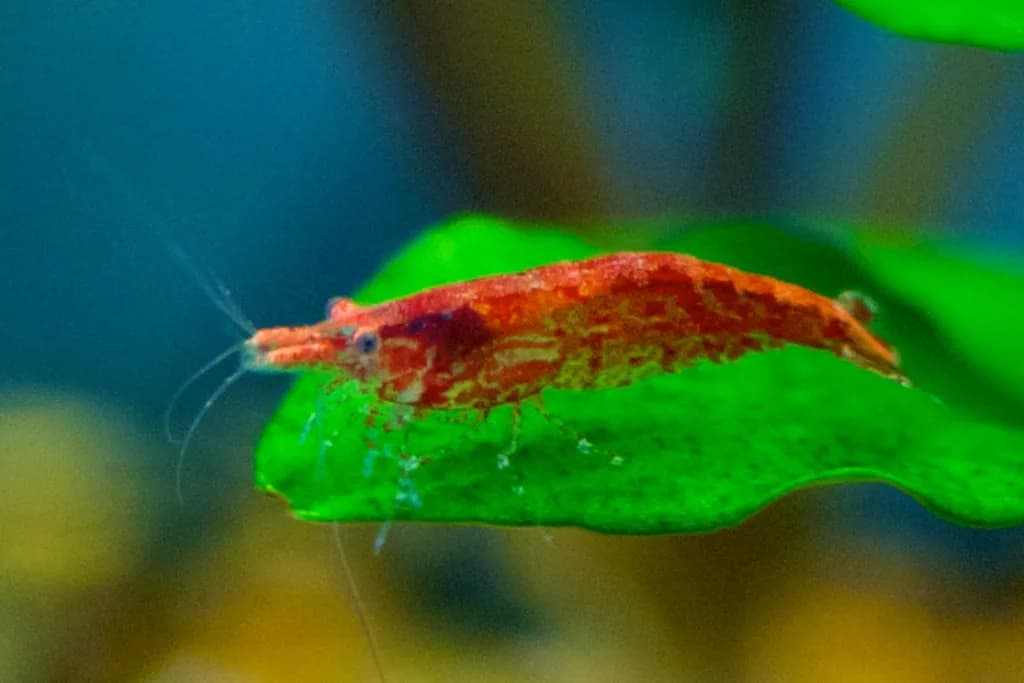
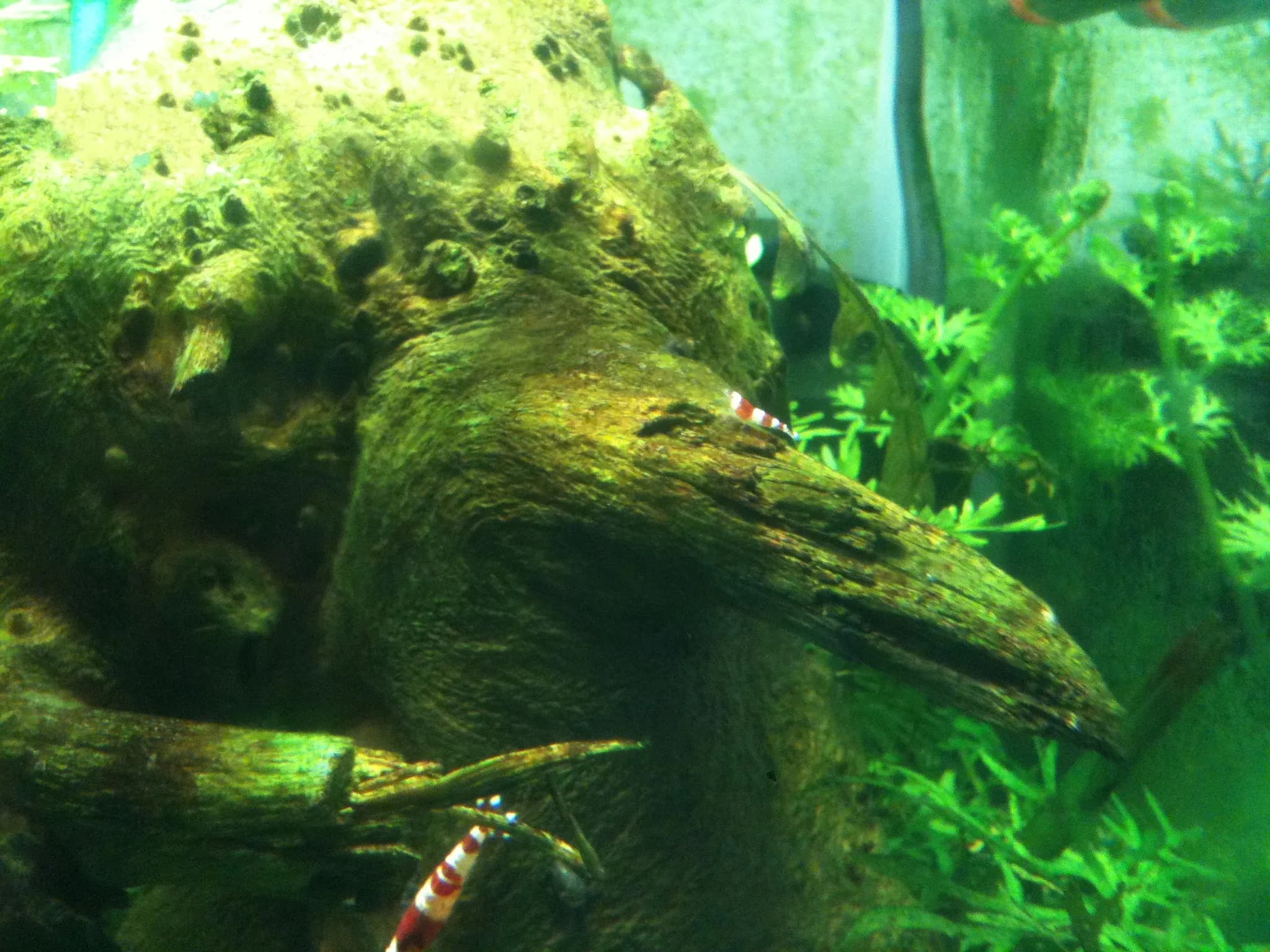
The two genera of dwarf freshwater shrimp dominate the hobby. Neocaridina davidi covers Cherry Shrimp, Blue Dream, Yellow, Snowball, Painted Fire Red, and all the other colour morphs at retail. Caridina cantonensis covers Crystal Red Shrimp (CRS), Crystal Black, Bee, Blue Bolt, and the Taiwan Bee morphs. Neocaridina tolerate a wide pH range (6.5 to 8.0), forgive mistakes, breed in dechlorinated tap water, and cost $2 to $8 per shrimp. Caridina demand soft acidic water (pH 5.8 to 6.8, KH near zero) sustained by an active soil substrate like ADA Amazonia, plus RO water with remineraliser. They cost $8 to $50+ per shrimp depending on grade. For a first shrimp tank, Neocaridina is the right pick. Caridina makes sense only after a stable Neocaridina colony has run for at least six months.
Genus comparison
| Feature | Neocaridina | Caridina |
|---|---|---|
| Common species | Neocaridina davidi | Caridina cantonensis |
| Wild origin | Taiwan (wild type) | Southern China, Hong Kong |
| Adult size | 2.5 to 3cm | 2.5 to 3cm |
| pH tolerance | 6.5 to 8.0 | 5.8 to 6.8 |
| dGH tolerance | 6 to 15 | 3 to 6 |
| TDS target | 150 to 250 ppm | 100 to 160 ppm |
| KH | 2 to 8 dKH | 0 to 2 dKH (low or zero) |
| Substrate | Any (inert or active) | Active soil required |
| Water source | Tap with dechlorinator | RO with remineraliser |
| Beginner-friendly | Yes | No |
| Lifespan | 1.5 to 2 years | 1.5 years |
| Typical price | $2 to $8 each | $8 to $50+ each |
| Hardness of care | 1/5 (very easy) | 4/5 (advanced) |
Why water chemistry diverges
The two genera evolved in different environments and that drives every other care difference.
Wild Neocaridina davidi live in Taiwanese streams that range from soft acidic to moderately hard alkaline depending on the catchment. The species adapted to a wide chemistry window. A century of selective breeding has produced colour morphs but has not narrowed the chemistry tolerance.
Wild Caridina cantonensis live in soft-water streams in southern China and Hong Kong. The water is naturally acidic (pH 5.5 to 6.5) and very low in dissolved minerals. The species cannot moult properly when minerals are too concentrated, which is why hard tap water kills them slowly through failed moults.
This is why active soils matter for Caridina. An active substrate (ADA Amazonia, UNS Controsoil, Akadama clay, any aquasoil with cation exchange capacity) actively pulls minerals out of the water column and lowers the pH. Inert gravel does nothing of the sort. A Caridina tank built on inert gravel and tap water will lose shrimp slowly week after week without an obvious cause.
The Neocaridina colour spectrum
Selective breeding has produced a rainbow of Neocaridina davidi colour morphs. All have identical care requirements; only the colour differs.
Red Cherry Shrimp
Neocaridina davidi
Taiwan (selectively bred)
The standard. Red Cherry Shrimp are the entry point to the hobby. The "Cherry" or "Sakura" grade (translucent legs, full red body) runs around $2 to $4 each. Higher grades exist (Fire Red, Painted Fire Red) at higher prices and breed truer for solid colour.
Blue Dream Shrimp
Neocaridina davidi 'Blue Dream'
Selectively bred (Neocaridina lineage)
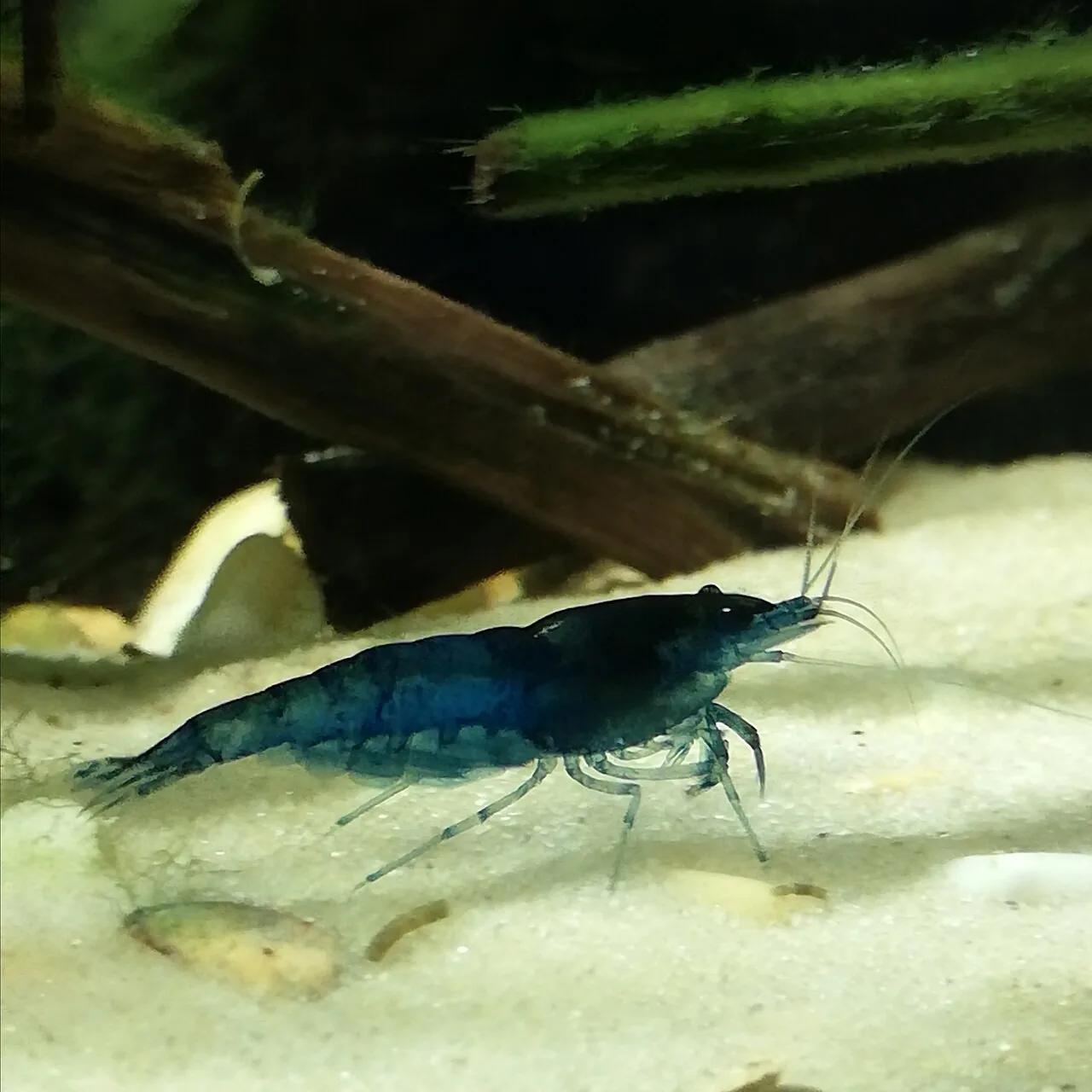
Deep royal blue with opaque legs. The most photogenic Neocaridina against a planted backdrop. Slightly more expensive than cherries because colour line stability is harder to maintain.
Yellow Neocaridina
Neocaridina davidi 'Yellow'
Selectively bred (Neocaridina lineage)
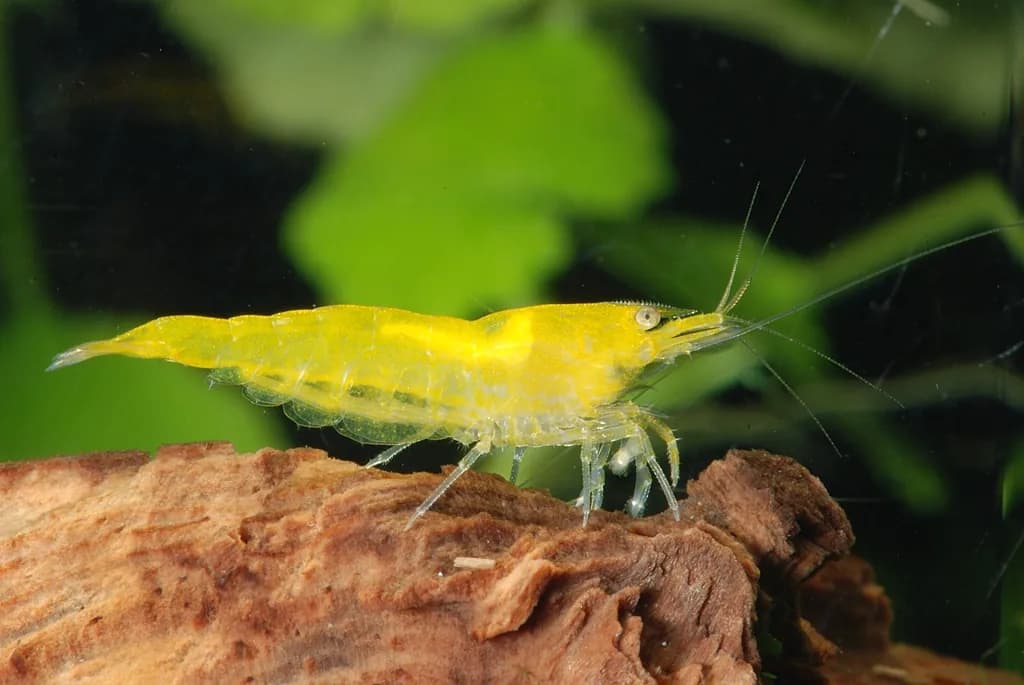
Pure yellow with optional metallic dorsal stripe ("Golden Back"). High visibility against dark substrate.
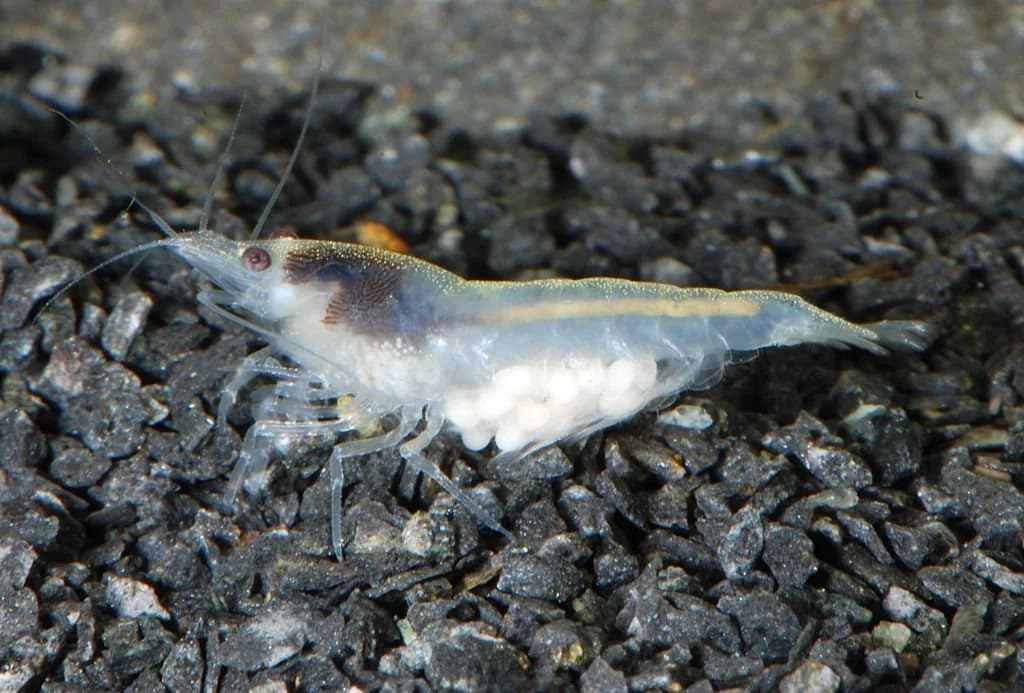
Snowball Shrimp
Neocaridina palmata var.
Selectively bred (China)
Translucent white body with iconic white egg saddles (the eggs look like snowballs under the tail). Prefer slightly harder water than the red morphs.
Critical rule for Neocaridina: one colour morph per tank. Different morphs interbreed freely (same species) and offspring revert toward wild grey within a few generations. Pure colour lines need a dedicated tank per morph.
The Caridina colour spectrum
The Caridina world is more complex. Multiple selective breeding lines, multiple grading systems.
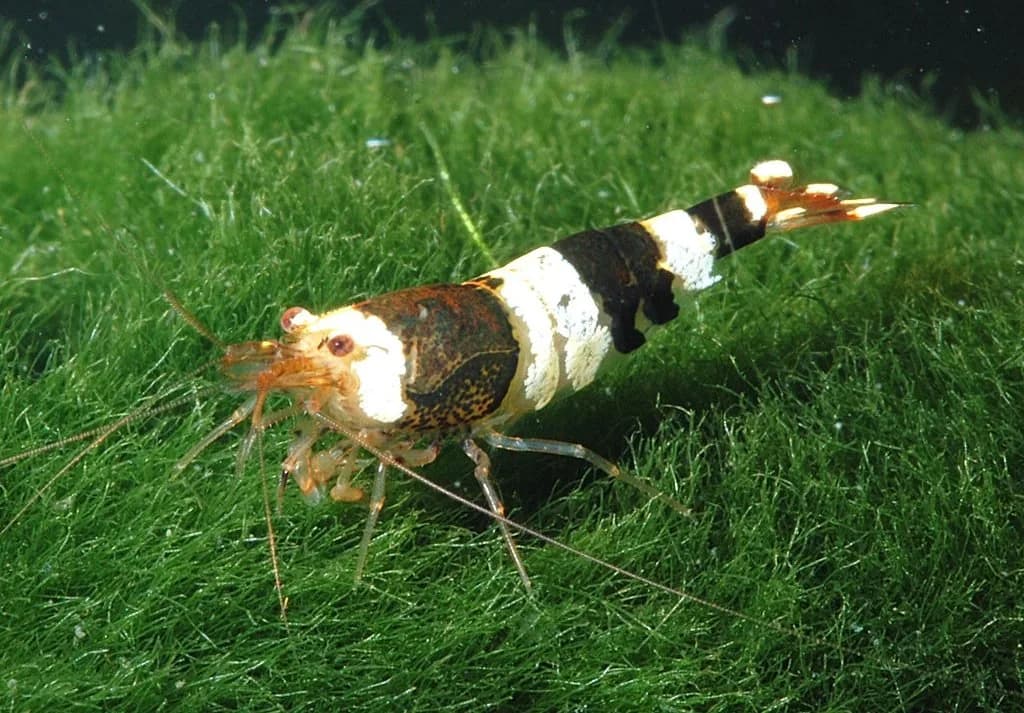
Bee Shrimp (wild)
Caridina cantonensis
Southern China, Hong Kong
The wild ancestor. Caridina cantonensis in its natural form, with imprecise black-and-white striping. These are the foundational stock for every Caridina colour line. Good for genetic diversity in a breeding setup.
Crystal Red Shrimp
Caridina cantonensis 'CRS'
Selectively bred from Hong Kong wild stock
Crystal Red Shrimp (CRS) are the original selective breeding triumph in the genus. Grades run C, B, A, S, S+, SS, SSS by increasing white-to-red ratio and crispness of pattern. C grades cost $5 to $10 each. SSS grades reach $200+ each. Same care across all grades.
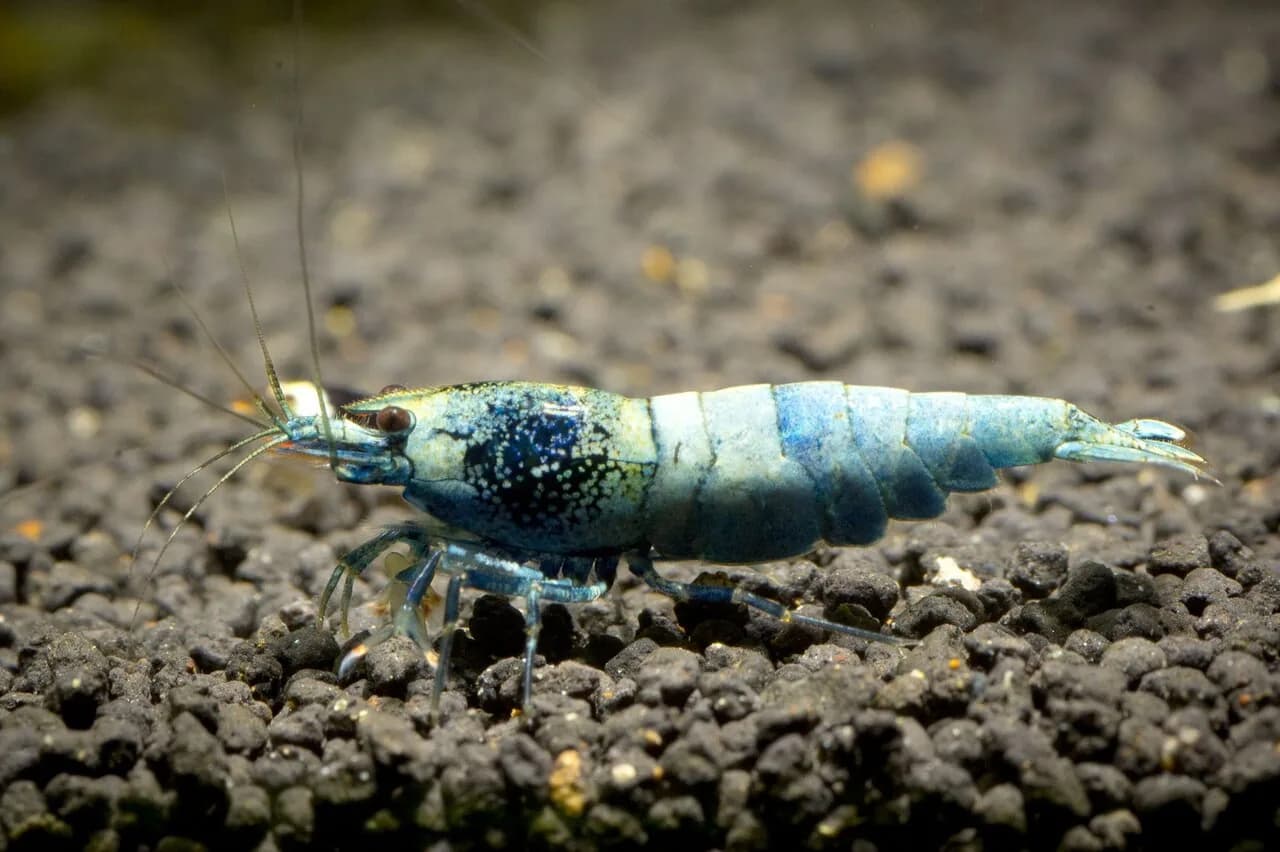
Blue Bolt Shrimp
Caridina cantonensis 'Blue Bolt'
Selectively bred (Taiwan Bee line)
The Taiwan Bee line. A gradient from white head to blue body, with several sub-variants ("Blue Bolt White Stripe", "King Kong Blue Bolt"). More fragile than CRS. Price $8 to $30 each at common grades.
Caridina morphs interbreed within the genus. Mixing CRS and Blue Bolt produces hybrid offspring. Experienced keepers either dedicate a tank per line or knowingly experiment with mixed colonies.
First-tank setup for Neocaridina
The easiest possible setup, suitable for a first shrimp tank.
- Tank: 20 litres or larger. A 30 litre rimless cube is perfect.
- Filter: sponge filter on a low air pump. No powerheads.
- Substrate: any inert sand or gravel. ADA Amazonia works too but is unnecessary expense.
- Water: dechlorinated tap water (provided the tap reads in the 6.5 to 8.0 pH range and 6 to 15 dGH). One test before committing.
- Hardscape: driftwood, stones, and Indian almond leaves for tannins.
- Plants: moss (Java is the standard), Anubias, Bucephalandra, Cryptocoryne. See low-light aquarium plants that don't need CO2.
- Cycle: 6 to 8 weeks before adding shrimp. Confirm zero ammonia and zero nitrite.
- Shrimp: 10 to 15 cherries added via slow drip acclimation over 2+ hours.
- Food: biofilm and algae cover most of it. A quality shrimp pellet (Shirakura, Hikari Shrimp Cuisine) twice a week supplements. Calcium via cuttlebone in the tank.
Total setup cost: $80 to $150.
First-tank setup for Caridina
More demanding. Not recommended without a stable Neocaridina tank already running.
- Tank: 30 litres or larger.
- Filter: sponge filter only.
- Substrate: active soil required. ADA Amazonia (Versions 2 or current) is the standard. The soil needs replacement every 18 to 24 months as the buffering capacity exhausts.
- Water: RO water plus Salty Shrimp GH+ remineraliser, mixed to TDS 100 to 130 ppm.
- Parameters: pH 5.8 to 6.5, KH 0 to 2, dGH 4 to 6. Weekly testing. Parameters must not swing.
- Cycle: 8 to 12 weeks. Active soil can leach ammonia for the first few weeks of a new setup.
- Shrimp: 10 low-grade CRS or wild bees as the starter. 1 to 2 lost to acclimation stress is normal.
- Food: specialised Caridina foods (Shirakura, Mosura, Genchem). Anything with copper is fatal.
- Topping off: RO + remineraliser only. Never raw tap water. Even small tap-water top-ups will shift TDS and KH out of range.
Total setup cost: $250 to $500.
What experienced keepers typically start with
Most aquarists in the hobby report a similar progression. Red Cherries first, in a planted nano tank with dechlorinated tap water and inert substrate. Six months of stable colony breeding builds the muscle memory for parameter discipline. After that, a second dedicated Caridina tank with RO water, active soil, and a small starter group of low-grade CRS becomes manageable. Skipping the Neocaridina step and starting with Caridina is the most common reason new shrimp keepers lose entire colonies in their first three months.
Can they live together?
Not in a way that works for either. Neocaridina parameters at pH 7.5 dGH 10 are uncomfortable for Caridina. Caridina parameters at pH 6.2 dGH 4 are tolerable but suboptimal for Neocaridina (especially harder-water Neos like Snowballs).
Parameters in the middle ground at pH 6.8, dGH 6 let both genera survive. Neither breeds well. The colony stagnates.
Two separate tanks dedicated per genus is the better answer. A Neocaridina tank and a Caridina tank, both 30 litres, gives two thriving colonies for the same total investment as one mediocre mixed tank.
What about Amano shrimp?
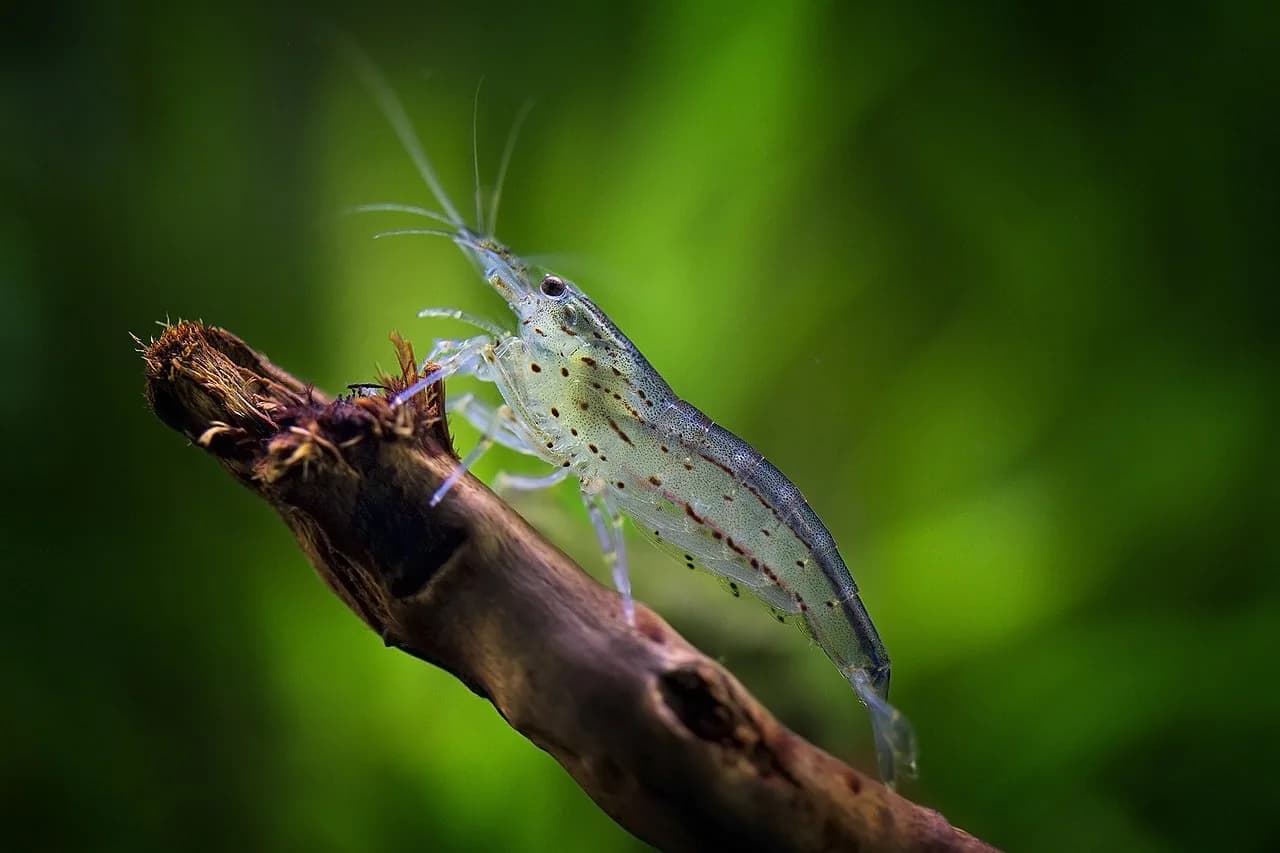
Amano Shrimp
Caridina multidentata
Japan, Taiwan
Amano shrimp (Caridina multidentata) are in the Caridina genus by name but are an entirely different species with completely different care. They tolerate a much wider parameter range than Cantonensis Caridina, ship better, and serve as the best algae-eating shrimp in the hobby. They cannot be bred at home (larvae need brackish water for a phase of development). Amano shrimp pair well with either Neocaridina or Cantonensis Caridina tanks as the larger, more visible co-resident.
Plan the shrimp tank
The compatibility tool anchored to cherry shrimp shows every fish, plant, and moss that overlaps Neocaridina parameters. Anchored to Crystal Red does the same for Caridina. The compare tool lays the two species side by side.
Related reading
- Can neon tetras live with cherry shrimp?
- Java moss vs Christmas moss: which to choose
- Best fish for a 30 litre planted tank
- Low-light aquarium plants that don't need CO2
Sources
Frequently asked questions
Direct answers to the questions search engines and AI assistants surface most often about this species.
Are Neocaridina or Caridina shrimp easier?
Neocaridina, by a wide margin. They tolerate tap water (with dechlorinator), a wider pH range (6.5 to 8.0), and parameter swings that would kill Caridina shrimp. A first shrimp tank should always be Neocaridina.
Can Neocaridina and Caridina shrimp live together?
Technically yes, but they will not thrive together. Neocaridina want neutral to slightly hard water; Caridina want soft acidic water buffered by active soil. Pick the parameters for one genus and the other will live but stop breeding. They will not interbreed (different genera).
Do Caridina shrimp need RO water?
Almost always. Caridina want very low TDS (around 100 to 160 ppm) and low KH. Most tap water is too hard and too high TDS to support a healthy Caridina colony. RO water plus a remineraliser like Salty Shrimp GH+ is the standard setup.
What is the cheapest shrimp to start with?
Red Cherry Shrimp at the lower colour grade. Expect to pay $2 to $4 each. 10 to 15 is the right starting count for a colony. Higher colour grades (Fire Red, Painted Fire Red) cost more but breed truer. Sticking to one grade per tank avoids colour reversion.
Will Cherry Shrimp and Crystal Red Shrimp interbreed?
No. Cherry shrimp are *Neocaridina davidi*. Crystal Red shrimp are *Caridina cantonensis*. They are different genera and do not produce hybrid offspring. They can be kept in the same tank without crossbreeding worries, but they want different water parameters so one will always be stressed.