
Biotope guide
The Blackwater Aquarium: Botanicals and Tannins
How to create a blackwater aquarium, what tannins and botanicals do, the best leaves and pods, which fish and plants suit tea-stained soft water, and how to keep it stable.
Updated 3 min read
Part of our complete planted-aquarium guide.
The short answer
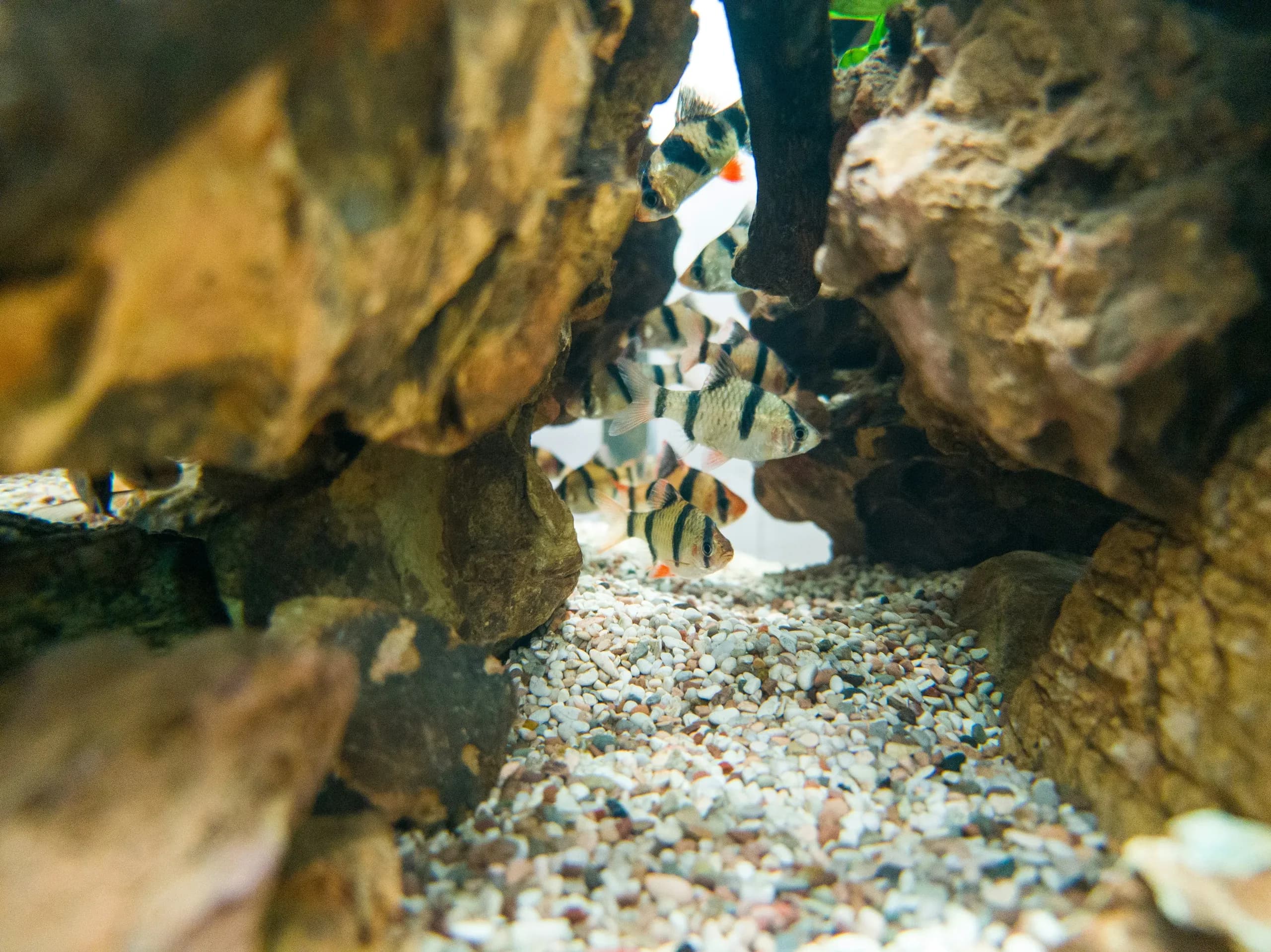
A blackwater aquarium recreates the tea-stained, soft, acidic water of tropical streams and flooded forests. You get the look and the water by adding botanicals, dried leaves, seed pods and wood, which leach tannins that stain the water amber, gently soften and acidify it, and feed a web of biofilm and microbes. It is a dim, atmospheric, deeply natural style that suits soft-water fish and shrimp from those habitats. Start with soft water (low KH), add safe botanicals, choose the right livestock, and accept that the water is meant to look like weak tea. The tannin colour is the point, not a problem.
What makes water "blackwater"
In the wild, blackwater habitats form where water filters through forest floors thick with fallen leaves and wood. The decomposing plant matter releases tannins, the same compounds that colour tea, which stain the water from pale amber to deep brown, lower its pH, and strip out minerals so it is very soft. The result is dim, acidic, mineral-poor water full of leaf litter and hiding places.
Two things create this in a tank: soft water to begin with, and botanicals to stain and acidify it.
Botanicals: leaves, pods and wood
Botanicals are the dried plant matter you add to release tannins and build the habitat. The staples:
- Indian almond (catappa) leaves, the classic, prized for their tannins and mild antibacterial effect.
- Oak and other safe dried leaves, for leaf litter and colour.
- Alder cones, small and tannin-rich.
- Seed pods and cholla wood, for structure, tannins and shrimp grazing.
Only ever use species known to be aquarium-safe, and rinse or briefly boil them first to sink them and remove surface dust. As they break down they feed biofilm, which shrimp and fry graze, so leaf litter is doing a job, not just decorating. Wood does much of the work too, most driftwood leaches tannins for months.
Getting the water right
Here is the catch beginners miss: tannins only lower pH meaningfully in soft, low-KH water. If your tap water is hard with a high KH, its carbonate buffer resists the acids and you get the amber colour without much pH drop. To create a true soft, acidic blackwater tank, start with RO or collected rain water, or heavily botanical-laden water, and keep the buffering low. Read the water chemistry guide to understand KH and pH. Whatever you do, keep it stable, a slow, steady low pH is fine; a swinging one is not.
Fish for a blackwater tank
Blackwater suits fish that evolved in exactly these conditions, soft-water species that often colour up beautifully against the dark water.
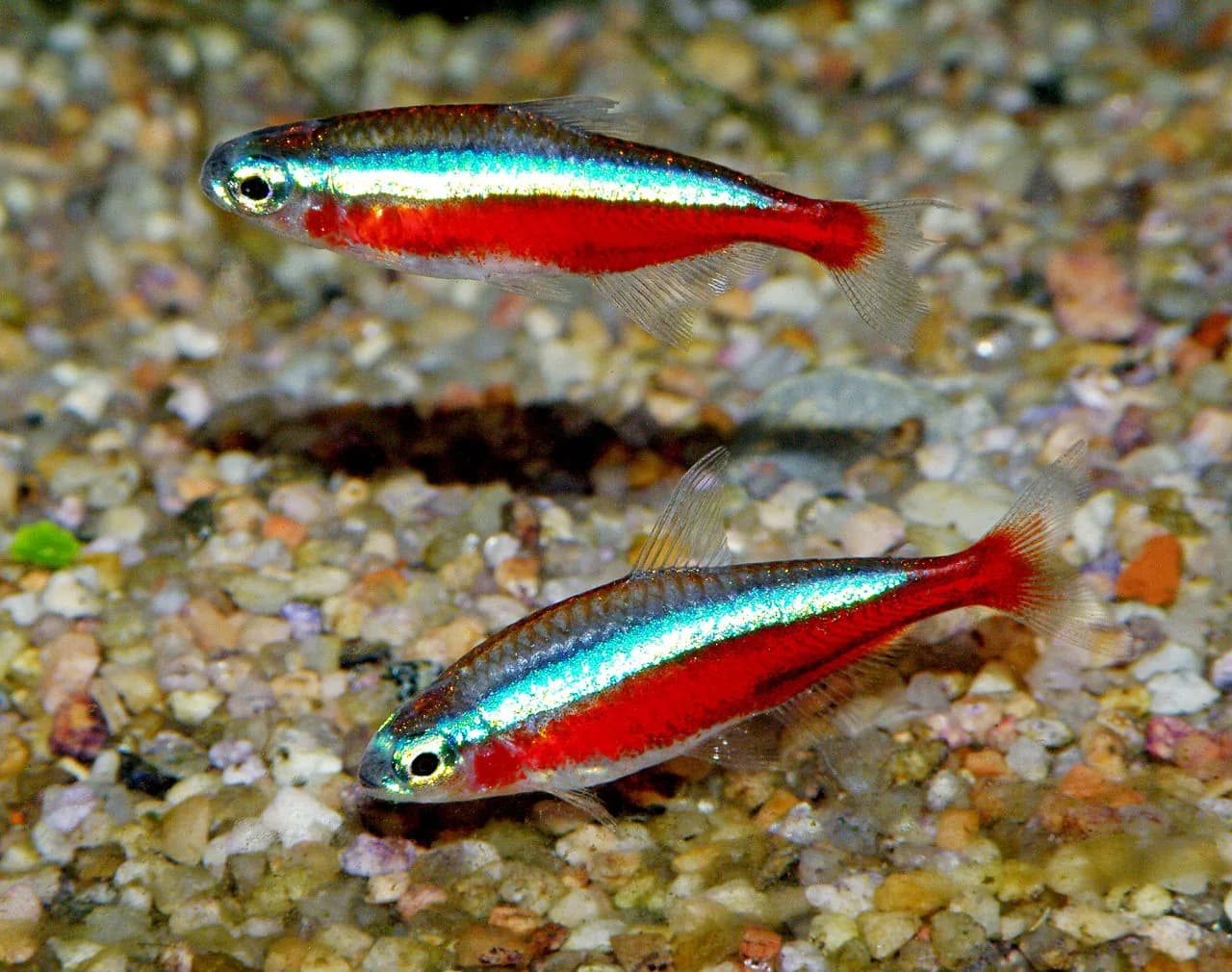
Cardinal Tetra
Paracheirodon axelrodi
Upper Orinoco and Rio Negro basins
Chocolate Gourami
Sphaerichthys osphromenoides
Borneo, Sumatra, peninsular Malaysia
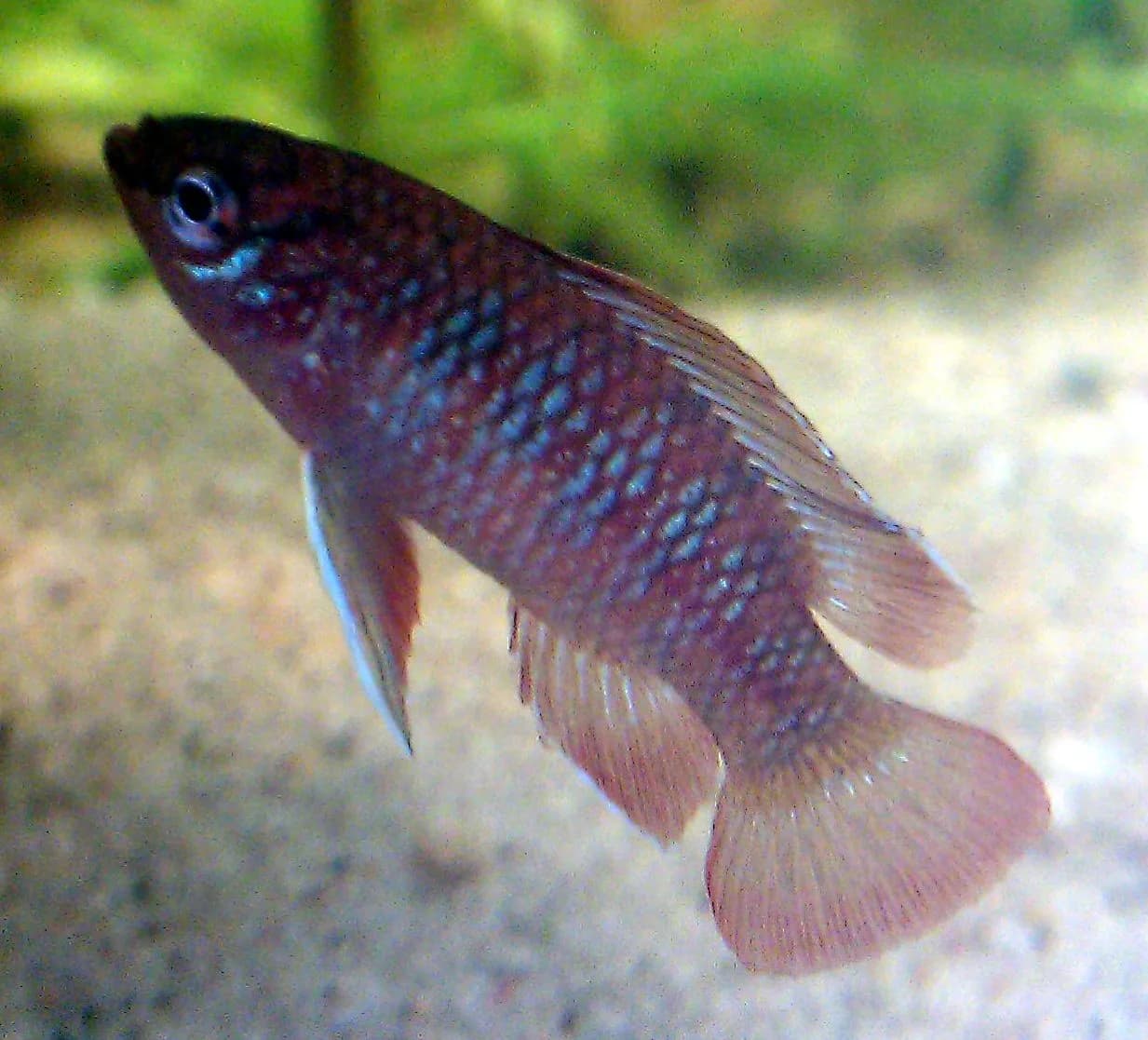
Scarlet Badis
Dario dario
West Bengal and Assam, India
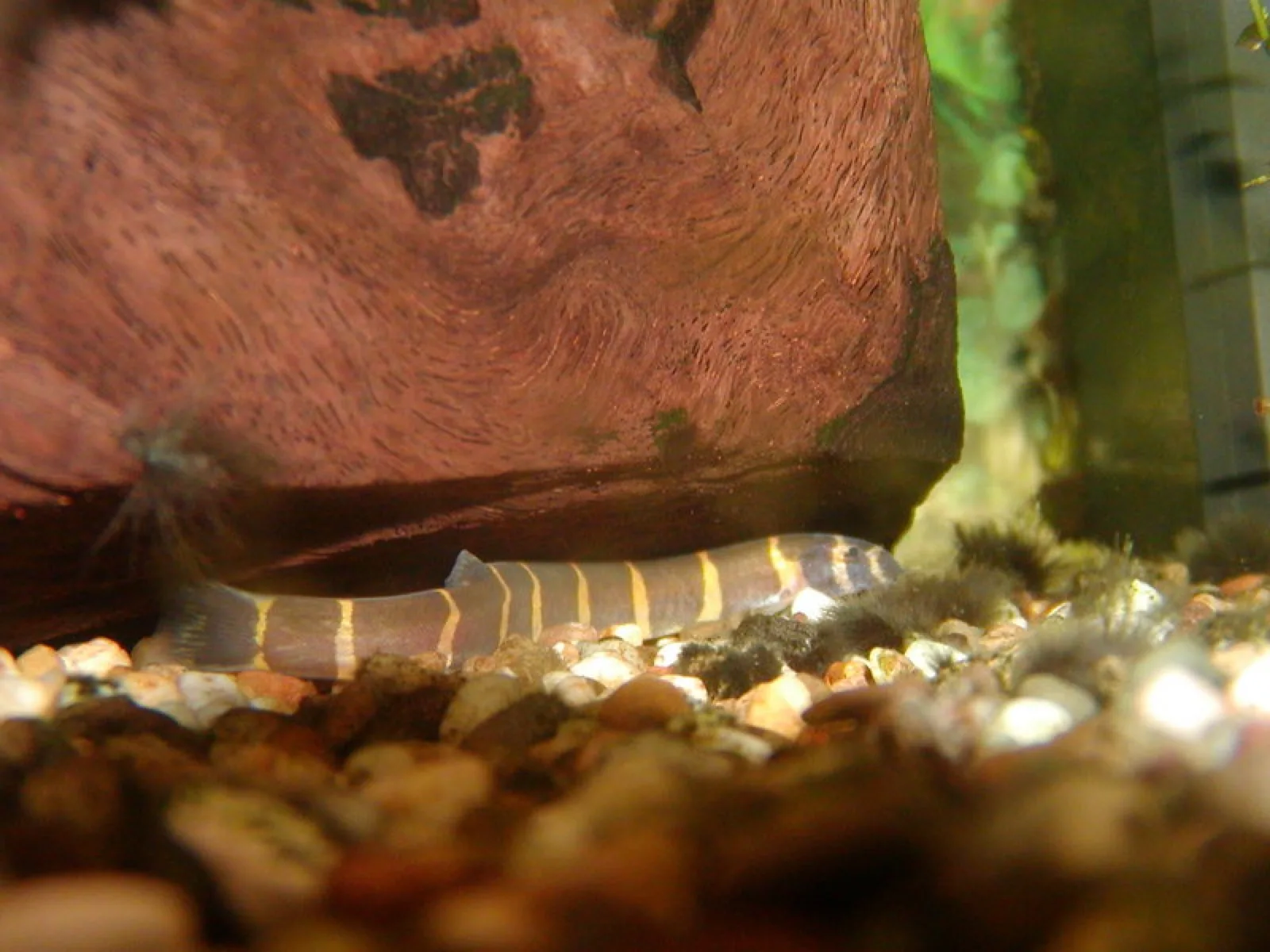
Kuhli Loach
Pangio kuhlii
Java, Sumatra, Malay Peninsula
Cardinal tetras glow against tannin-stained water, chocolate gouramis and scarlet badis are delicate soft-water gems that often only thrive in these conditions, and kuhli loaches love rooting through leaf litter. Use the compatibility tool to build a peaceful, soft-water community.
Shrimp and plants
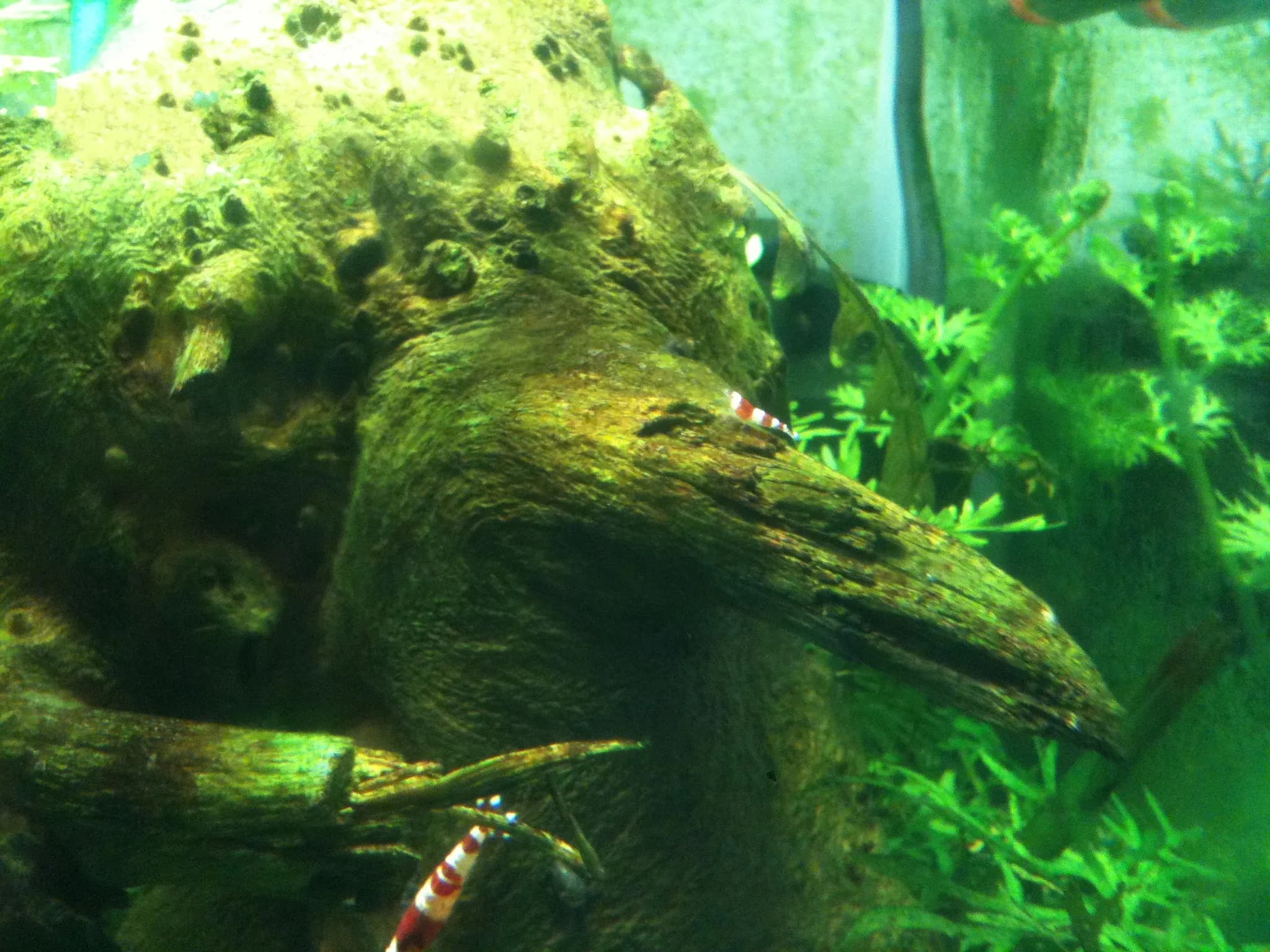
Crystal Red Shrimp
Caridina cantonensis 'CRS'
Selectively bred from Hong Kong wild stock
Soft-water caridina shrimp are a natural fit, the low pH suits them and the botanicals feed them. Plants are trickier: the dim, stained water passes less light, so lean on low-light species and floaters, and epiphytes on the wood.
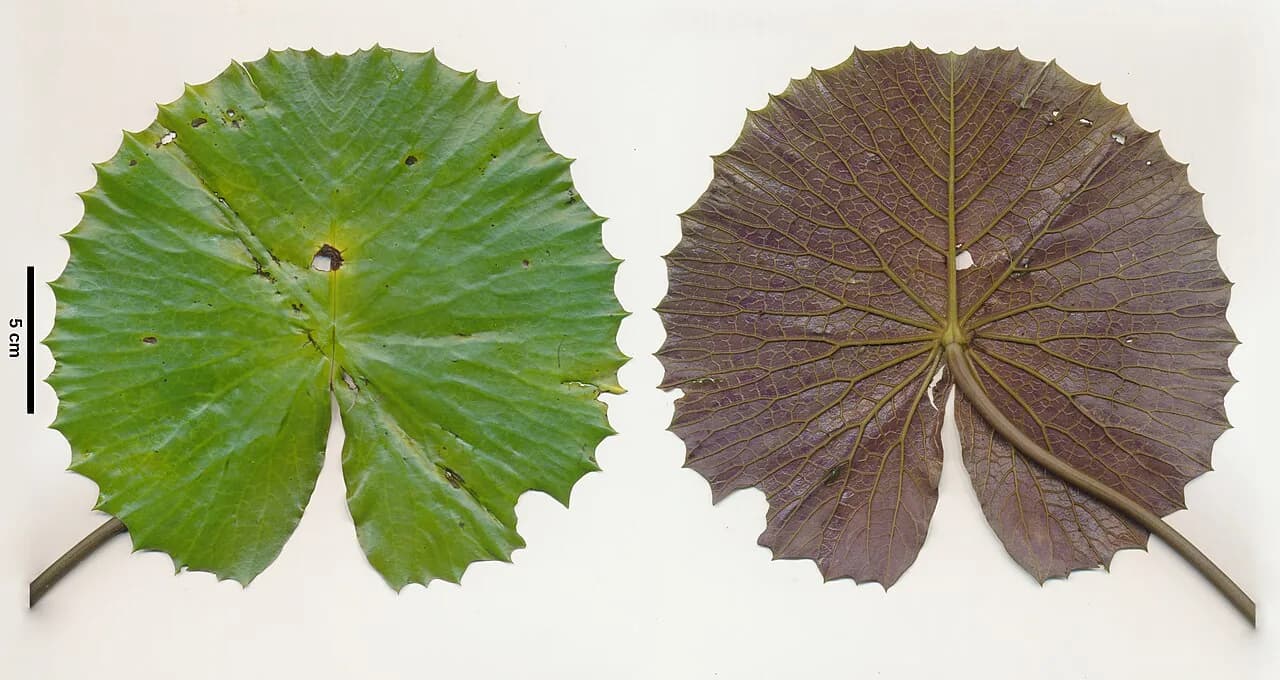
Red Tiger Lotus
Nymphaea zenkeri
West Africa (Cameroon)
A red tiger lotus and some hardy stems, plus anubias and java fern on the wood, suit the shaded conditions.
Keeping it stable
- Top up botanicals as they break down, so the tannin level stays roughly steady rather than fading then spiking.
- Watch pH stability, especially in very soft water where it can drift. See water chemistry.
- Don't over-clean. Leaf litter is part of the ecosystem; let it break down and only remove what turns to slime.
- Expect amber water. Carbon and water changes will clear the colour if you ever want to, but in a blackwater tank the colour is the goal.
FAQ
The quick answers are above. Next, read water chemistry to control softness and pH, and the hardscape database for tannin-leaching wood.
Frequently asked questions
Direct answers to the questions search engines and AI assistants surface most often about this species.
What is a blackwater aquarium?
A blackwater aquarium recreates the soft, acidic, tea-stained water of tropical streams and flooded forests, where tannins from wood, leaves and seed pods (botanicals) stain the water amber. It is dim, natural, and suited to soft-water fish and shrimp from those habitats.
What do tannins do in an aquarium?
Tannins stain the water amber, mildly soften it and lower the pH, and have gentle antibacterial and antifungal properties that many keepers value for sensitive fish and fry. They are harmless. The main visible effect is the tea colour, which is cosmetic and prized in blackwater tanks.
What botanicals are used in a blackwater tank?
Indian almond (catappa) leaves are the classic, along with oak and other safe dried leaves, alder cones, and seed pods like cholla wood and various 'pods'. They leach tannins as they break down, feed biofilm for shrimp and fry, and create leaf-litter cover. Only use species known to be aquarium-safe.
Do blackwater aquariums lower pH?
Mildly, and only if the water has little buffering (low KH). Tannins and the acids from decomposing botanicals nudge pH down in soft water, but in hard, high-KH water the buffer resists the change and you get colour without much pH drop. To truly soften, start with RO or rain water.
Are blackwater tanks good for shrimp?
For soft-water caridina shrimp, yes, they suit the low pH and soft water, and the leaf litter and biofilm are ideal food. Botanicals are a natural fit for a shrimp tank. Hard-water neocaridina are more flexible and do fine with or without a blackwater setup.