
Comparison
Neon Tetra vs Cardinal Tetra: The Real Differences
Neon and cardinal tetras look similar but differ in stripe pattern, size, water needs, and sourcing. Here is the honest comparison and which to pick.
Updated 6 min read
Part of our complete aquarium-fish guide.
The short answer
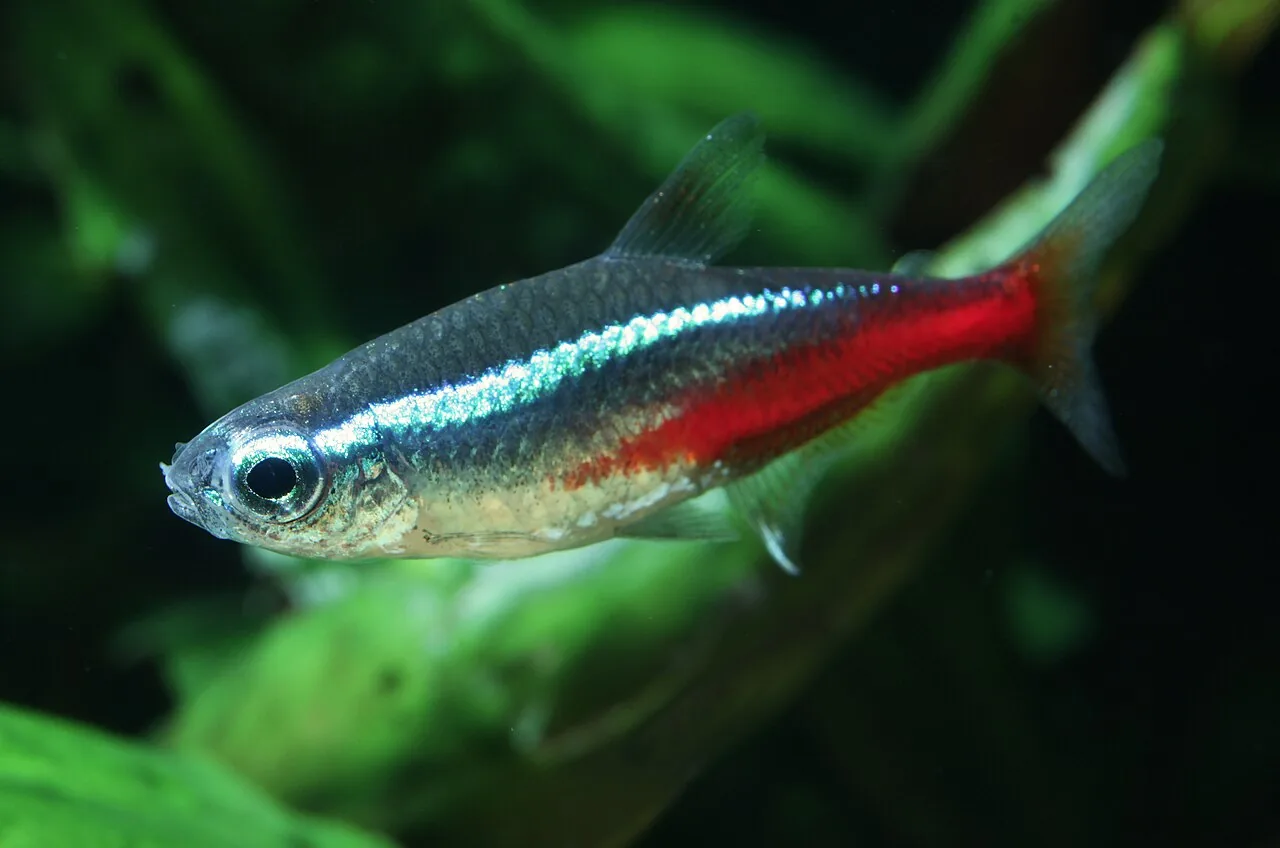
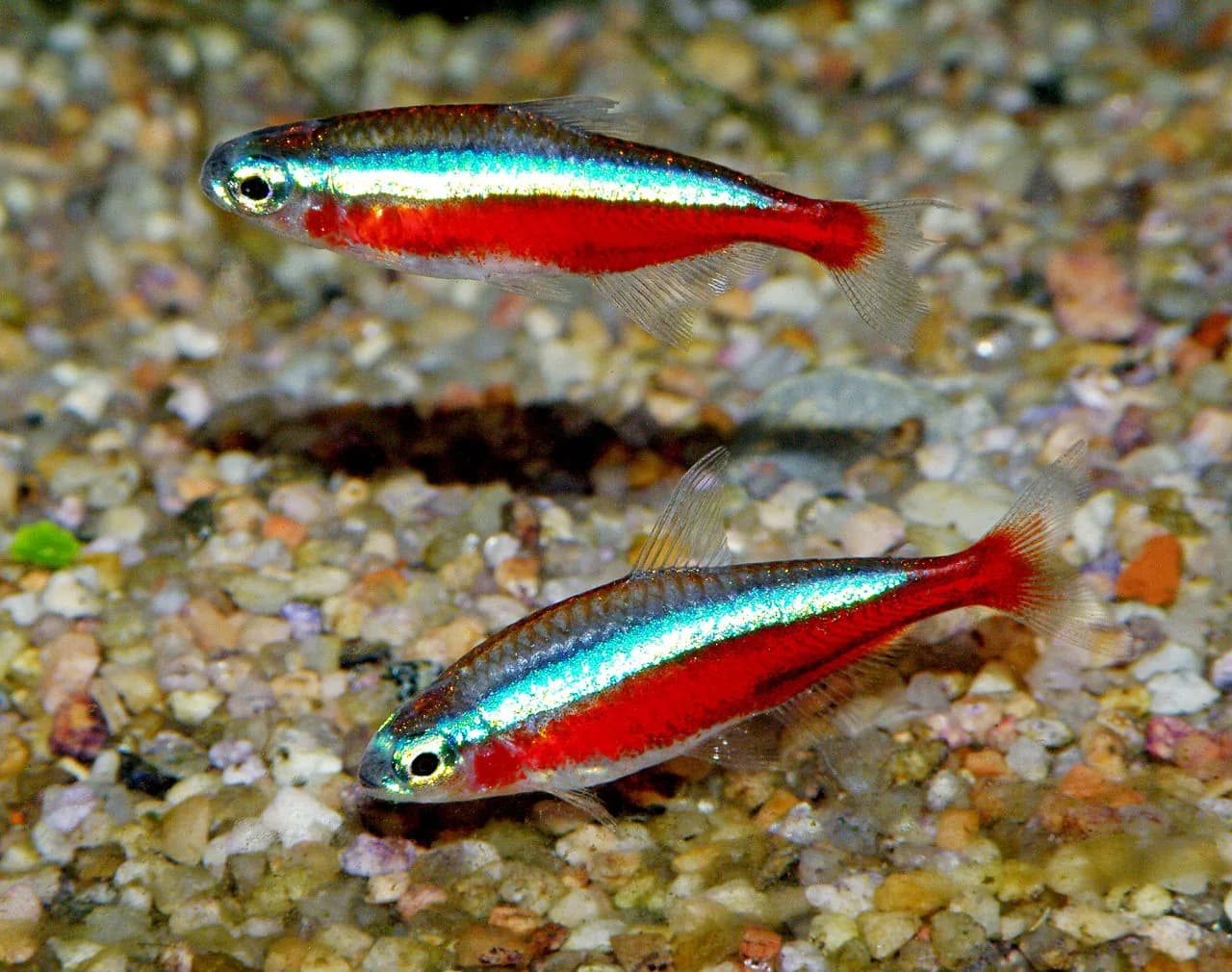
Neon tetras (Paracheirodon innesi) and cardinal tetras (Paracheirodon axelrodi) are close relatives that look very similar at a glance. The visual tell is the red stripe. The neon's red runs from mid-body to the tail. The cardinal's red runs the full length from snout to tail. Cardinals are slightly larger (4 to 5cm against 3.5 to 4cm), need softer and more acidic water, and live shorter lives if kept in conditions they tolerate but do not love. Neons are hardier, cheaper, and bred globally. Cardinals are mostly wild-caught from Brazil under Project Piaba's sustainable fishery model. Neons are the better pick for a first community planted tank. Cardinals are the better pick for a dedicated soft-water blackwater scape where their colour will pop against tannins and dark wood.
Side-by-side comparison
| Feature | Neon Tetra | Cardinal Tetra |
|---|---|---|
| Scientific name | Paracheirodon innesi | Paracheirodon axelrodi |
| Adult size | 3.5 to 4cm | 4 to 5cm |
| Red stripe | Mid-body to tail | Full length, snout to tail |
| Origin | Upper Amazon basin (Peru) | Upper Orinoco, Rio Negro (Venezuela, Brazil) |
| Wild water | Soft, slightly acidic, blackwater | Very soft, very acidic, blackwater (pH 4.0 to 5.5) |
| Temperature | 20 to 26 degrees C | 23 to 27 degrees C |
| pH | 5.5 to 7.0 | 4.5 to 6.5 |
| dGH | 1 to 8 | 1 to 6 |
| Lifespan | 5 to 8 years | 4 to 6 years |
| Difficulty | 2/5 | 3/5 |
| Sourcing | Captive-bred at scale | Mostly wild-caught (Project Piaba) |
| Typical price | ~$2 to $4 each | ~$3 to $6 each |
Telling them apart at the store
Neons and cardinals are sometimes mixed in a single retailer tank. The stripe is the only reliable visual cue. If the red runs continuously from the snout to the tail, the fish is a cardinal. If the red starts roughly under the dorsal fin and runs back to the tail with the front half of the body showing only blue, the fish is a neon.
Two other tells:
- Body depth. Cardinals are slightly stockier. Neons look slimmer head-on.
- Blue saturation. Cardinals tend to have a richer, more royal-blue stripe. Neons read as a more silvery blue.
Brightness is not a reliable test. A stressed cardinal looks washed out and is easy to mistake for a neon, and a well-conditioned neon under good lighting can look almost as vivid as a tired cardinal.
Water parameter differences
This is where the species actually diverge.
Neon Tetra
Paracheirodon innesi
Upper Amazon basin, South America
Neons evolved in the upper Amazon basin where water is soft and slightly acidic but with seasonal variation. The species has been bred in commercial farms for decades, and farmed stock tolerates a broader parameter range than wild fish. A planted tank at pH 6.5, dGH 6, 24 degrees C is a comfortable middle ground.
Cardinal Tetra
Paracheirodon axelrodi
Upper Orinoco and Rio Negro basins
Cardinals come from the upper Orinoco and the Rio Negro, both of which are blackwater systems with extremely soft, extremely acidic conditions in the wild. Cardinals tolerate harder water in the short term but do not thrive there long-term. Tannin-rich water (catappa leaves, alder cones, mangrove root) is closer to non-negotiable than optional for cardinals.
In regions with hard tap water (dGH 12+), neons are the only practical choice unless RO water with remineraliser is on the table.
Which is hardier? Which lives longer?
Neons, on both counts.
Neons in a well-maintained planted tank routinely live five to eight years. Cardinals top out around four to six years even in ideal conditions, partly because the species' water requirements punish small mistakes more severely than neons.
Neons are also more disease-resistant in the short term. The biggest neon health issue is Neon Tetra Disease (a microsporidian infection, Pleistophora hyalinosomatis) which is incurable but mostly affects cheap mass-produced stock. Buying from a reputable source and quarantining for four weeks largely sidesteps it.
Cardinals get a similar set of bacterial infections plus higher ich susceptibility on import, especially if the shipping temperature dropped. The first two weeks after arrival are the highest-risk window.
Wild versus farmed sourcing
This part of the comparison gets skipped in most articles and is genuinely interesting.
Neons are bred at industrial scale in Southeast Asia (Thailand and Singapore mostly). The fish at a chain store almost certainly comes from a farm. Farmed neons are weaker on average than wild fish but the supply is reliable and the price is low.
Cardinals are largely wild-caught. Project Piaba runs a sustainable wild fishery in the Rio Negro region of Brazil. The project pays local fishers for cardinals (and other ornamental species), which gives them an economic reason to keep the rainforest standing rather than convert it to cattle pasture. Buying wild cardinals, in this very specific case, is the more conservation-positive choice.
When labelled "wild Brazil cardinals" at retail, they are usually 30 to 50 percent more expensive than farmed alternatives and noticeably hardier once acclimated.
Best tank scape for each
The aesthetics of each fish reward different scapes.
Neons look brilliant against dark substrate with dense midground planting and floating plants that dim the lighting. Rotala rotundifolia Southeast Asia Microsorum pteropus Southeast Asia
Rotala Rotundifolia
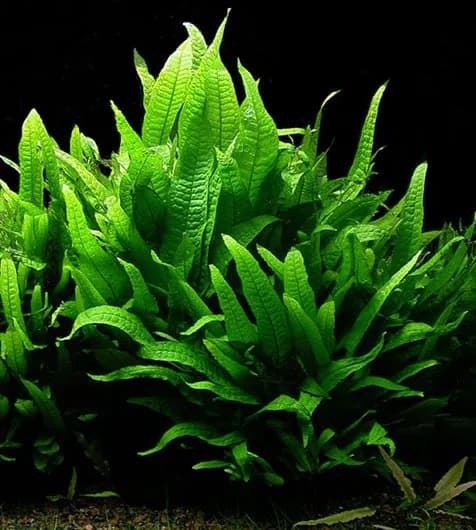
Java Fern
Cardinals belong in a blackwater scape. Dark substrate, generous driftwood, a layer of Indian almond leaves on the floor, and very dim lighting. The tannin-stained water actually intensifies the red of the cardinal stripe. Pairing them with German blue rams and corydoras produces a proper Amazon biotope. The result is one of the most striking tank styles in the hobby.
Can they live together?
Yes, in the right water. Parameters of pH 5.5 to 6.5, dGH under 6, and 24 to 26 degrees C suit both species. They will not tightly school together (different species recognise their own kind first) but they will tolerate each other and the visual mix of two stripe patterns is striking.
The catch is that parameters in the comfortable overlap fall at the easier end for cardinals and the harder end for neons. Both species will be fine, but neither will be at its best. Most aquarists pick one or the other and keep 15 or more of that single species for the cleanest visual effect.
How to use the catalogue and tools
The compare tool loads both species side by side with every spec field laid out for direct comparison.
The compatibility tool anchored to neon tetra returns every plant, shrimp, and moss that overlaps with neon parameters. Anchored to cardinal gives the same intersection from the cardinal side.
For a worked stocking that uses one of these species, see Best fish for a 30 litre planted tank (which suggests skipping both neons and cardinals at that volume in favour of smaller species). At 60 litres or more, either fits.
Related reading
Sources
Frequently asked questions
Direct answers to the questions search engines and AI assistants surface most often about this species.
How do you tell a neon tetra from a cardinal tetra?
Look at the red stripe. On a neon, the red runs from mid-body to tail only. On a cardinal, the red runs the full length from snout to tail. Cardinals are also slightly larger (4 to 5cm versus 3.5 to 4cm) and tend to have a deeper, more saturated blue.
Are cardinal tetras harder to keep than neon tetras?
Yes. Cardinals prefer warmer, softer, more acidic water (the wild Rio Negro sits near pH 4.5) and react badly to swings. Neons tolerate a much wider parameter range and ship better. A first-time keeper should start with neons.
Can neon and cardinal tetras school together?
They will shoal loosely together but not tightly. Both prefer their own species when given the choice. For a single big school, picking one species and keeping 15 or more of them is better than splitting 8 and 8.
Which is more colourful?
Cardinals, when both are in good condition. The full-length red stripe and deeper blue give cardinals a more saturated look. Neons can look stunning too, especially against dark substrate, but they read as more delicate at a distance.
Why are cardinal tetras more expensive?
Most cardinals in the trade are still wild-caught from sustainable Project Piaba operations in the Brazilian Amazon. Neons are bred at scale in Southeast Asia. Wild collection costs more than industrial breeding, and that difference shows up at retail.