
FAQ deep-dive
How Many Ember Tetras Should You Keep Together?
Ember tetras are obligate schoolers. Bare minimum is 6. Ideal is 10 to 15. Here is the math by tank size and what goes wrong with too few.
Updated 5 min read
Part of our complete aquarium-fish guide.
The short answer
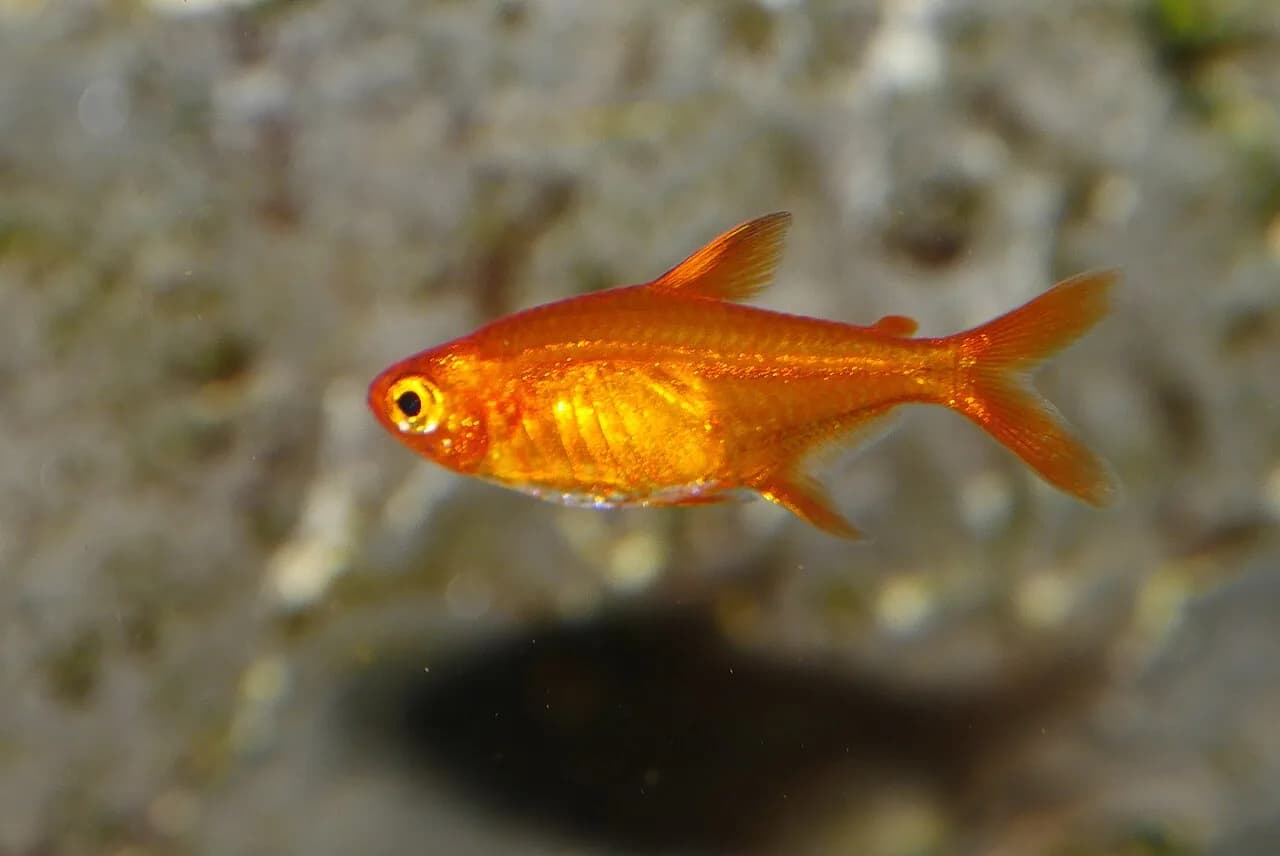
Ember tetras (Hyphessobrycon amandae) are obligate schoolers. The bare minimum is six. The visual sweet spot is 10 to 15. In a 40 litre or larger planted tank, 20+ becomes a fully natural shoal that shows the species' colour and behaviour at its best. Below six, embers stress, lose colour, hide constantly, and become disease-prone. The 2cm adult size means even a 30 litre nano comfortably holds 10 fish; bioload is low. Females are noticeably plumper than the slimmer, more orange males, and in a school of 10 or more, natural pair-formation behaviour and occasional spawning appear in a mature lightly-stocked tank. Pairs do not work. Groups do.
Why six is the absolute floor
Schooling fish are evolved to recognise safety in numbers. The instinct is hard-wired. When a schooling fish finds itself in a group too small to register as "safe", the response is chronic low-level stress. The visible signs:
- Colour loss. A stressed ember reads as pale orange or even washed-out pink, not the fluorescent red-orange of a healthy fish.
- Constant hiding. Healthy embers spend most of the day mid-water in loose formation. Stressed embers cluster in one corner behind plants and only emerge for food.
- Reduced feeding. Embers in groups of 3 or 4 often refuse food or eat very little. They are too anxious to risk venturing into open water for it.
- Shortened lifespan. A 2cm fish in chronic stress is a candidate for ich and bacterial infections. Stressed embers rarely make it to the 2 to 4 year lifespan the species is capable of.
Six is not the ideal number. Six is the line below which the fish suffer measurably. It is a floor, not a target.
What 10 to 15 looks like in a real tank
This is the volume at which embers stop being "those small orange fish" and start being a properly displaying species.
In a group of 10 to 15:
- The school moves as a loose unit through the mid-water.
- Males display intensely to each other in spawning posture, flaring fins and pursuing.
- Colour reaches full saturation, especially in the morning hours after lights come on.
- The school breaks and reforms across the day, with sub-groups exploring different parts of the tank.
- Casual spawning happens in a mature planted tank without any breeding effort. Most fry get eaten, but occasionally one survives in dense moss.
A school of 15 in a 60 litre planted tank looks like a moving cloud of orange against green plants. It is one of the more rewarding displays in nano fishkeeping.
How tank size scales the recommendation
Tank volume is mostly a function of bioload and footprint. Embers are tiny so bioload is rarely the limit; footprint and aesthetic density are.
| Tank size | Practical school size | Notes |
|---|---|---|
| 20 litres | 6 | Floor. Tight footprint limits proper schooling. |
| 30 litres | 8 to 10 | Comfortable. The minimum for natural behaviour. |
| 40 litres | 10 to 12 | Sweet spot for a single-species nano. |
| 60 litres | 15 to 20 | A serious school. Plus room for other species. |
| 100 litres | 25+ | At this volume, embers look like wild shoals. Pairs well with a centrepiece species. |
The other rule: bare ember tetras at the smaller end of the range, mixed setups only at 40 litres and above. Once the tank exceeds 40 litres, embers can share with a small bottom group or a shrimp colony without compromising the school.
Sexing ember tetras
The easiest way to sex embers is to look at body shape when the fish are well-fed and relaxed.
Ember Tetra
Hyphessobrycon amandae
Rio das Mortes basin, Brazil
Females are noticeably plumper through the middle, with a clearly rounded belly when viewed from above. They tend to be slightly larger overall (up to 2.2cm) and slightly less brightly coloured (more orange than fire-red).
Males are slimmer with a flatter belly profile, slightly smaller (1.8 to 2cm), and brighter (fire-red instead of orange-red). Males display to each other and to females with rapid fin flaring and pursuit.
In a school of 10 or more, both sexes appear. A 2-to-1 ratio of females to males prevents the males from over-stressing each other. Most retail bags arrive roughly 50-50 by random chance.
Tank mates for an ember school
Embers are peaceful and undemanding. They share well.
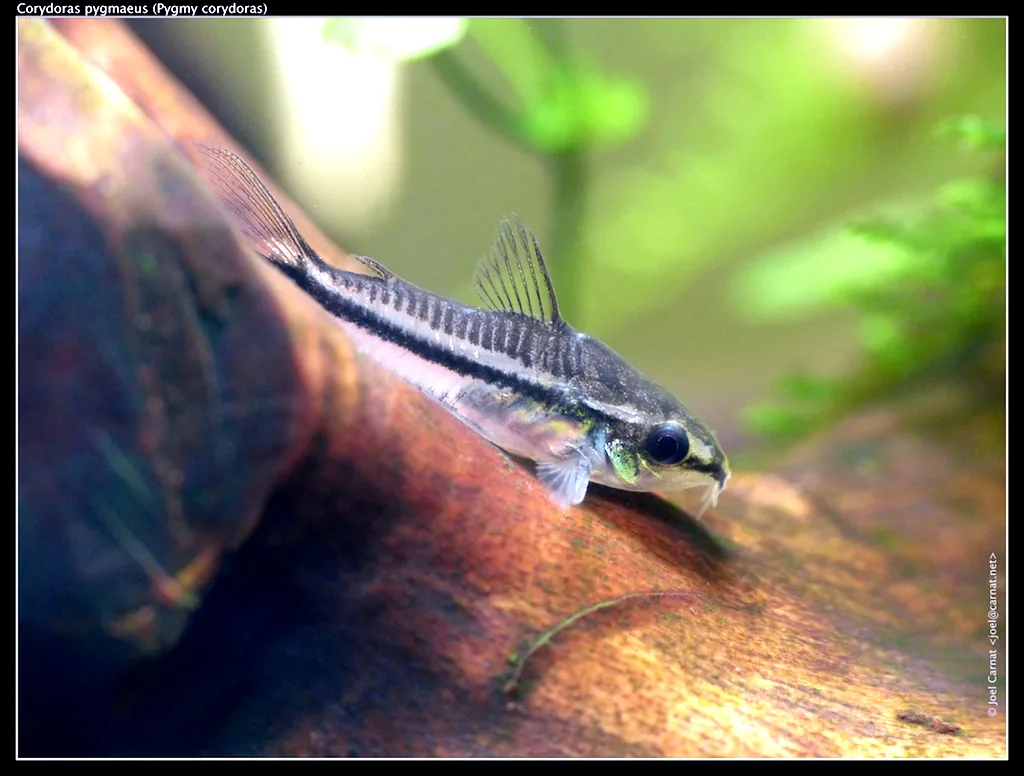
Pygmy Corydoras
Corydoras pygmaeus
Madeira River basin, Brazil
The bottom-dweller pairing. Pygmy corys swim mid-water in their own school, occupying a slightly different vertical band from the embers. A 60 litre tank with 10 embers and 6 pygmy corys reads as two separate but compatible shoals.
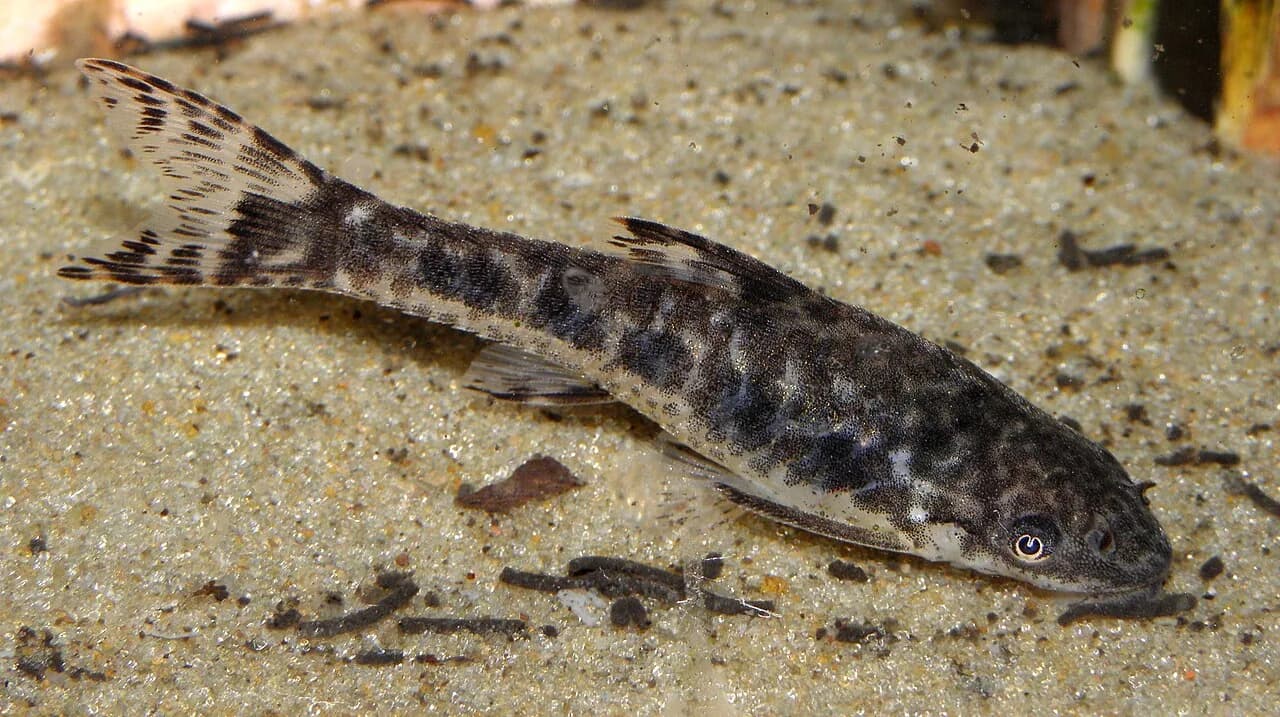
Otocinclus (Common)
Otocinclus vittatus
Northern and central South America
The algae grazer pairing. Otocinclus stick to plant leaves and glass, ignoring both the ember school and any shrimp. See do otocinclus really eat algae for the matured-tank requirement.
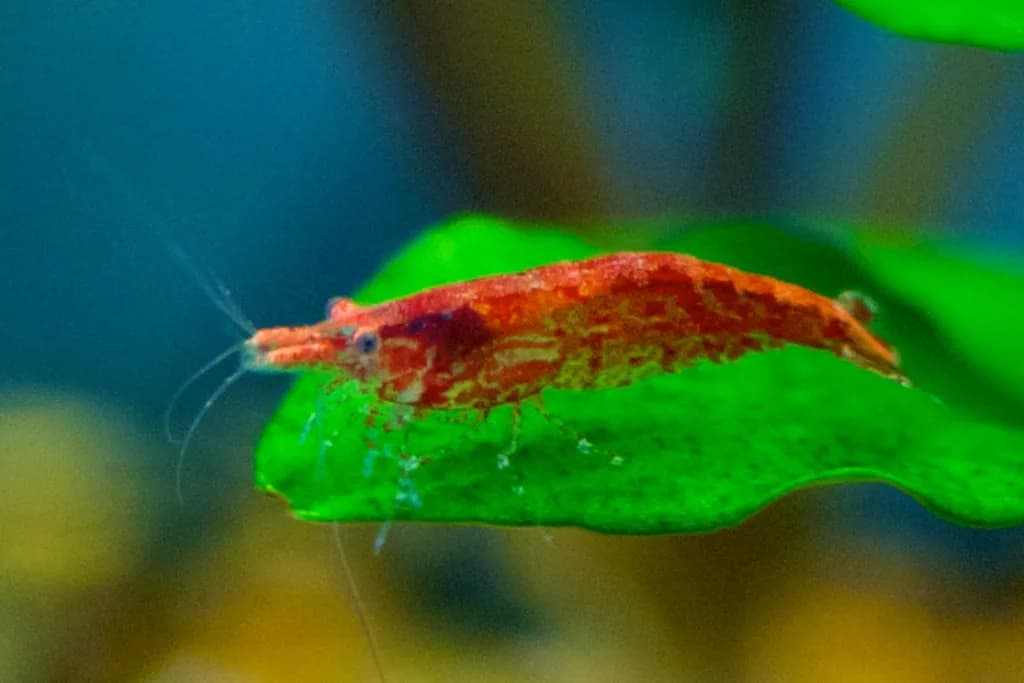
Red Cherry Shrimp
Neocaridina davidi
Taiwan (selectively bred)
The invertebrate pairing. Embers and adult cherry shrimp coexist fine. Shrimplets will be picked off occasionally without dense moss cover, but a colony with thick Taxiphyllum barbieri Southeast Asia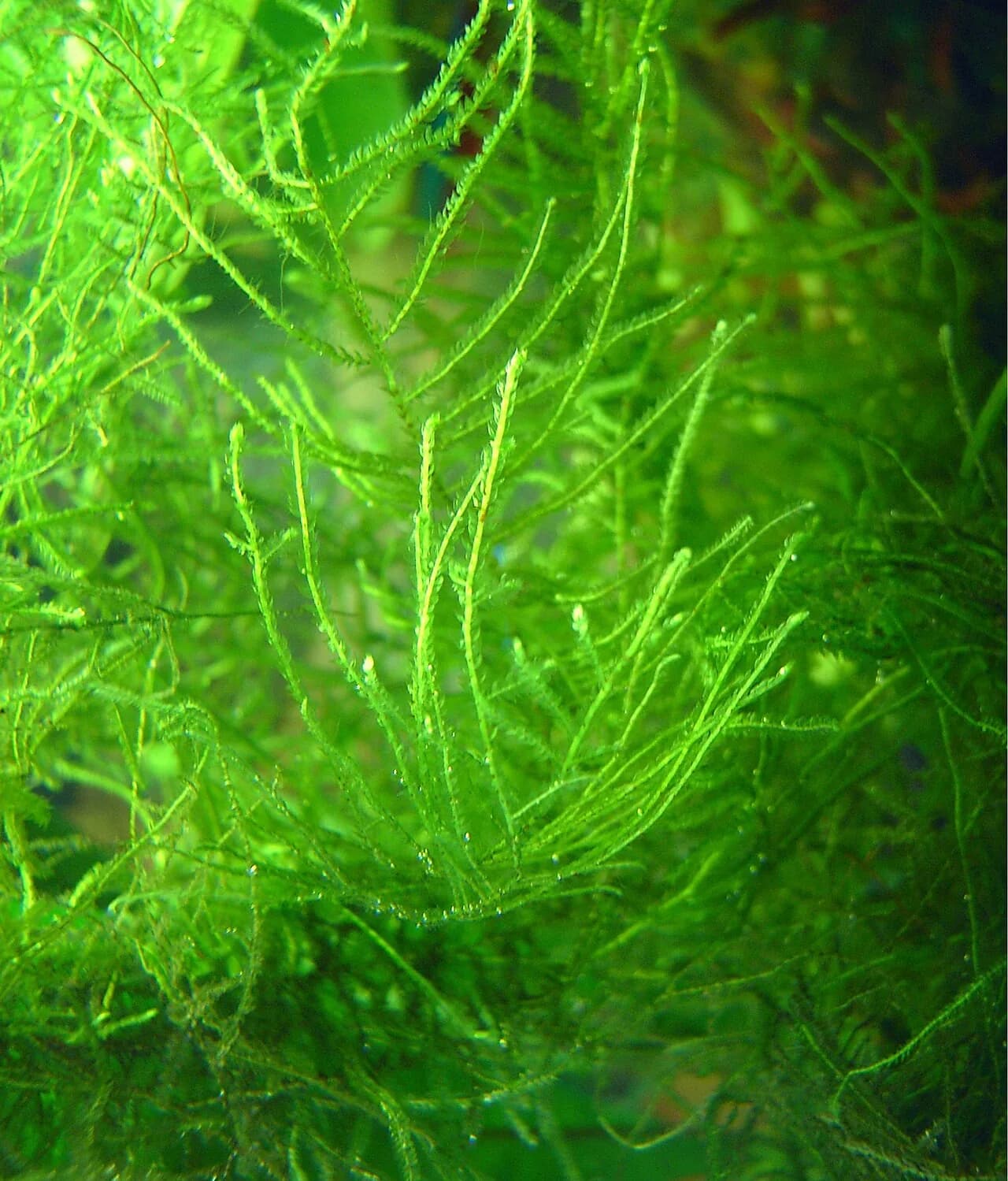
Java Moss
What goes wrong if the school is too small
The pattern is predictable. Four embers in a tank look fine for the first month. Then:
Week 1 to 4: Fish look normal. They explore, eat, and behave more or less like a healthy school would.
Month 2 to 3: Colour starts to fade. The fish spend more time hiding behind hardscape. Feeding response slows.
Month 4 to 6: First ich outbreak. Stressed schooling fish lose immune function and break out in white spot disease. Treating with elevated temperature usually works but leaves the fish weaker.
Month 7 to 12: First death, often the smallest or weakest fish. The remaining group's stress compounds.
Year 2: Group attrits to 1 or 2 fish, which then live miserably or die.
The whole arc is preventable by buying 10 instead of 4 at the start. Cost difference: roughly $20. The fish live full lives and look spectacular.
Plan with the catalogue and tools
The planner tool with ember tetra preselected suggests tank-size-appropriate co-residents. The compatibility tool anchored to ember tetra returns every plant, shrimp, and moss that overlaps with their parameter window.
Related reading
- Best fish for a 30 litre planted tank
- Neon tetra vs cardinal tetra: the real differences
- Can neon tetras live with cherry shrimp?
- Stocking a 60 litre community planted tank
Sources
Frequently asked questions
Direct answers to the questions search engines and AI assistants surface most often about this species.
Is four ember tetras enough?
Not really. Four ember tetras will survive but stress visibly. They lose colour, hide more often, eat less, and rarely live their full 2 to 4 year lifespan. Six is the absolute minimum. For a tank that cannot fit six, a smaller schooling species like chili rasboras (10 of those fit easily in 20 litres) is the better choice.
How many ember tetras in a 20 litre tank?
Six. The species is small (2cm adults) so the bioload is fine, but the footprint of a 20 litre tank is the practical limit. A real natural shoal of 10 to 15 needs 30 litres or more.
Do ember tetras school with other tetras?
They shoal loosely with other small tetras (chili rasboras, neons in larger tanks) but they prefer their own species. For tight schooling behaviour, single-species groups of 10 or more work best, not mixed with other tetras.
How do you tell male ember tetras from female?
Females are noticeably plumper and slightly larger. Males are slimmer and slightly more vibrantly orange. The difference is subtle but visible in a group: the rounder fish are female.
Are ember tetras good beginner fish?
Yes. Difficulty rating 2 out of 5. They tolerate a wide parameter range (pH 5.5 to 7.0, dGH 1 to 10, 23 to 29 degrees C), forgive small mistakes, ship well, and breed casually in a well-planted mature tank without intervention.