
List article
The Best Beginner Aquarium Plants (Hard to Kill)
The easiest aquarium plants for beginners, hardy species that grow in low light with no CO2, plus where to place each one and the mistakes that kill new plants.
Updated 3 min read
Part of our complete planted-aquarium guide.
The short answer
The best beginner plants share one trait: they tolerate neglect. The hardiest of the lot are the rhizome epiphytes (anubias, java fern), which attach to hardscape and feed from the water, and the hardy root feeders and stems (cryptocoryne, vallisneria, amazon sword, hornwort) that grow in almost any conditions. None of them need CO2 or bright light. Pick a handful of these, plant them thickly, give them six to eight hours of modest light, and you have a green tank that is genuinely hard to kill. Avoid demanding carpets and red colour-line stems until you have a tank with CO2 and more light.
What makes a plant "easy"
An easy aquarium plant does three things: it grows in low to medium light, it does not need CO2 injection, and it forgives inconsistent care. Most easy plants come from shaded, slow-flowing streams, so they are used to dim, gentle conditions. The trade-off is speed: easy plants grow slowly, which is exactly why they are forgiving. Fast, demanding plants punish any gap in light, CO2 or nutrients by melting or handing their share to algae.
The hardy shortlist
Anubias (barteri, nana and friends)
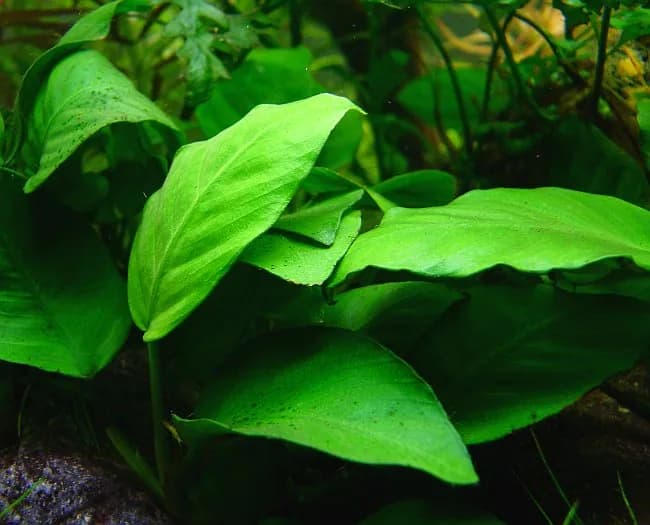
Anubias Barteri Nana
Anubias barteri var. nana
West Africa (Cameroon)
The single most beginner-proof plant there is. It is a rhizome epiphyte: you glue or tie it to wood or stone and never bury the rhizome, or it rots. It grows so slowly it almost never needs trimming and tolerates deep shade. The perfect midground accent on driftwood.
Java Fern
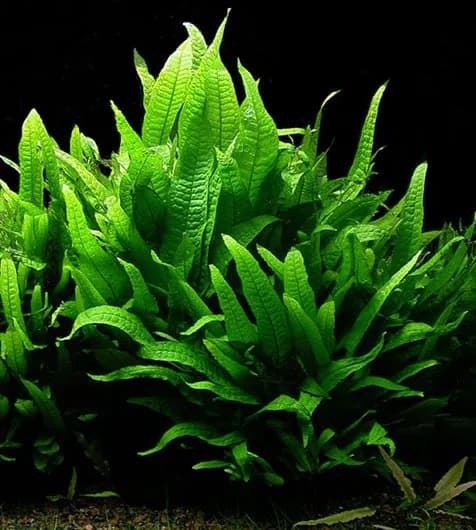
Java Fern
Microsorum pteropus
Southeast Asia
The other classic epiphyte, attached the same way and just as tough. It grows a little faster than anubias and sprouts baby plants on its leaf tips that you can snap off and re-attach. Several cultivars exist (Windelov, Trident, Narrow Leaf) with identical care.
Cryptocoryne wendtii
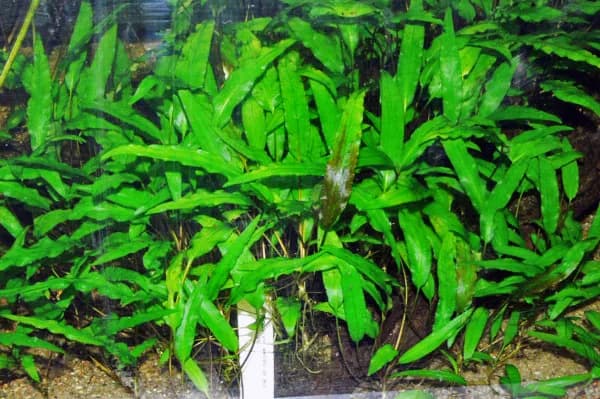
Cryptocoryne Wendtii
Cryptocoryne wendtii
Sri Lanka
A superb low-light rosette plant for the midground, in green, brown and reddish varieties. Its one quirk is "crypt melt": it often drops all its leaves after being moved, then regrows from the roots within weeks. Do not throw it out when this happens. It is a heavy root feeder, so give it aquasoil or a root tab.
Vallisneria and Amazon Sword
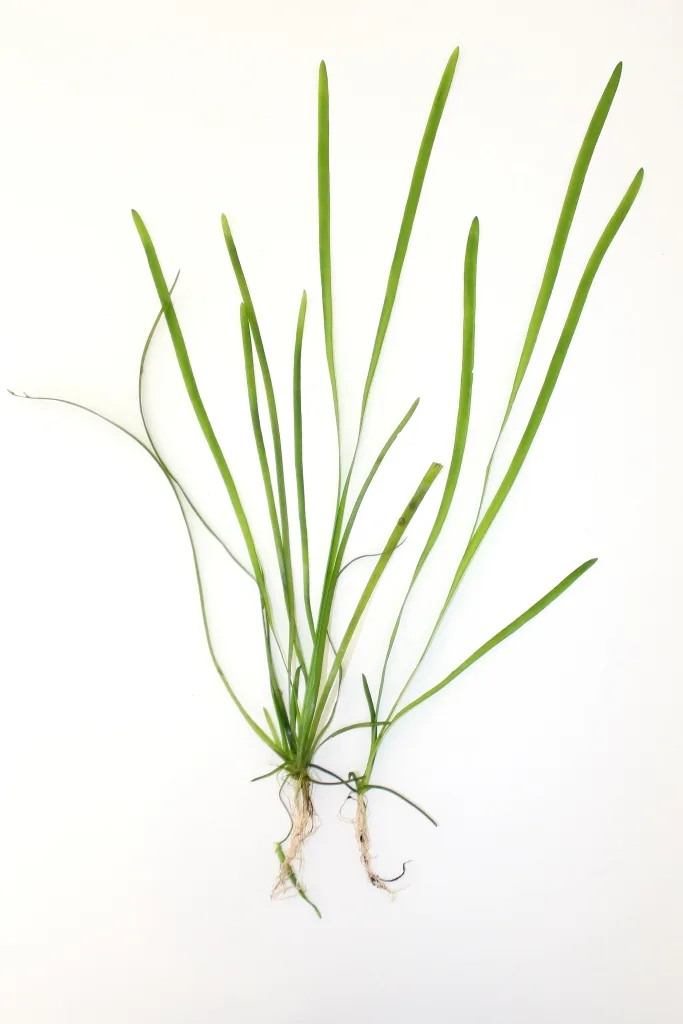
Vallisneria Spiralis
Vallisneria spiralis
Europe, Asia, Africa
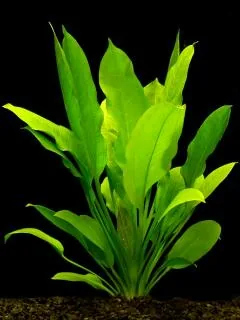
Amazon Sword
Echinodorus grisebachii
Brazil
Two hardy background plants for filling space fast. Vallisneria sends up tall grassy blades and spreads by runners into a jungle back wall. The amazon sword is a big rosette that becomes a centrepiece. Both are hungry root feeders that reward a root tab, and both show potassium pinholes clearly if you under-dose, which makes them useful health gauges.
Hornwort and mosses
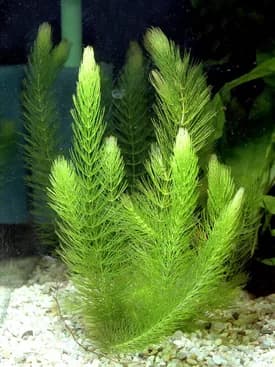
Hornwort
Ceratophyllum demersum
Cosmopolitan
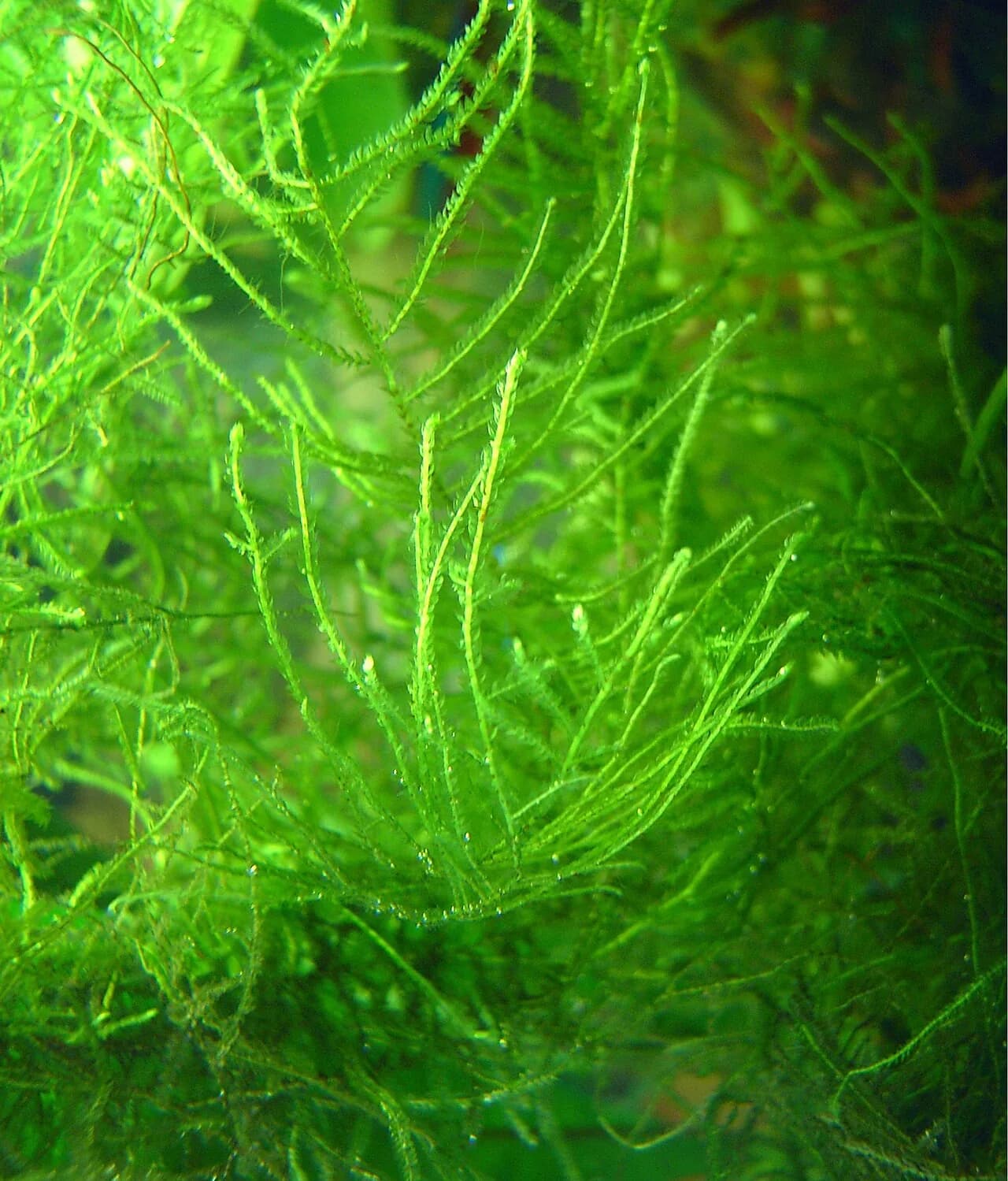
Java Moss
Taxiphyllum barbieri
Southeast Asia
For instant coverage, floating or loosely planted stems like hornwort grow like weeds and soak up excess nutrients, which is a real help in a new tank fighting algae. Mosses attach to anything and never need planting. Both are close to unkillable.
Where each plant goes
- Foreground: low crypts, and easy carpets like Monte Carlo once you are ready for a little more light.
- Midground: anubias and java fern on hardscape, cryptocoryne.
- Background: vallisneria, amazon sword, tall stems, hornwort.
Plant heavily and mix textures. See how to plant an aquarium for the technique, and aquascaping design for arranging them well.
Why beginner plants die (and how to stop it)
- Buried rhizomes. Anubias, java fern and bucephalandra rot if their rhizome is under the substrate. Keep it exposed and attach the plant to hardscape.
- "Melt" mistaken for death. Most plants are farmed emersed and shed those leaves when they convert to underwater growth. New growth follows. Read why plants melt.
- Non-aquatic plants. Some shops sell true houseplants as aquarium plants. They rot underwater within weeks. Stick to known aquatic species.
- Starving root feeders. Swords, crypts and vallisneria in bare sand slowly starve. Add root tabs or use aquasoil.
- Deficiencies. Yellowing, holes or pale new growth mean a nutrient shortage, not a lost cause. Diagnose it in the deficiency guide.
FAQ
The quick answers are above. When your plants are settling in, the next reads are how to plant an aquarium, growing red plants, and diagnosing any trouble in the deficiency hub.
Frequently asked questions
Direct answers to the questions search engines and AI assistants surface most often about this species.
What is the easiest aquarium plant to grow?
Anubias barteri nana. It attaches to wood or stone, lives off the water column, tolerates almost any light and temperature, needs no CO2, and grows so slowly it barely needs trimming. A single plant survives years of neglect.
What aquarium plants grow in low light with no CO2?
Anubias, java fern, cryptocoryne, vallisneria, amazon sword, hornwort and most mosses all thrive in low light without CO2. They grow slower than a high-tech tank but reach the same density over time.
Do beginner aquarium plants need special substrate?
Not always. Epiphytes like anubias and java fern attach to hardscape and need no substrate at all. Root feeders like swords, crypts and vallisneria do better in aquasoil or in sand with root tabs pushed in near the roots.
Why do my new aquarium plants keep dying?
Usually one of three things: the rhizome of an epiphyte was buried (it rots), the plant was a non-aquatic sold as aquarium plant, or it is simply melting as it converts from farmed emersed growth to submerged, which is normal and it grows back.
How many plants do I need for a new tank?
As many as you can afford. Planting heavily from the start out-competes algae for light and nutrients and keeps the water stable. A thinly planted new tank is the classic recipe for an algae outbreak.