
FAQ deep-dive
How Many Fish Can You Put in a Tank?
How to work out how many fish your aquarium can hold, why the inch-per-gallon rule fails, and how bioload, schooling, aggression and swimming space really decide stocking.
Updated 3 min read
Part of our complete aquarium-fish guide.
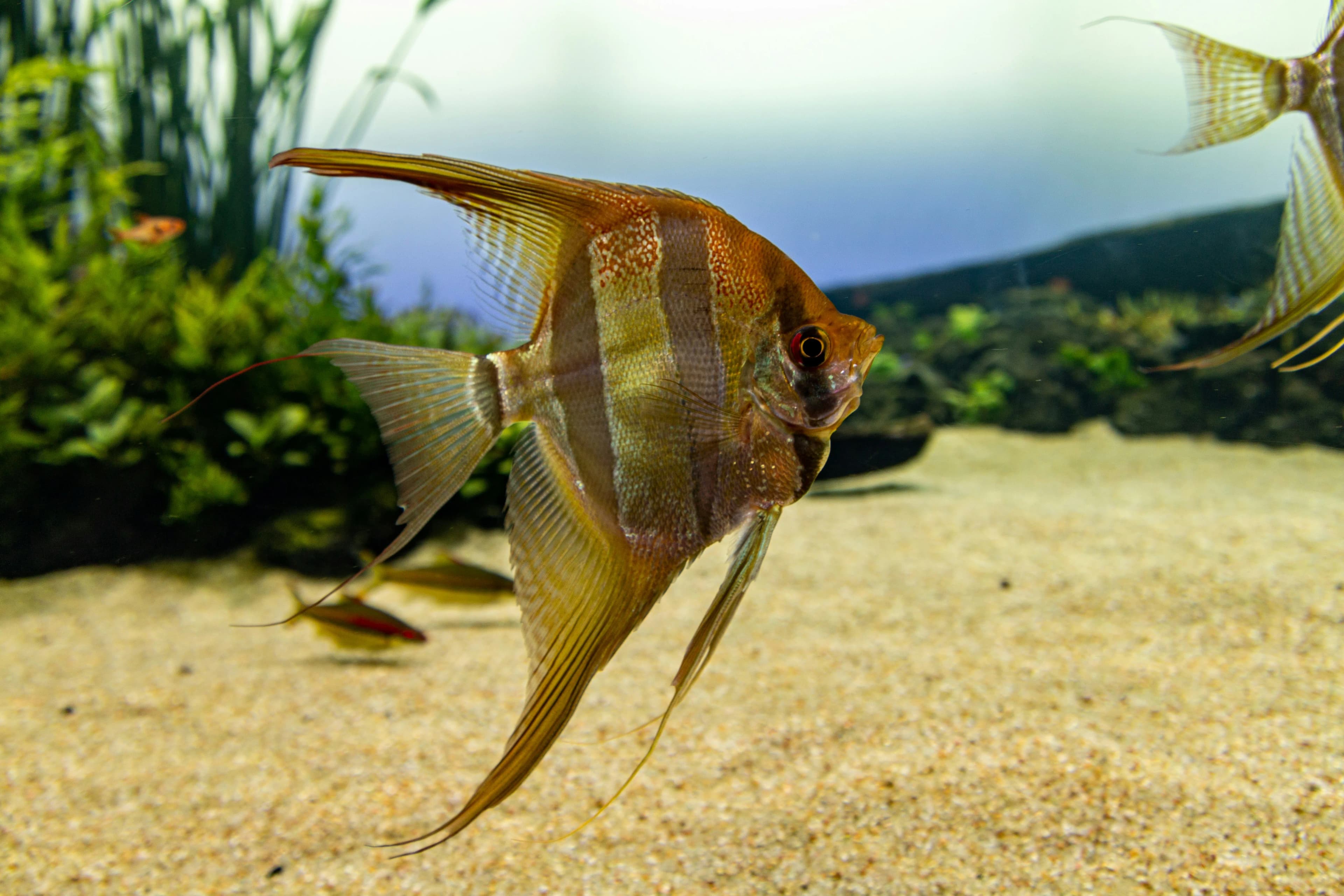
The short answer
There is no magic number of fish per litre, and the old "one inch per gallon" rule is a myth that ignores nearly everything that matters. Real stocking depends on four things: bioload (how much waste the fish produce, which depends on their adult size and body shape, not their length in the shop), filtration and planting (how much that tank can process), schooling needs (many fish must be kept in groups of six or more), and behaviour and space (territory, aggression, and room to swim). Work with those, understock rather than overstock, and use the tank planner for your exact volume instead of any per-gallon shortcut.
Why the inch-per-gallon rule fails
"An inch of fish per gallon" is appealing because it is simple, and wrong because it is too simple. It breaks on every real tank:
- Body shape. A slim neon tetra and a chunky fish can both be "two inches" while producing wildly different amounts of waste. Mass and metabolism matter, not length.
- Adult size. Fish are sold as juveniles. That "one inch" fish may grow to six. Always stock for the adult size.
- Schooling. The rule treats fish as interchangeable inches, but many species must be kept in groups to be healthy.
- Territory and swimming space. A single cichlid may need a whole tank's floor to itself; active swimmers need length regardless of "inches".
Use it, at most, as a loose sanity check, never as a plan.
The four things that really decide stocking
1. Bioload
Every fish adds waste (ammonia) that the cycle and plants must process. Bigger, messier, hungrier fish add far more. A strong filter and heavy planting raise how much waste a tank can handle, so a well-filtered, planted tank holds more than a bare one of the same size. Watch your nitrate, a tank that needs constant large water changes to keep nitrate down is overstocked.
2. Schooling minimums
Shoaling and schooling species feel safe only in a group, usually at least six of their own kind, and more is better. Kept in ones and twos they turn stressed, drab and often nippy.
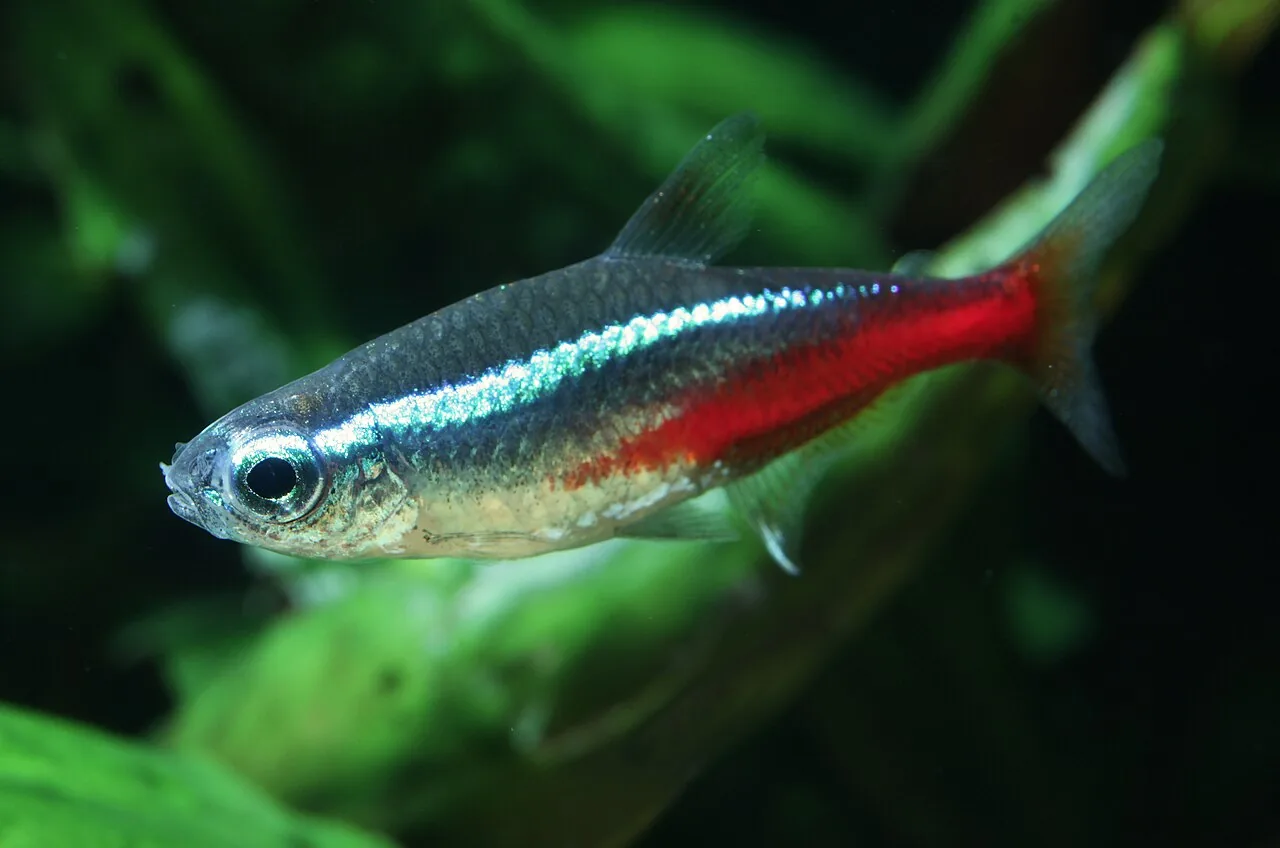
Neon Tetra
Paracheirodon innesi
Upper Amazon basin, South America
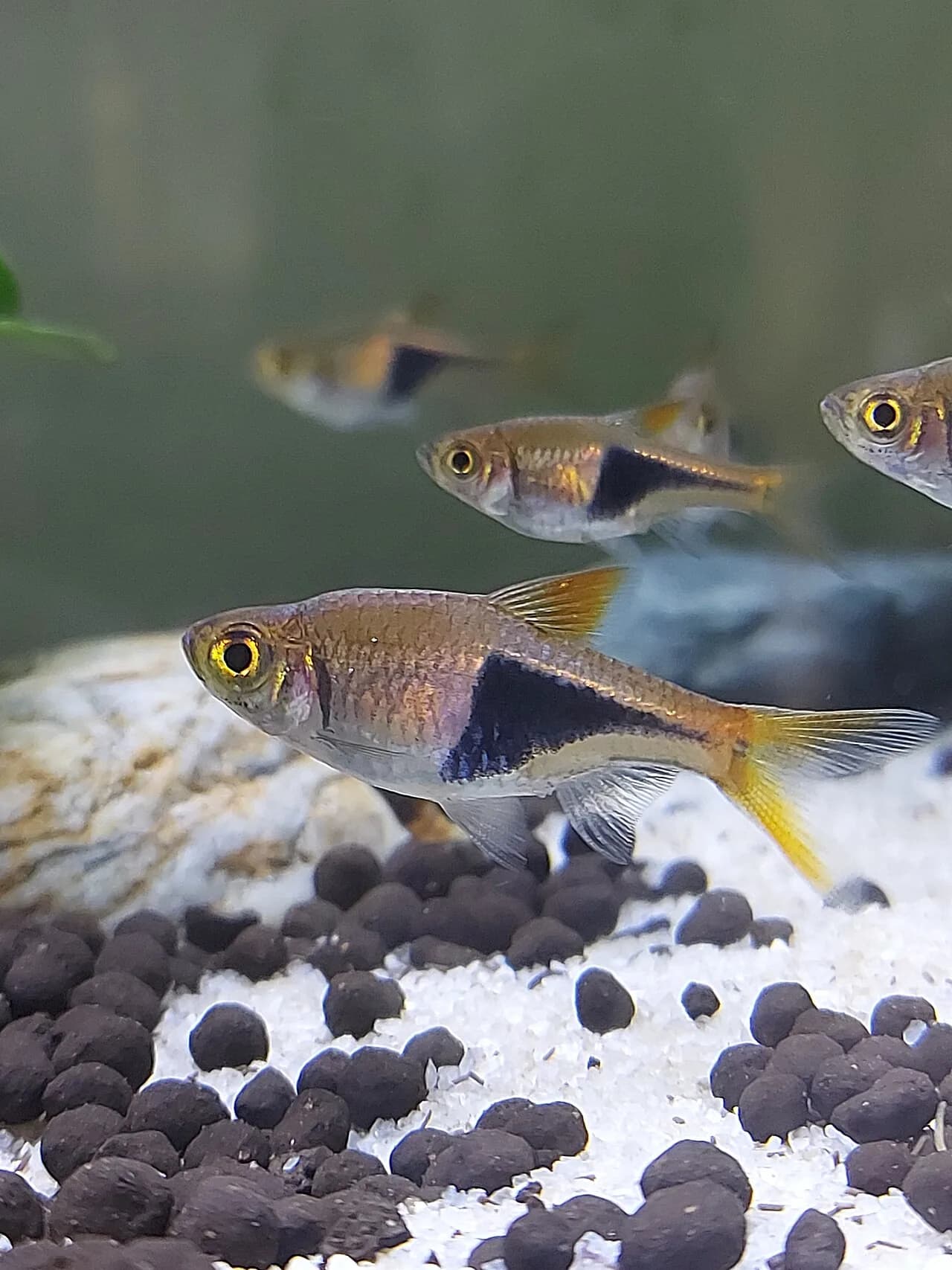
Harlequin Rasbora
Trigonostigma heteromorpha
Thailand, Malaysia, Sumatra
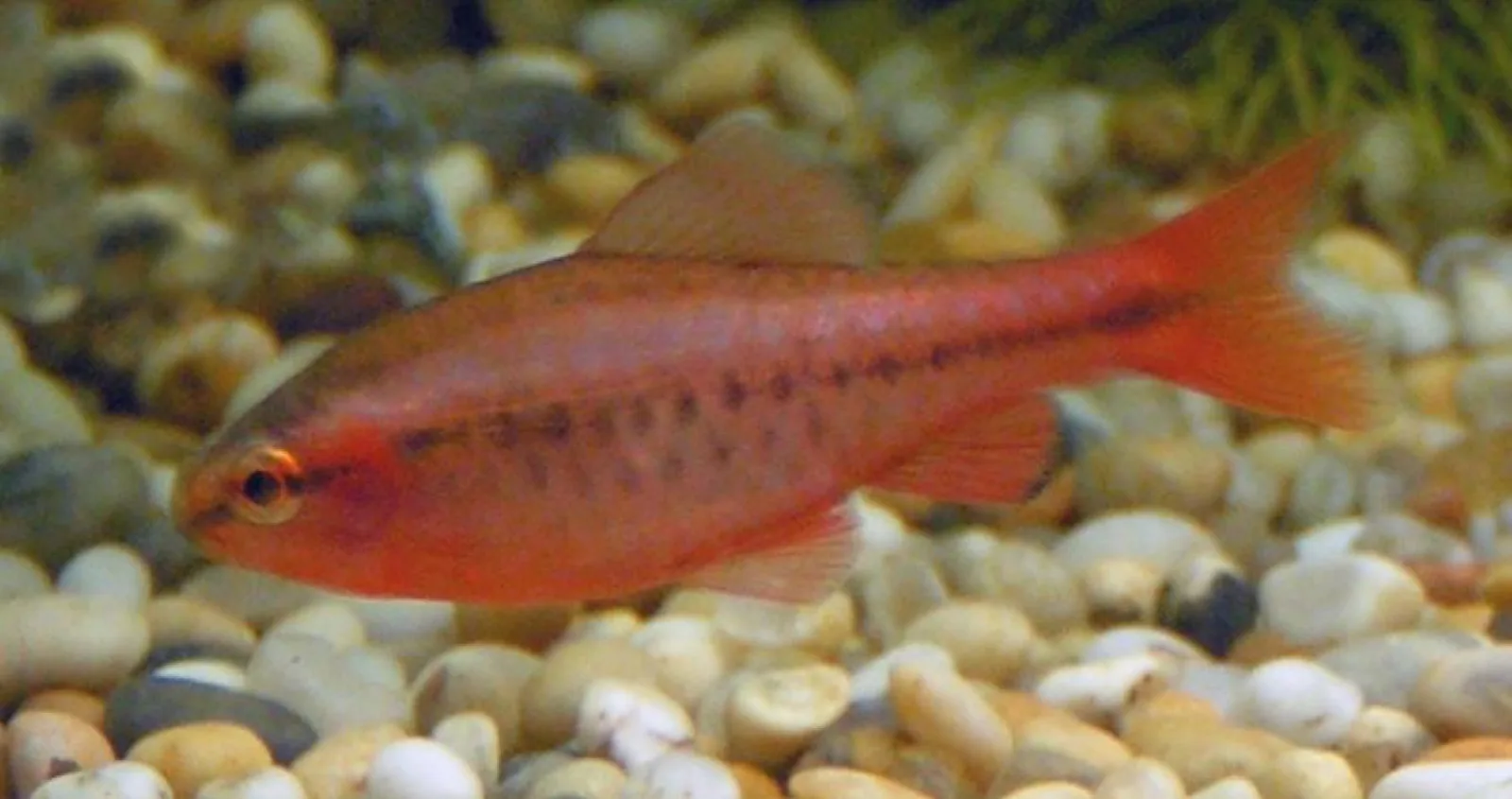
Cherry Barb
Puntius titteya
Sri Lanka
Plan around full schools of a few species rather than single specimens of many, which both looks better and keeps the fish healthy.
3. Territory and temperament
Some fish need space of their own. A pair of dwarf cichlids will claim and defend a patch of the floor, and boisterous or nippy fish need room and numbers to spread aggression.
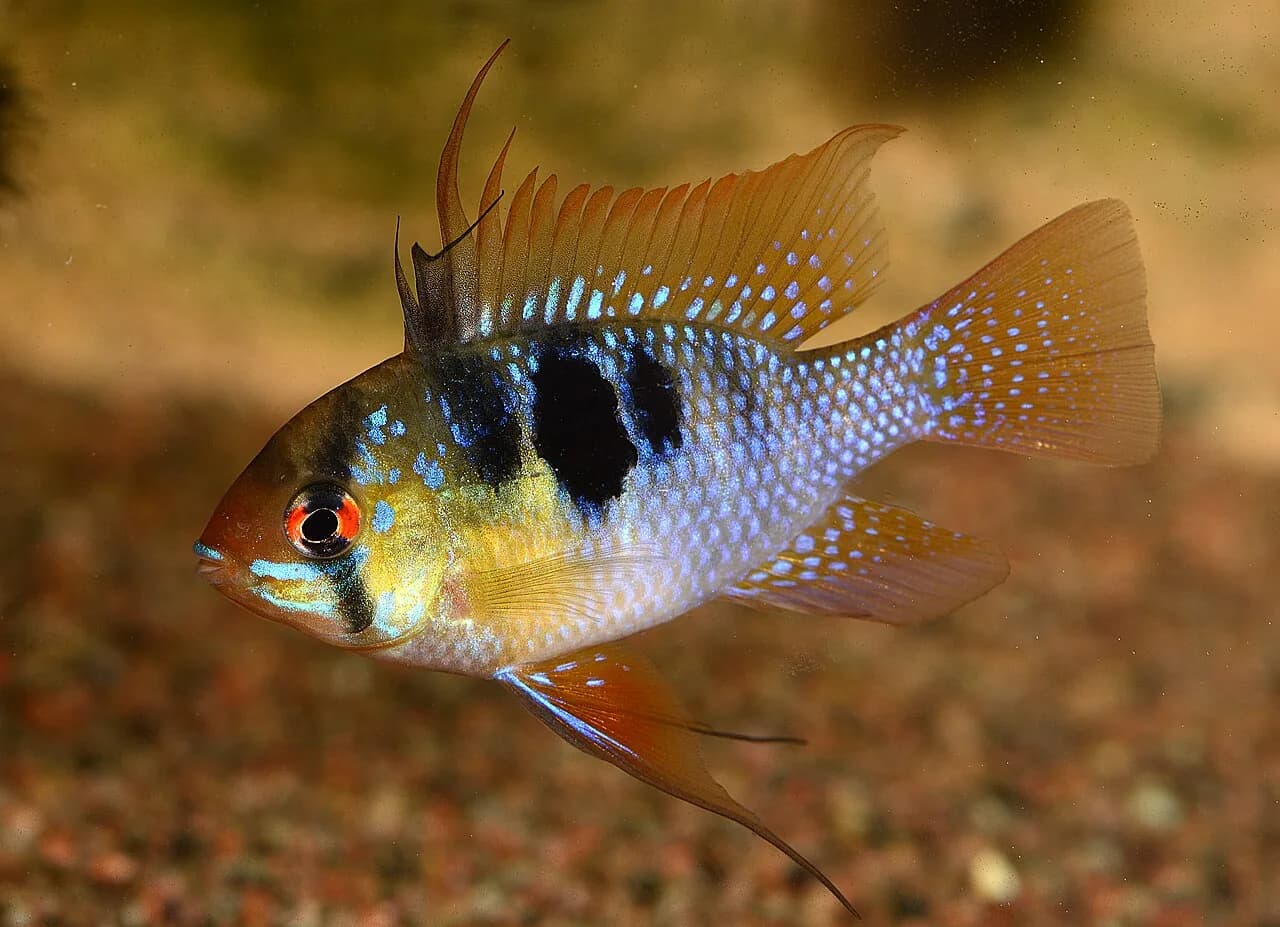
German Blue Ram
Mikrogeophagus ramirezi
Orinoco basin, Venezuela & Colombia
Use the compatibility tool to check temperaments and territory before combining species, not after.
4. Swimming space and layout
A tank's footprint and length matter as much as its volume. Active swimmers need horizontal room; bottom dwellers need floor space; surface fish need surface area. A tall, narrow tank holds fewer active fish than a long, shallow one of the same litres.
A sensible approach
- Understock. A lightly stocked tank is more stable, clearer, healthier and easier. Aim below the limit, not at it.
- Build around schools. A few full schools plus a centrepiece and a clean-up crew beats a crowd of singles.
- Add a clean-up crew. Shrimp, snails and algae grazers earn their keep with little bioload.
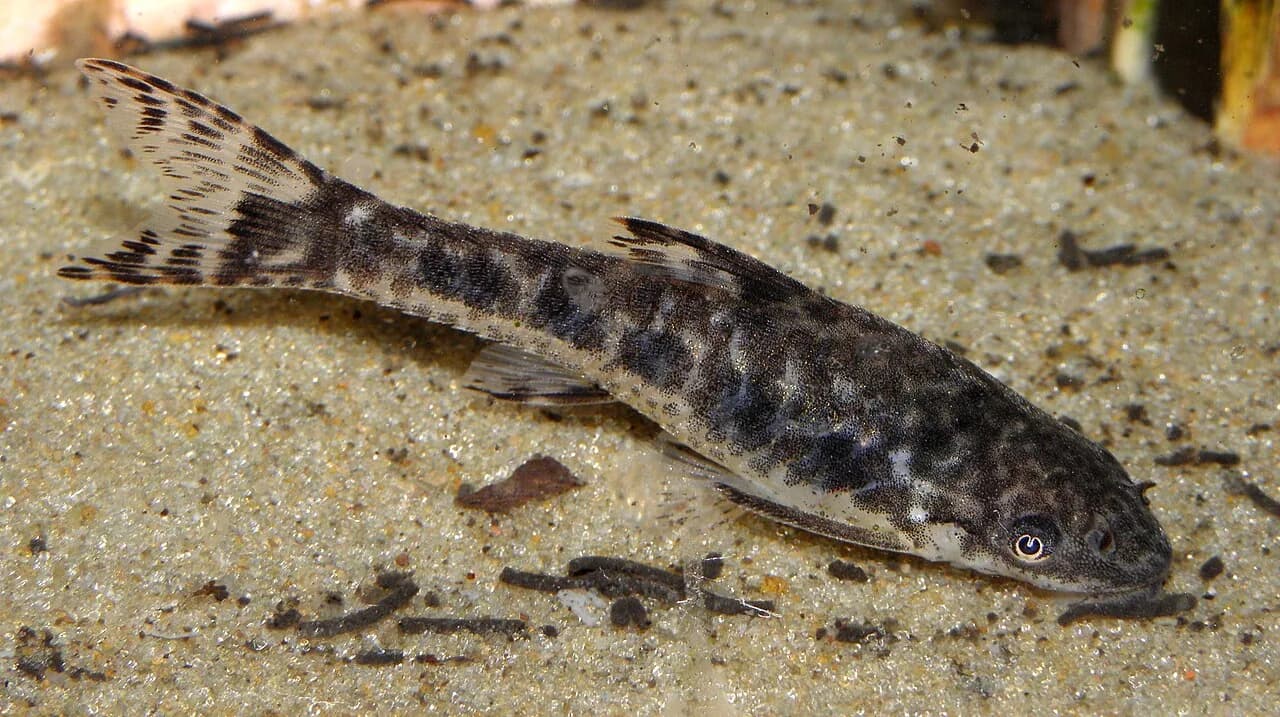
Otocinclus (Common)
Otocinclus vittatus
Northern and central South America
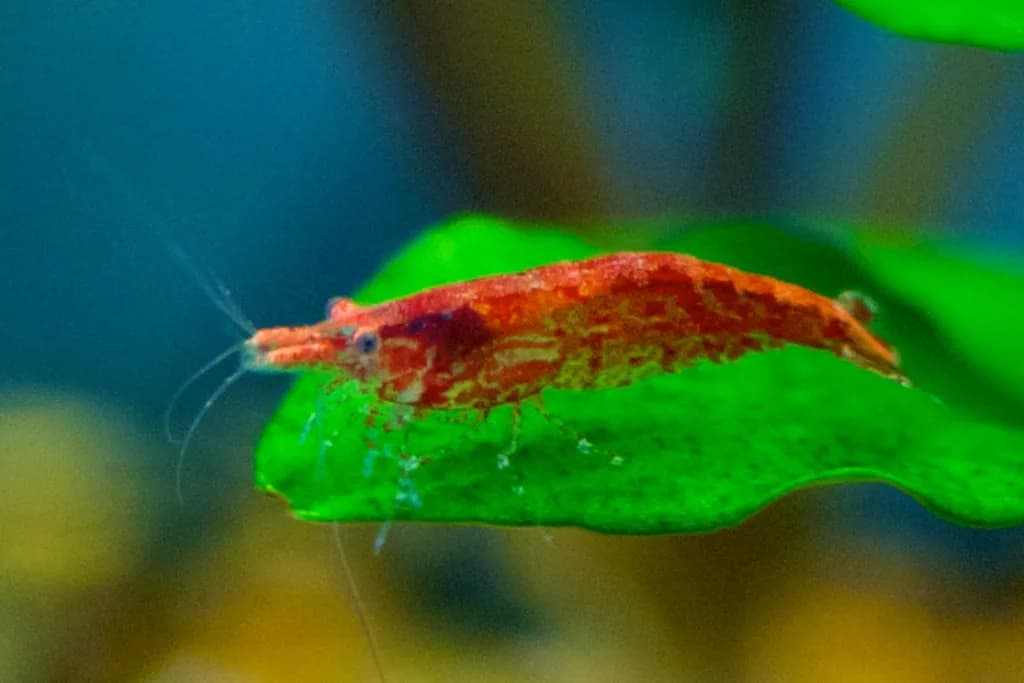
Red Cherry Shrimp
Neocaridina davidi
Taiwan (selectively bred)
- Stock slowly. Add fish a few at a time so the filter bacteria grow into the load. See how to cycle a tank.
- Use the tools. The tank planner works out a sensible bioload and schooling plan for your exact volume, and the stocking-by-tank-size pages give worked examples.
FAQ
The quick answers are above. Next, use the tank planner and compatibility tool to build your list, and read how to cycle a tank before you add anyone.
Frequently asked questions
Direct answers to the questions search engines and AI assistants surface most often about this species.
How many fish can I put in my aquarium?
There is no single number, it depends on the tank volume, the species' adult size and waste output, how well the tank is filtered and planted, and whether the fish school or need territory. As a rough guide, understock rather than overstock, respect schooling minimums, and use a stocking tool for your exact tank rather than a per-gallon rule.
Is the one inch per gallon rule accurate?
No, it is a crude myth. It ignores body shape (a chunky fish produces far more waste than a slim one of the same length), schooling needs, territory and swimming space, and adult size rather than the size a fish is sold at. Use it only as a very loose sanity check, never as a real plan.
What happens if you overstock a fish tank?
Overstocking overwhelms the filter and plants, so ammonia and nitrate climb, water quality falls, and fish become stressed, more disease-prone and aggressive. It is a leading cause of ongoing algae, illness and losses. Understocking a tank is almost always better than filling it to the limit.
How many fish should be in a school?
Schooling and shoaling fish need a minimum group to feel secure, usually at least six of the same species, and more is better. Kept in twos and threes they become stressed, nippy and washed-out. Plan your stocking around full schools rather than singles of many species.
Does a planted tank hold more fish?
Somewhat. Live plants absorb ammonia and nitrate and add oxygen, which buffers the bioload, and a heavily planted tank with strong filtration is more forgiving than a bare one. But plants do not remove the need for sensible stocking, swimming space and schooling minimums still apply.