
Tank setup
How to Grow a Carpet in an Aquarium
How to grow a lush aquarium carpet, the best carpeting plants, whether you need CO2, the dry start method, and why carpets melt or turn to algae.
Updated 3 min read
Part of our complete planted-aquarium guide.
The short answer
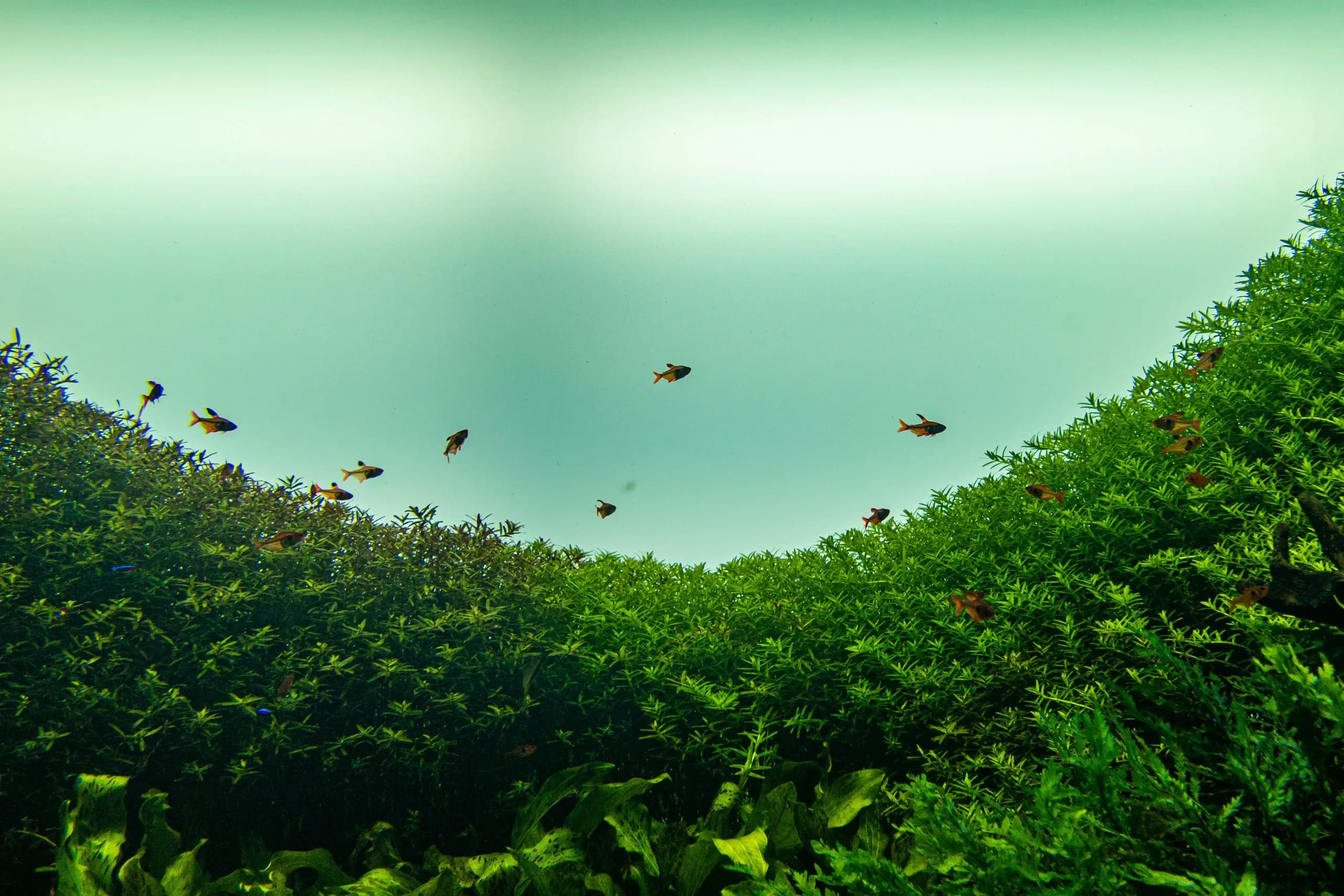
A carpet is the hardest look in the hobby to fake, because it is mostly about light reaching the substrate and CO2 driving horizontal growth. Pick a carpeting plant that matches your setup: Monte Carlo or dwarf hairgrass for a hardier tank, HC Cuba for the finest carpet if you run CO2. Plant it as many small portions spaced close together, give it strong light and, ideally, CO2, and either flood the tank or use the dry start method to get it rooted first. Then trim it to force it to spread sideways. Carpets reward patience and punish shortcuts with algae.
Choose the right carpet plant
Carpets range from forgiving to fussy. Match the plant to how much light and CO2 you are willing to run.
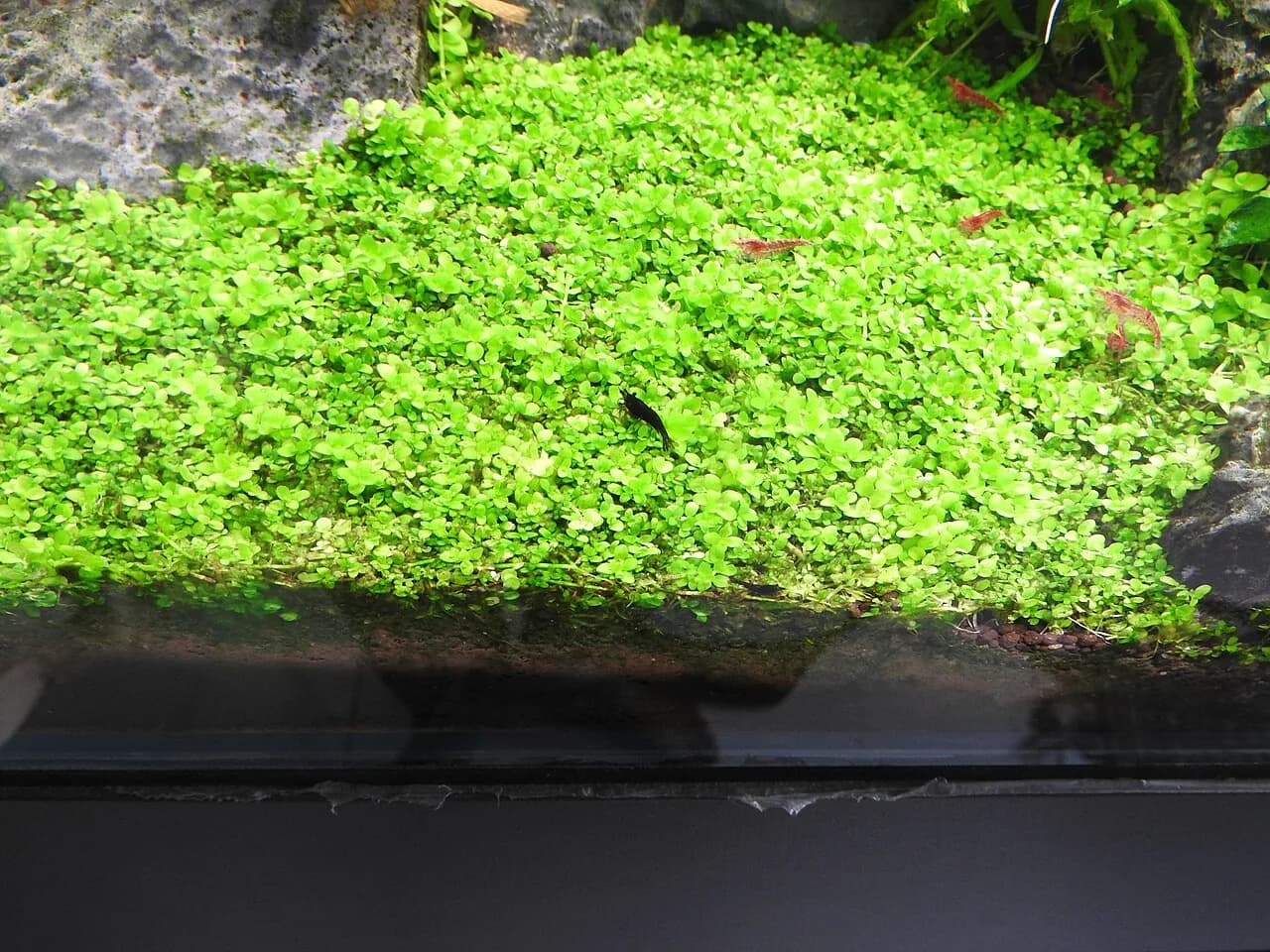
Monte Carlo
Micranthemum tweediei
Argentina
Monte Carlo is the best all-rounder: small round leaves, a fresh green carpet, and enough tolerance to fill in slowly even without CO2 (faster with it). The usual first carpet.
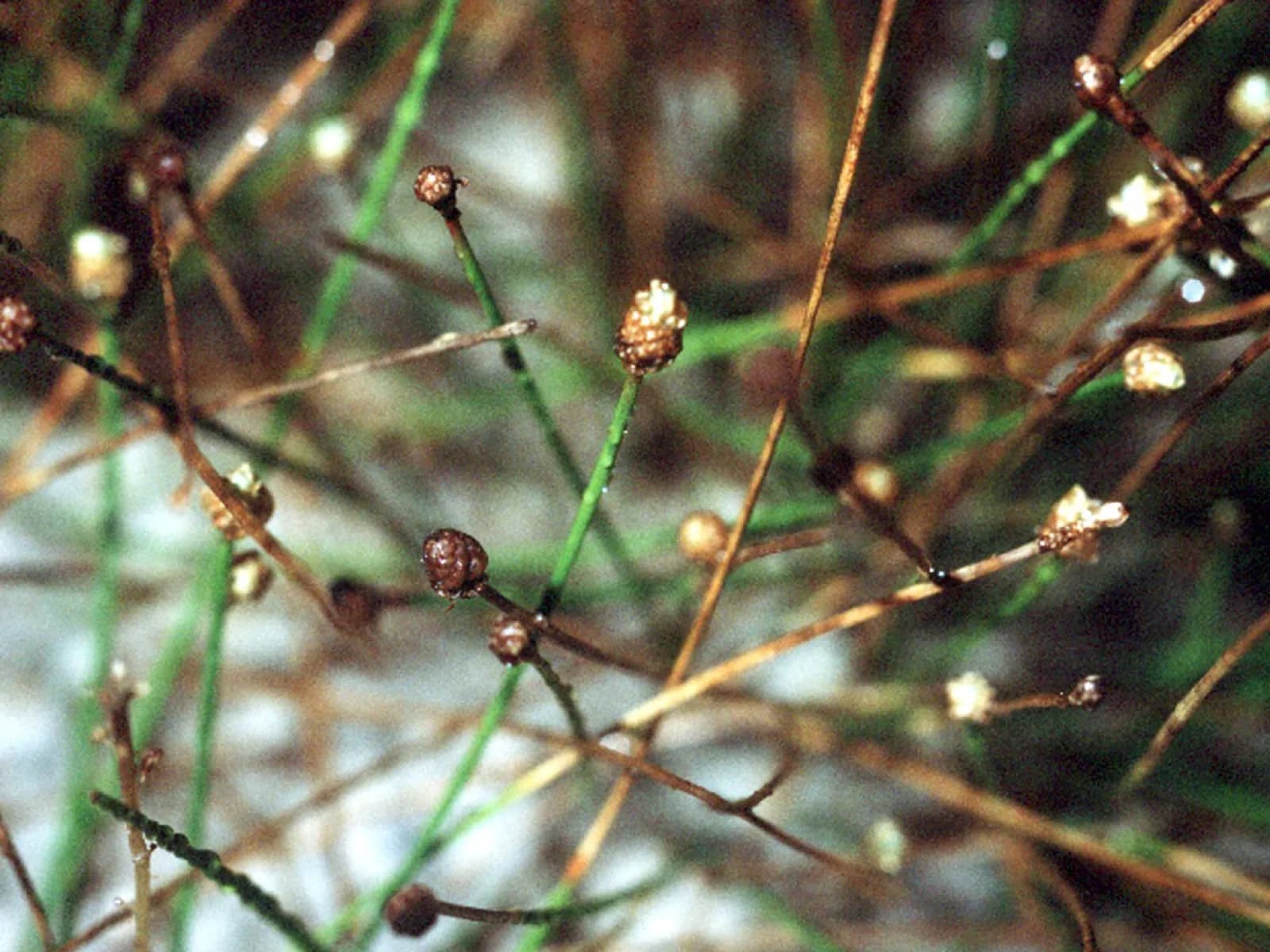
Dwarf Hairgrass
Eleocharis parvula
Worldwide temperate / subtropical
Dwarf hairgrass gives a grassy lawn that spreads by runners. Hardy, and forgiving of moderate light, though a dense carpet still wants good light and CO2.
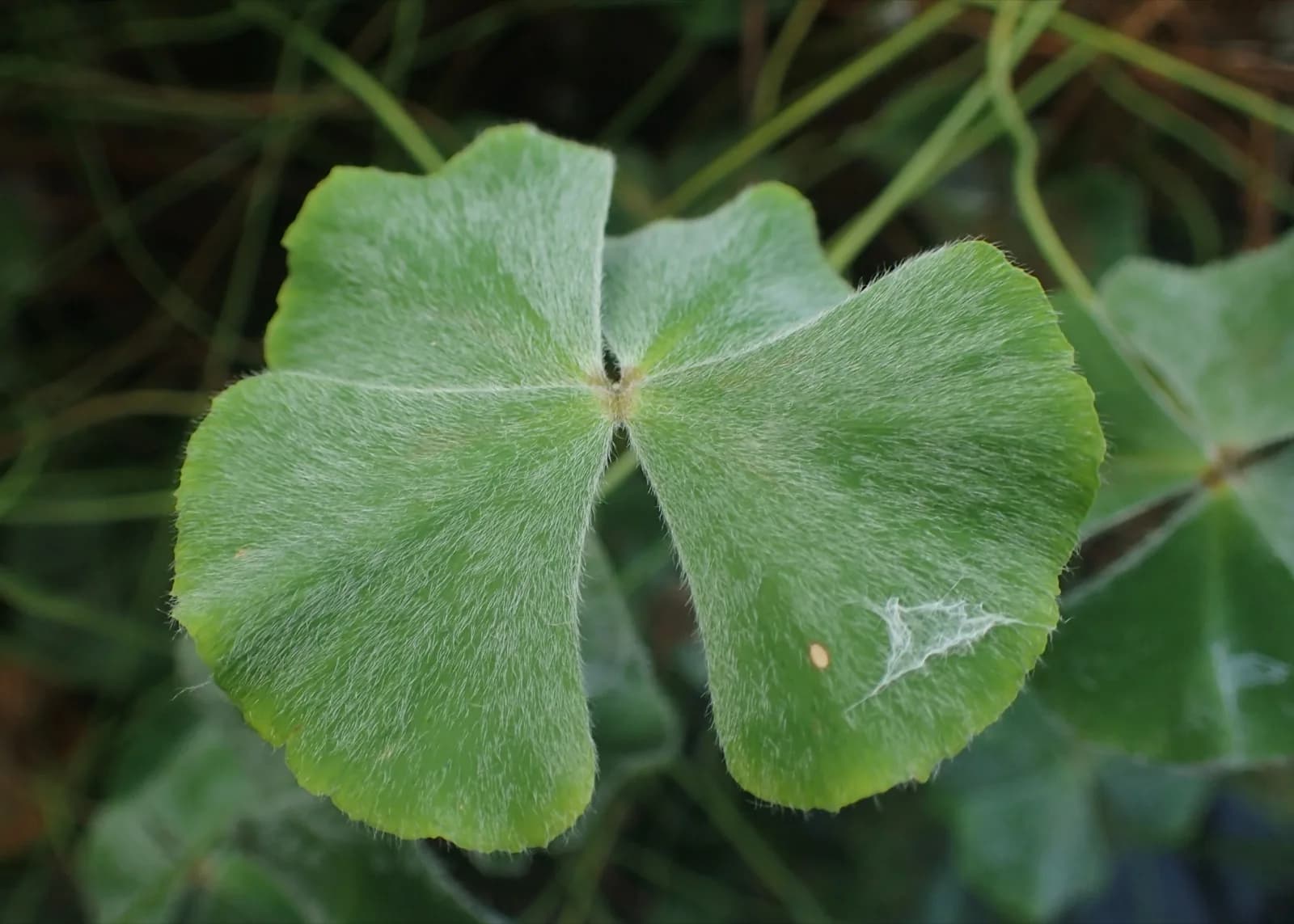
Four-Leaf Clover
Marsilea hirsuta
Northern Australia
Marsilea hirsuta is the low-tech champion: very hardy and happy in modest light with no CO2. The catch is speed, it grows slowly, so a full carpet takes patience.
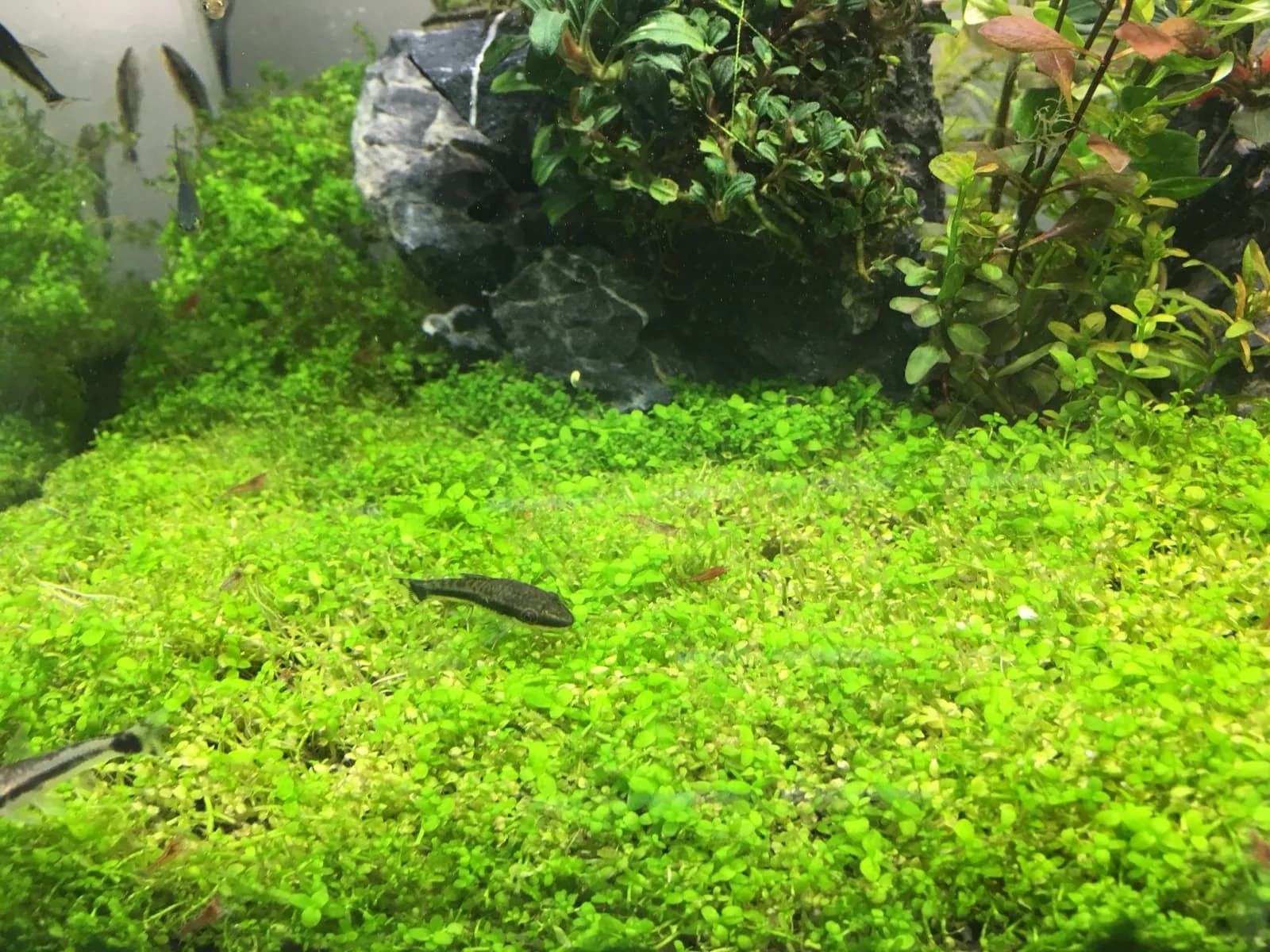
Dwarf Baby Tears (HC Cuba)
Hemianthus callitrichoides 'Cuba'
Cuba
HC Cuba (Hemianthus callitrichoides) is the finest, most sought-after carpet, tiny leaves and a dense pearl of a lawn. It is also the most demanding: strong light and CO2 are effectively required, or it melts.
Light and CO2 do the work
A carpet lives or dies by two things: enough light reaching all the way down to the substrate, and enough CO2 to make the plant grow sideways rather than up. When light and CO2 are strong, carpet plants creep horizontally and stay short and dense. When either runs short, they stretch upward reaching for light, thin out, and let algae into the gaps. This is why carpets are the flagship of the high-tech tank. See lighting for PAR targets and CO2 injection for the setup.
The dry start method
The dry start is the reliable way to establish a carpet with no algae risk. You plant the carpet into damp substrate with only a film of water, seal the tank with cling film or a lid to hold humidity, and grow the plants emersed, in air, for four to eight weeks. Emersed growth roots fast and dense, and because there is no standing water, algae cannot take hold. Once the carpet has knitted together, you flood the tank and the plants convert to underwater growth. Mist daily, keep it warm and lit, and be patient.
Planting technique
However you grow it, plant small and plant dense.
- Split the plant (or tissue-culture cup) into many small portions.
- Using tweezers, push each portion a centimetre or two into damp substrate.
- Space them a couple of centimetres apart across the whole foreground.
- Keep the water shallow and the substrate damp while you work.
More, smaller plantlets close together fill in far faster than a few big clumps. Our how to plant an aquarium guide covers the full technique.
Keeping it healthy
Once it is down, a carpet needs three things: a trim to force horizontal spread, a clean-up crew to keep detritus off it, and stable conditions.
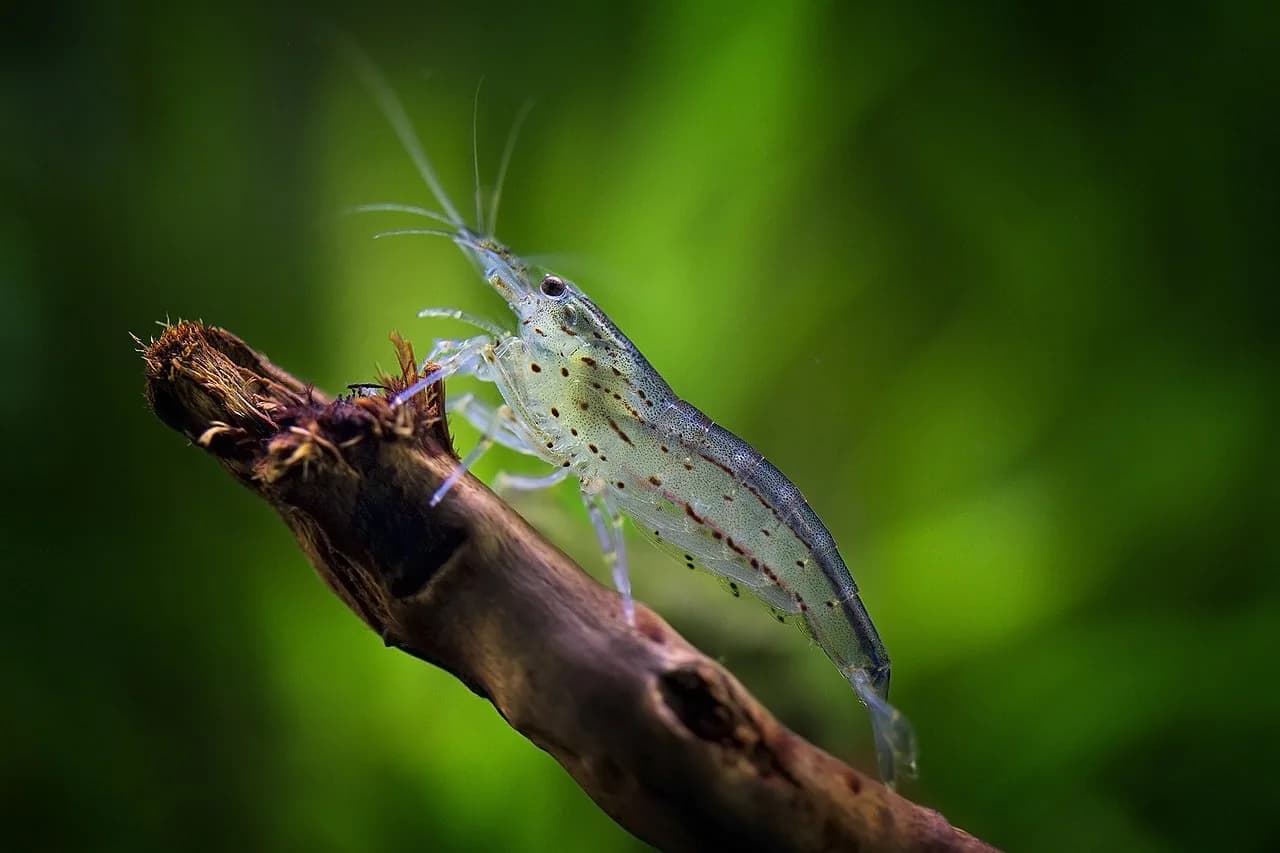
Amano Shrimp
Caridina multidentata
Japan, Taiwan
Trim the carpet as it thickens, which pushes it to spread rather than stack up and shade itself out. A crew of amano shrimp or a small algae-grazing fish keeps the surface clean, since detritus settling into a carpet is a fast route to black beard algae. Watch for deficiencies in fast carpets, and keep flow moving over the whole foreground so no dead spots form.
FAQ
The quick answers are above. If your carpet is struggling, check CO2, lighting and algae next, in that order.
Frequently asked questions
Direct answers to the questions search engines and AI assistants surface most often about this species.
Do you need CO2 to grow a carpet?
For a tight, fast carpet of demanding plants like HC Cuba or Monte Carlo, effectively yes. CO2 plus strong light is what makes them creep sideways instead of growing up and thinning out. A few hardier carpets like Monte Carlo and dwarf hairgrass can slowly fill in without CO2, but it is slower and patchier.
What is the easiest aquarium carpet plant?
Monte Carlo (Micranthemum) and dwarf hairgrass (Eleocharis) are the most forgiving. Marsilea hirsuta is even hardier but grows very slowly. HC Cuba (Hemianthus callitrichoides) gives the finest carpet but is the most demanding and needs CO2.
What is the dry start method?
You plant the carpet in damp substrate with only a thin film of water, cover the tank to keep humidity high, and grow the plants emersed (in air) for four to eight weeks before flooding. Emersed growth roots fast and dense without any algae risk, then converts underwater once you fill the tank.
Why is my carpet growing tall instead of spreading?
Not enough light reaching the substrate, or not enough CO2. Carpet plants creep sideways when light and CO2 are strong, and stretch upward reaching for light when either is short. Increase light and CO2, and trim the tall growth to push horizontal spread.
How do I plant a carpet?
Separate the plant into small portions and push each into damp substrate a couple of centimetres apart using tweezers. More, smaller plantlets spread faster than a few big clumps. Keep the substrate damp and the water shallow while you work.